
Circularity in Action: 2026 Copenhagen Delegation
Embarking on our third Sustainability Delegation to Scandinavia, we once again set our sights on the vibrant cities of Copenhagen, Denmark, and Malmö, Sweden. This year, our focus remained on uncovering the strategies these urban centers employ to foster sustainable innovation, champion circular economy principles, and collaboratively shape thriving, livable communities.
Our delegation of 17 accomplished professionals from the US, hailing from diverse backgrounds from Los Angeles to New York, brought a rich tapestry of expertise spanning architecture, urban planning, public policy, advocacy, education, energy, and beyond. Over the course of eight days, from April 19th to April 26th 4th, 2026, we immersed ourselves in the groundbreaking approaches that define Scandinavian leadership in green and social progress.
Day 1 - Discovering Copenhagen: An Intro Lunch and Nordhavn Tour
Delegations members arrived early in the morning and we had a delectable lunch at Cadence. If you ever visit the city, we recommend it.
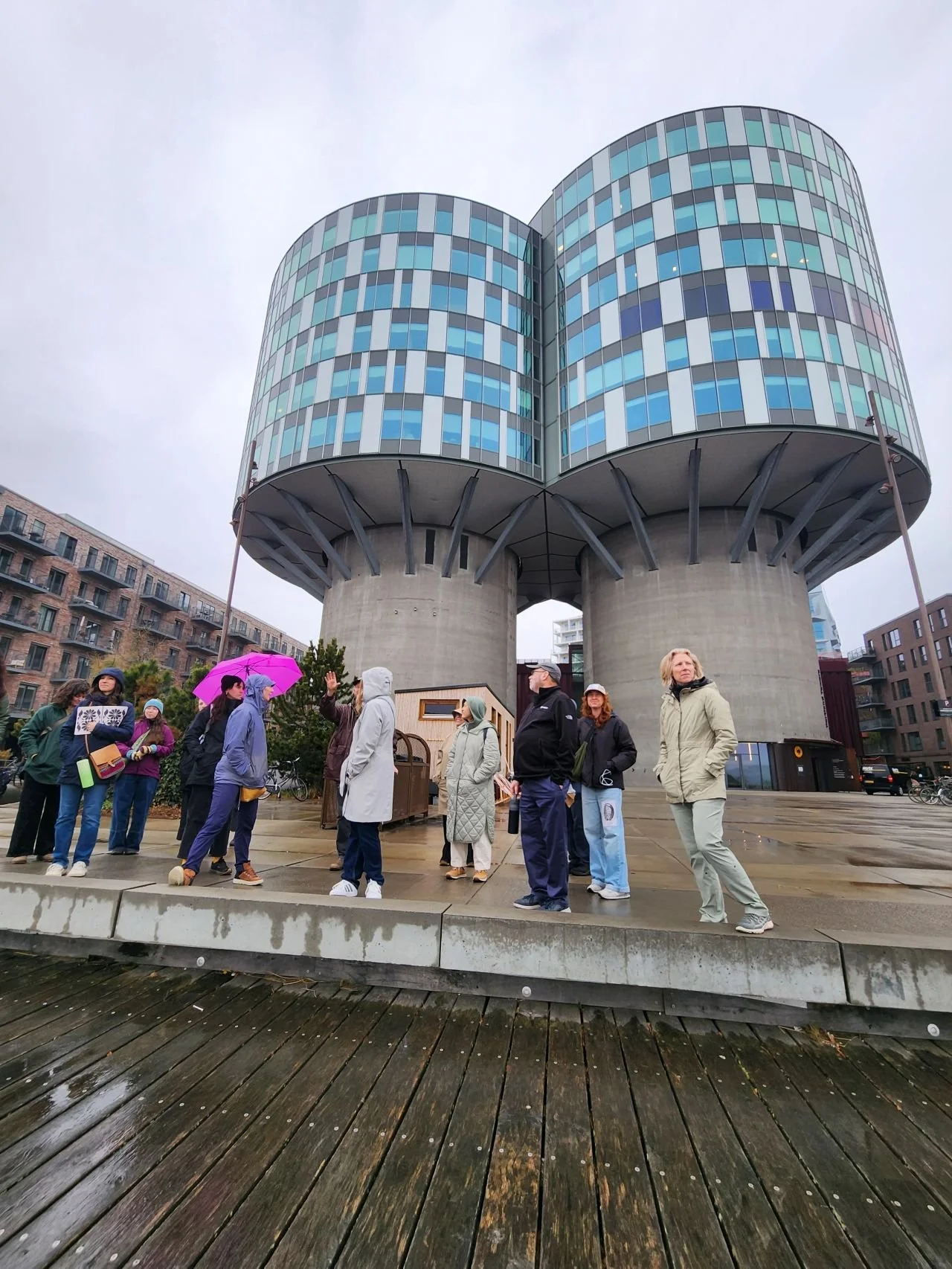
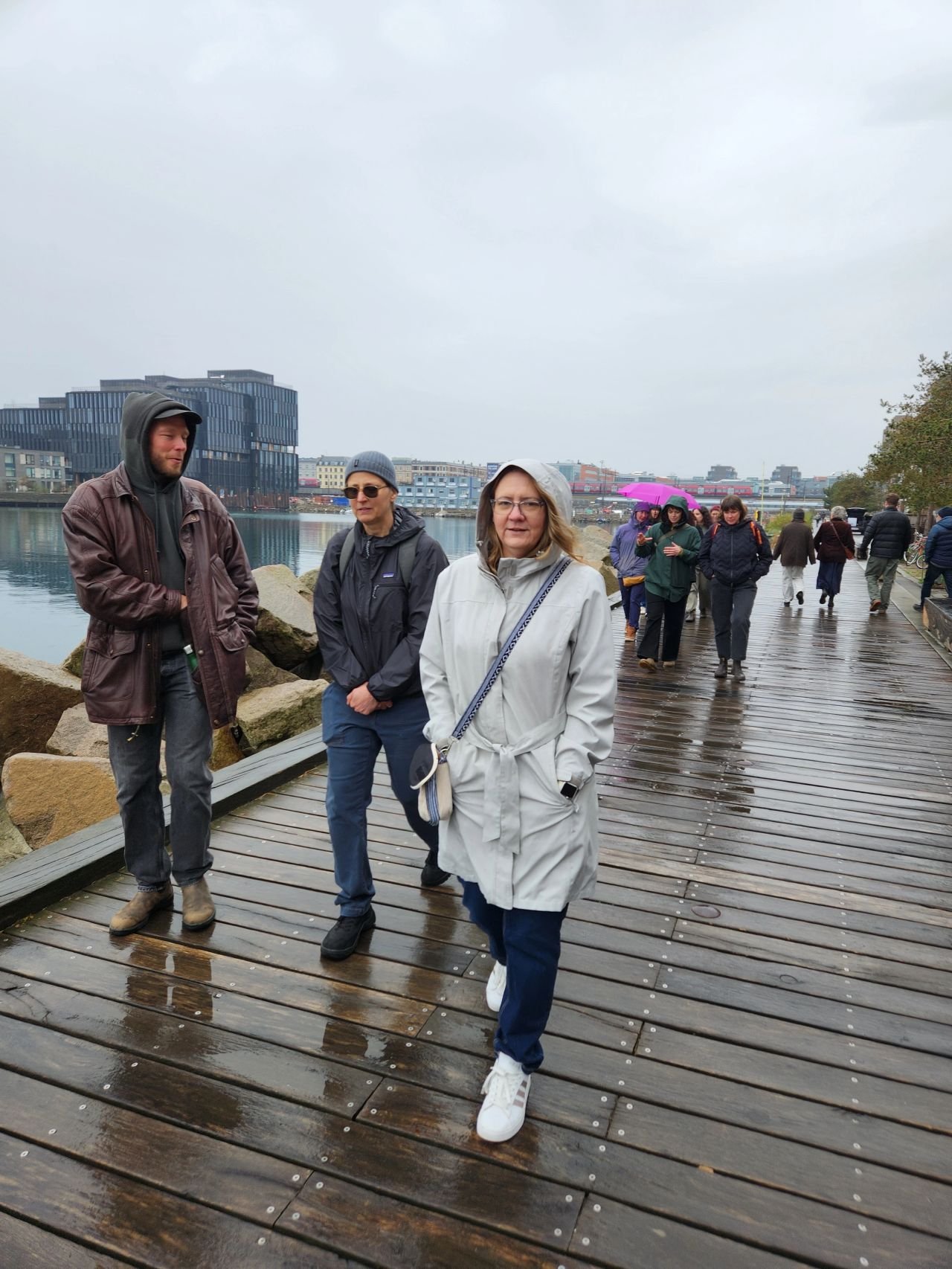
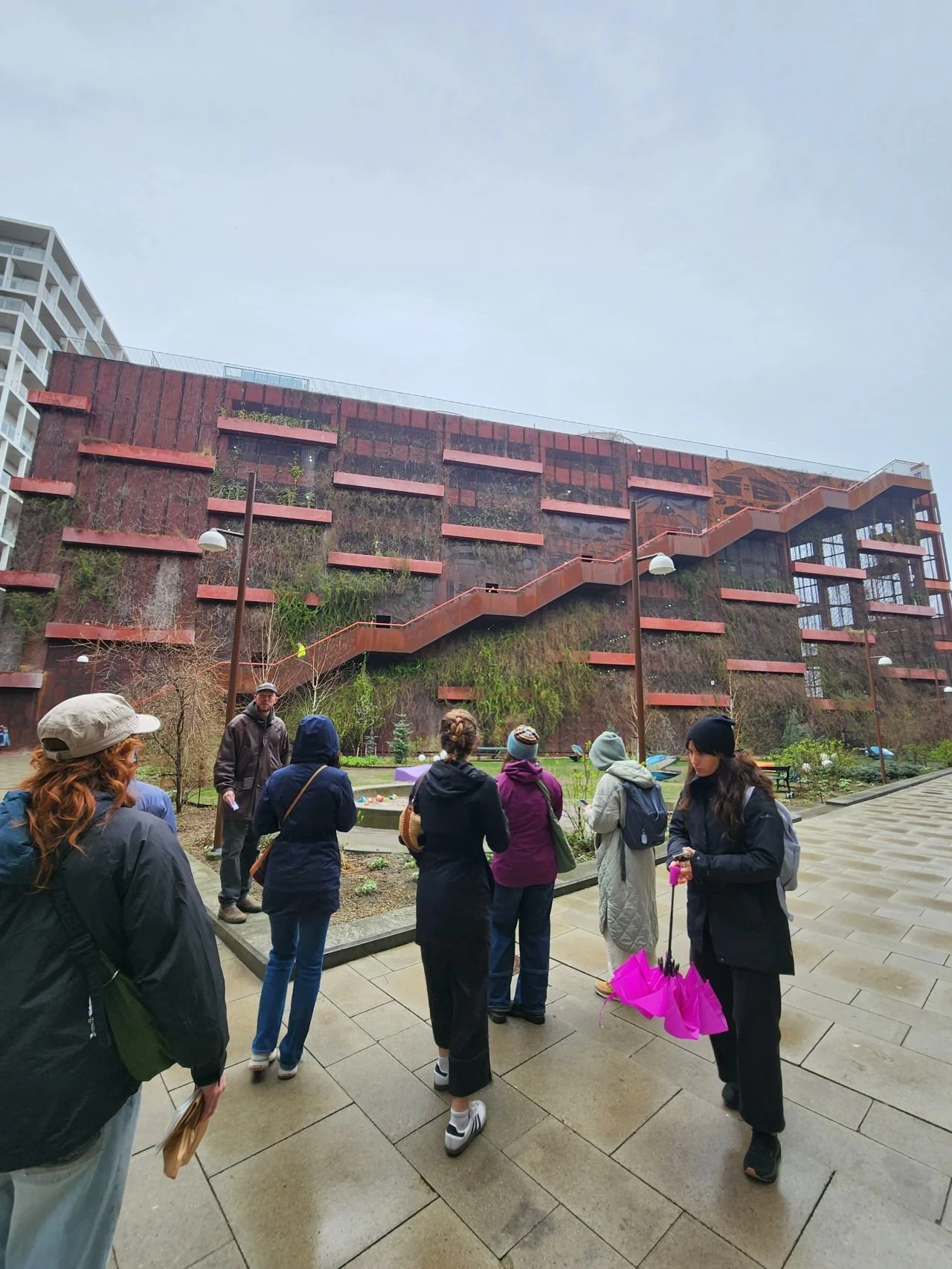
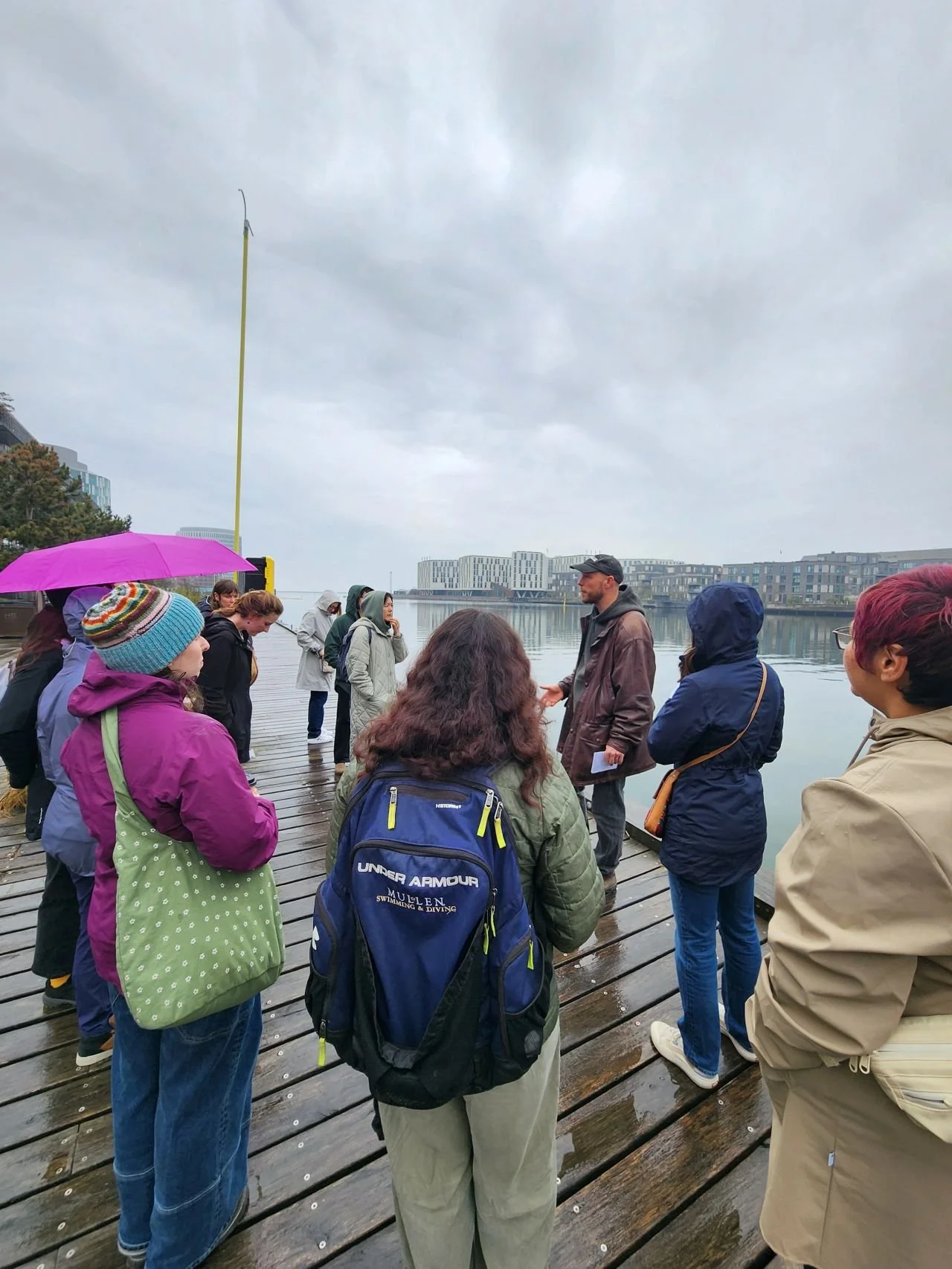
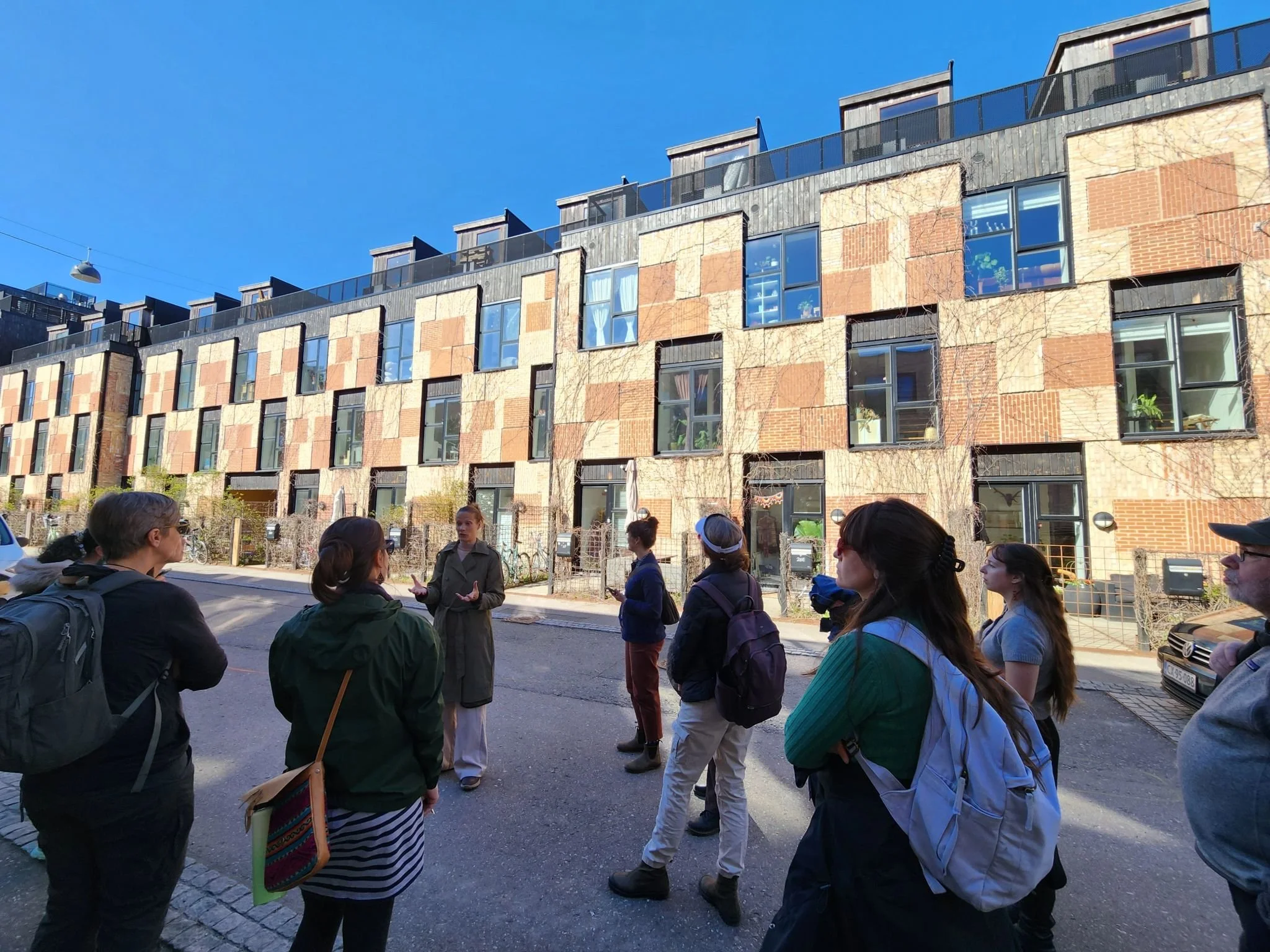
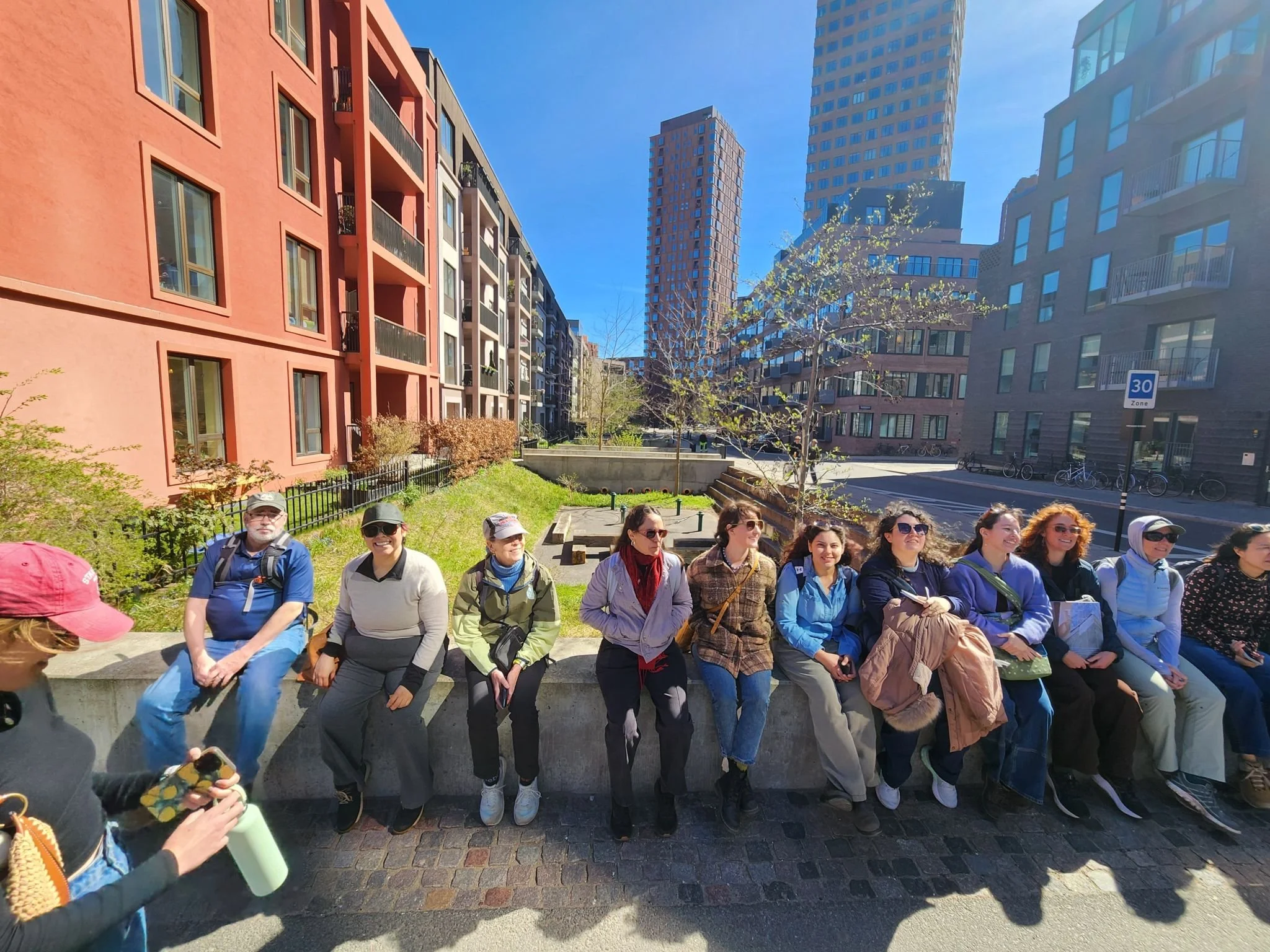
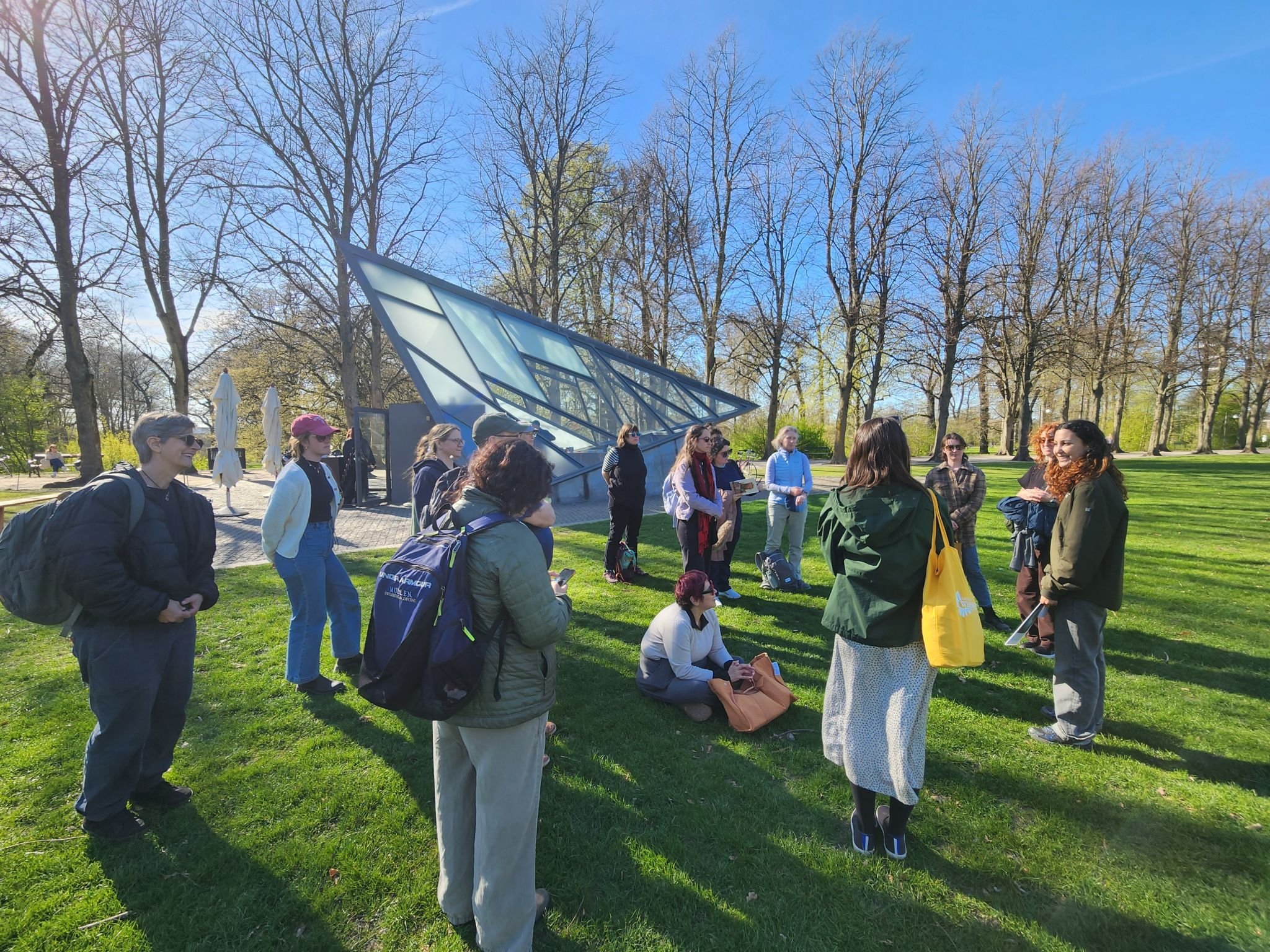
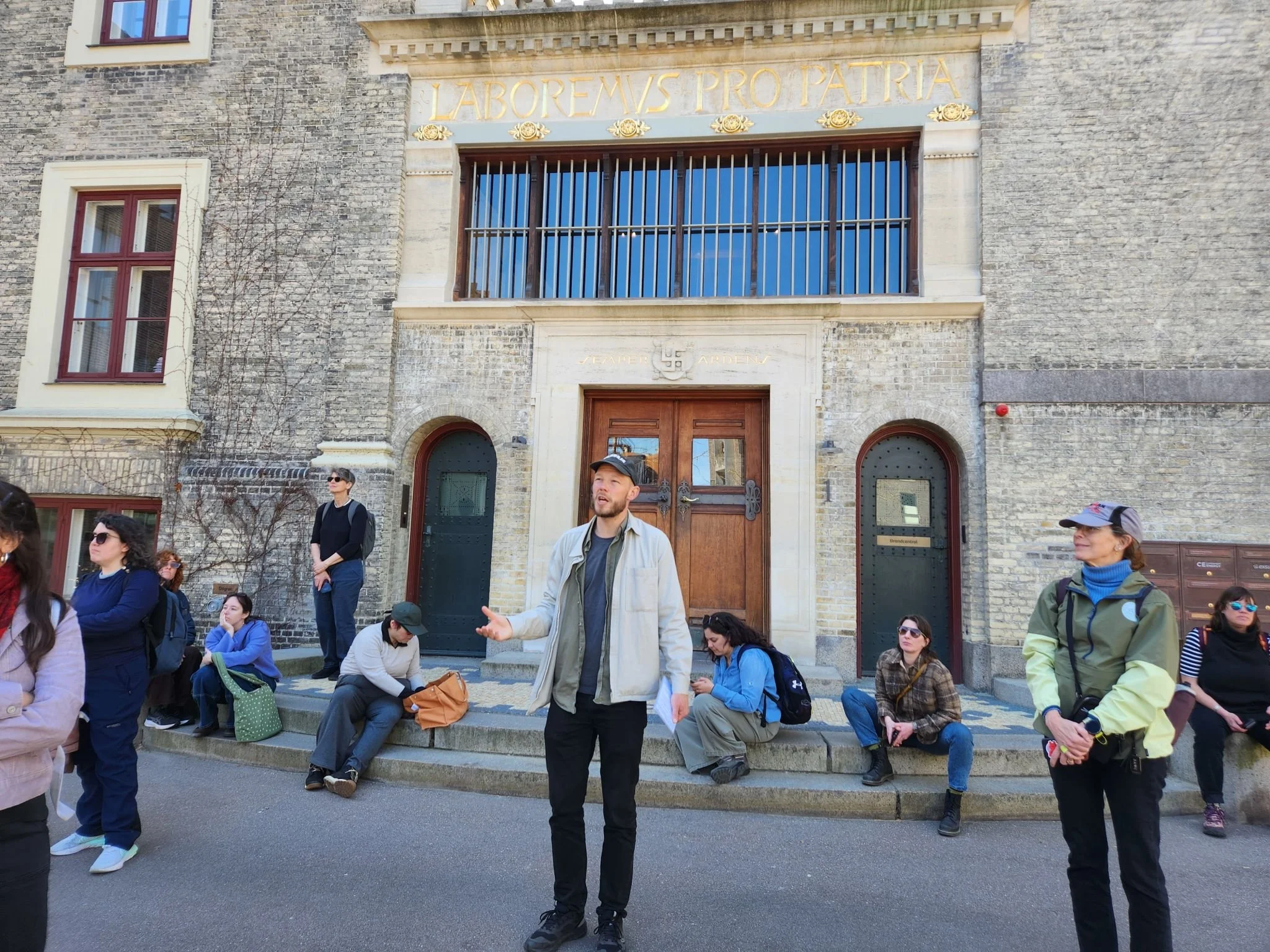
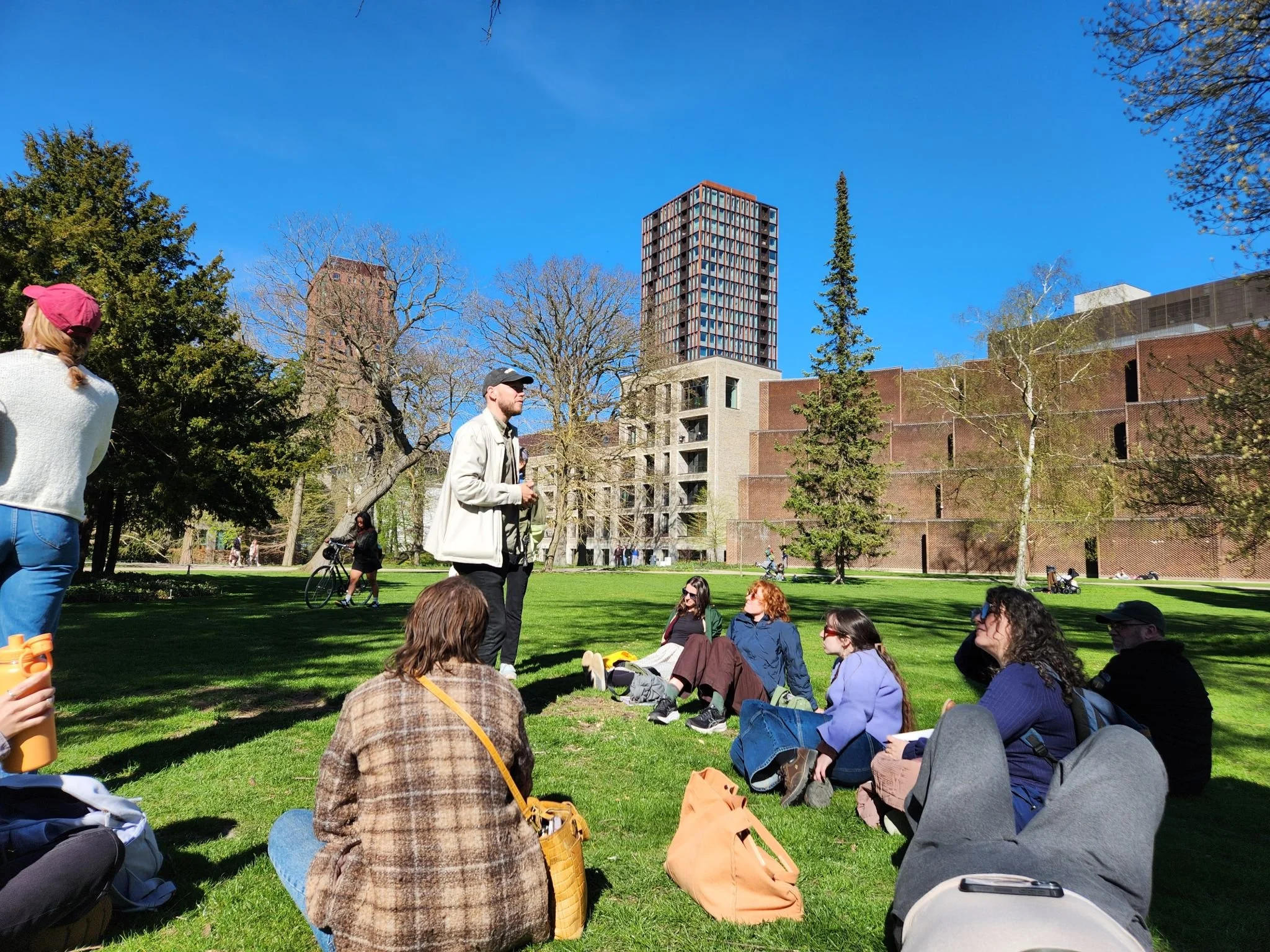
After lunch, Asger Arnbjørn led us on a very educational walking tour of Nordhavn harbor district. He is an excellent guide and super knowledgeable. The whole area used to be a heavy industrial zone and a free trade zone. Considerable effort went into repurposing the area for residential use, including preserving many existing structures.
Norhavn is home to some great landmark buildings embodying sustainable urban redevelopment including:
- The Silo designed by Cobe: a grain silo converted into luxury apartments
- Portland Towers: cement storage towers converted into office space
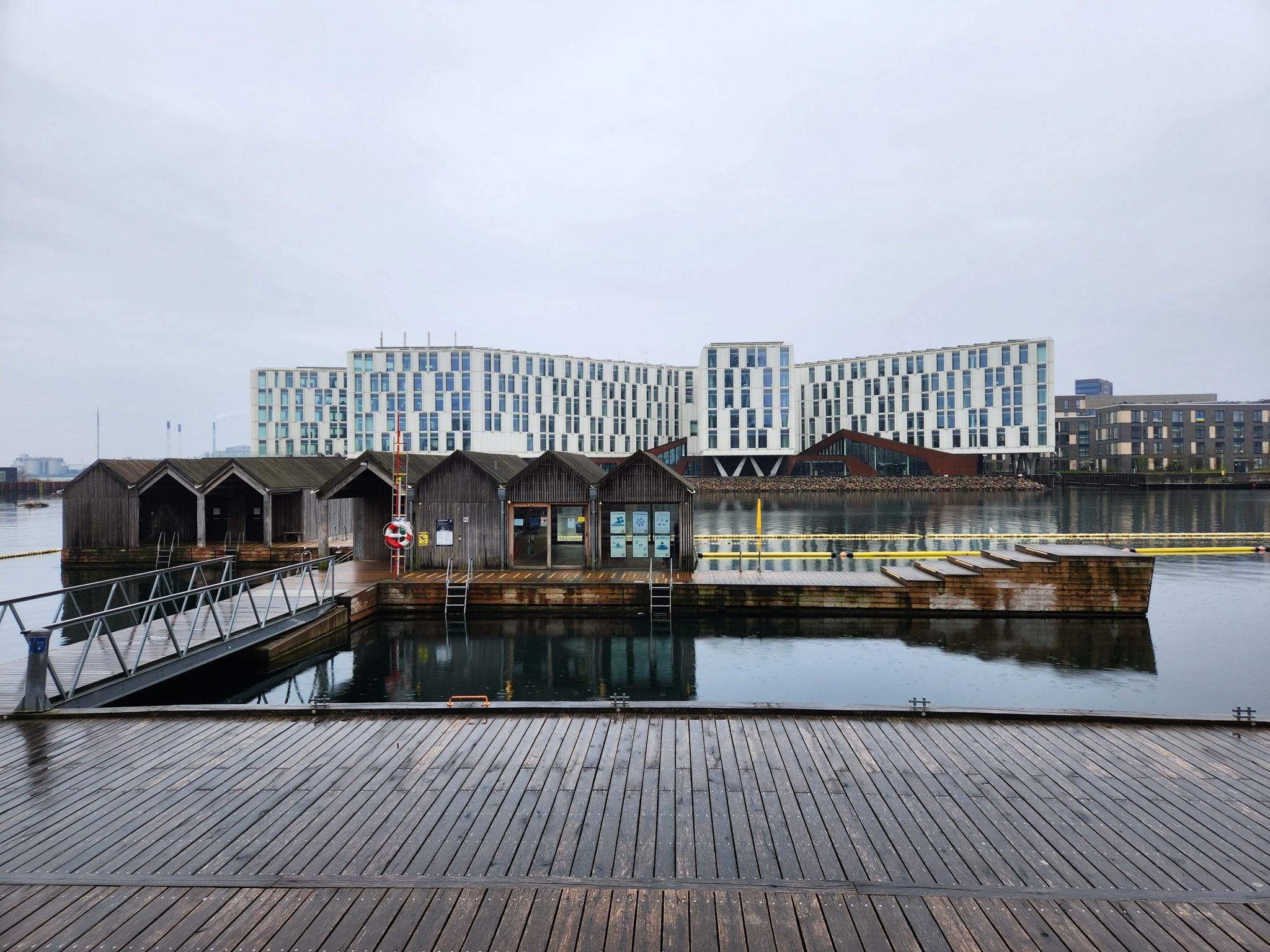
- UN City designed by 3XN/GXN: LEED Platinum certified building housing many UN offices with automated blinds that adjust based on sunlight
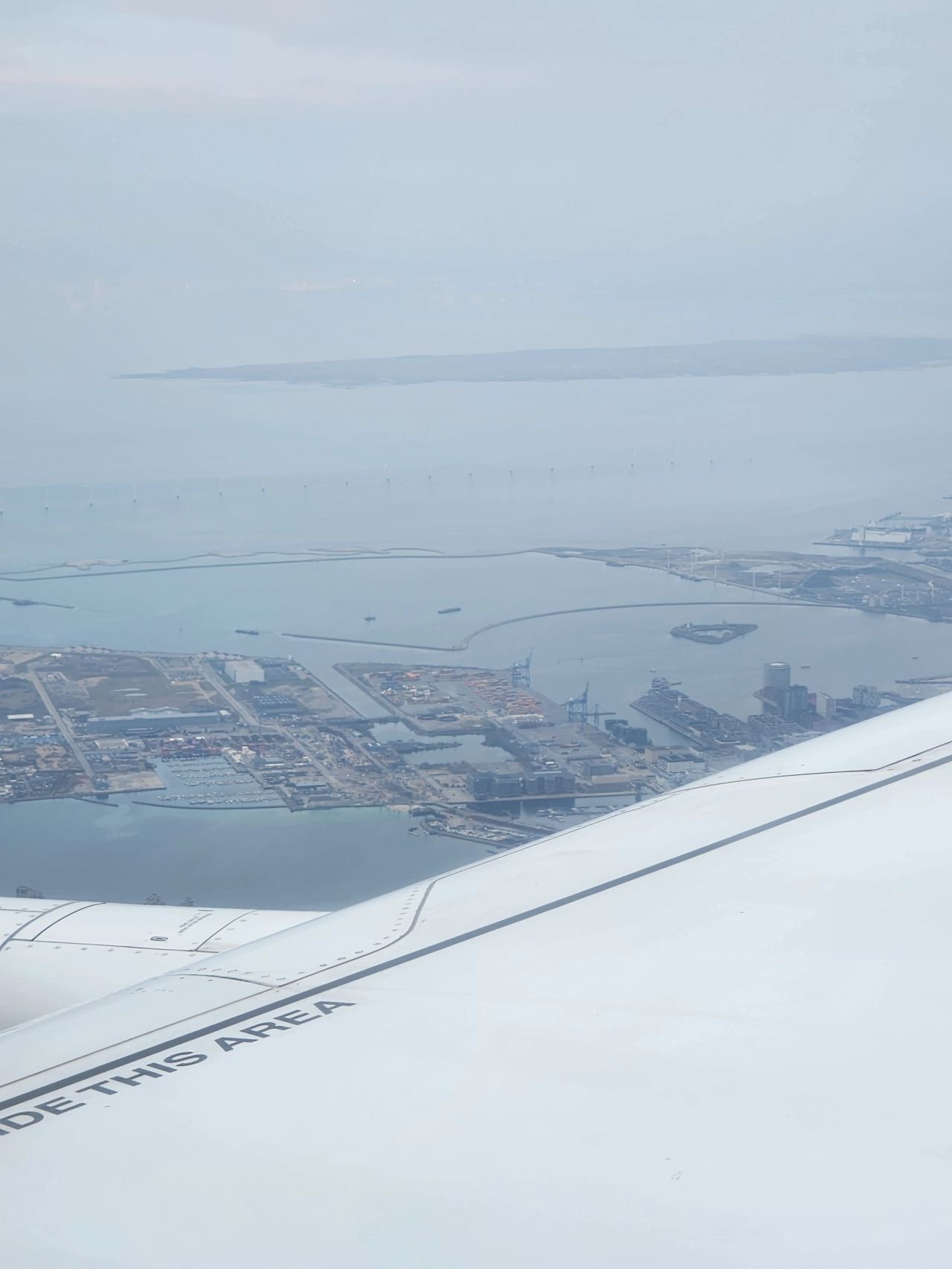
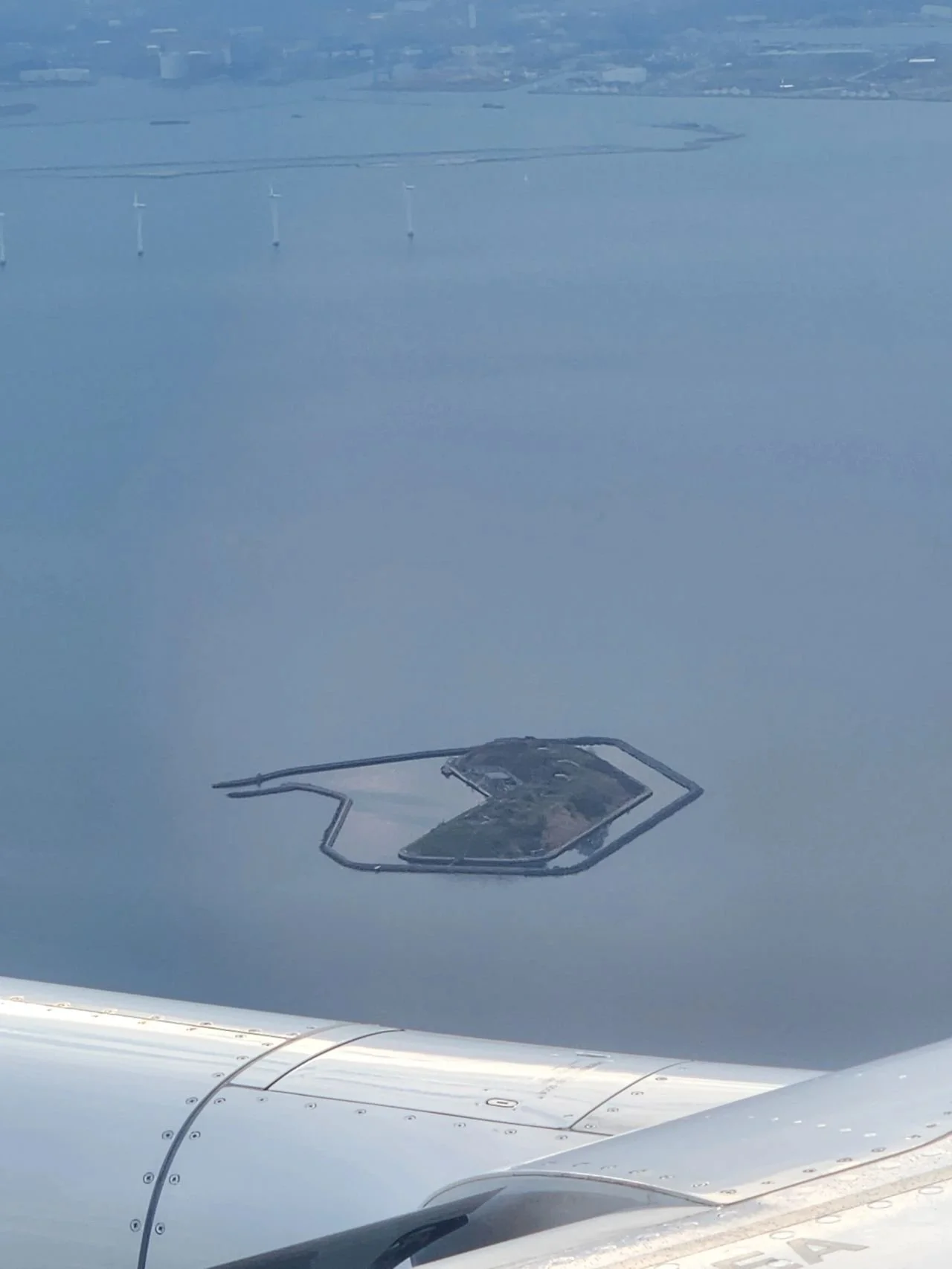
It's also a bit controversial with the new infill being created north of the harbor. The walls in the ocean are needed to combat rising sea levels, but it was rolled out in a way many consider to be corrupt and rushed. It's and area planned to house 50,000 people and to be completed in 2070. When you fly into the city, look out for the sizable walls, including the ones built around the islands north of the city.
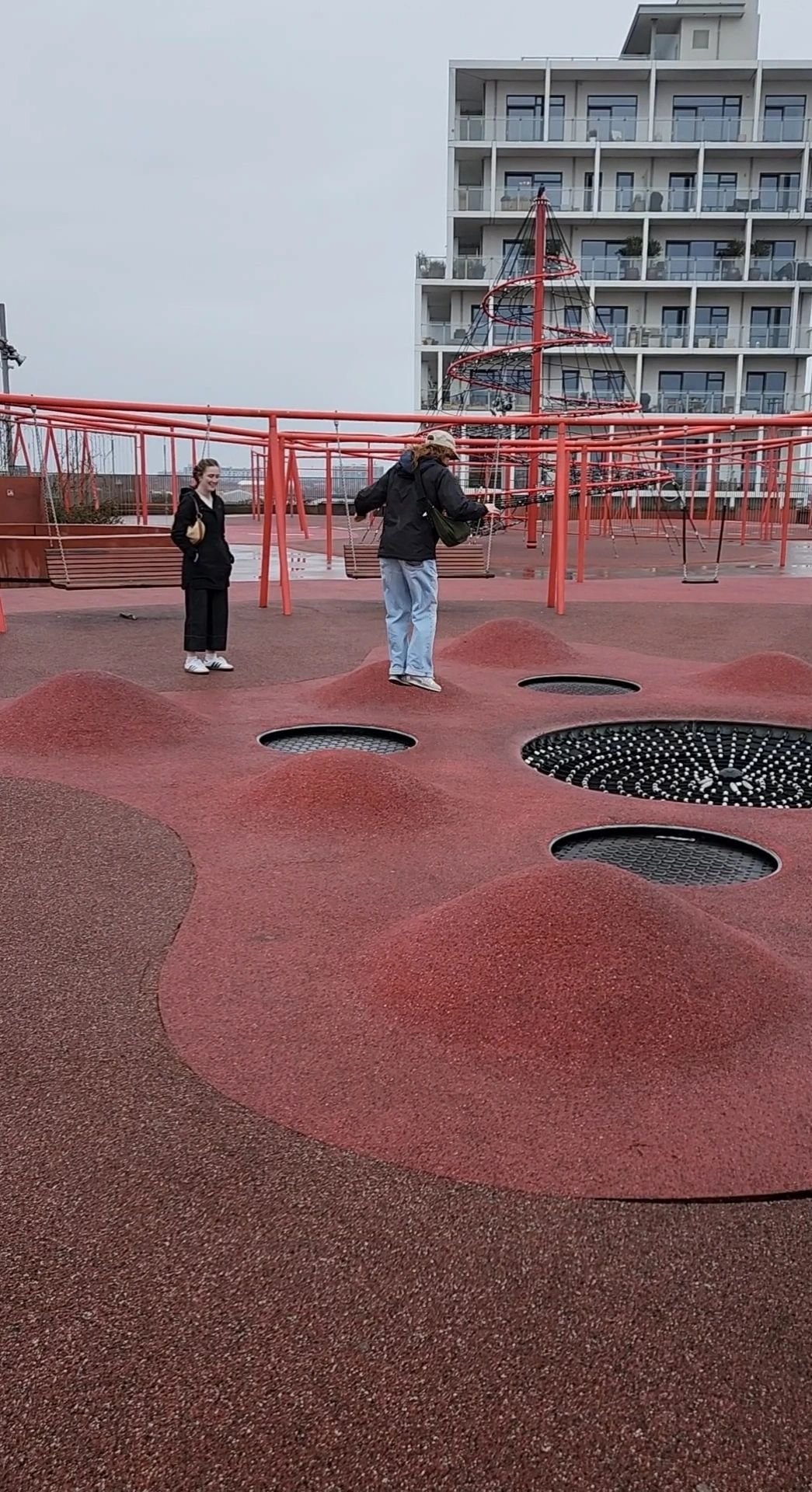
One of the highlights is watching adults enjoy the Konditaget Lüders playground on top of a parking garage designed by JAJA Architects. It’s a stark reminder how critical good planning and design is for urban development and how much of our space can be designed to meet multiple purposes instead of just one. Can other cities please learn from this faster!!!
Another interesting insight was how they reduced cost by sharing infrastructure between housing complexes. Instead of building underground parking for every apartment building, they built an oversized underground parking underneath one structure that was shared. It’s a great example of how you can keep cost down by rethinking how to develop an area with more shared infrastructure.
After the tour, we enjoyed dinner at Khmer, the best Cambodian food in the city.
Day 2 - Copenhagen: Ecosystem Introduction and Bicycle City Tour
Today was focused on gaining a mile high view of sustainability efforts across the country and the city!
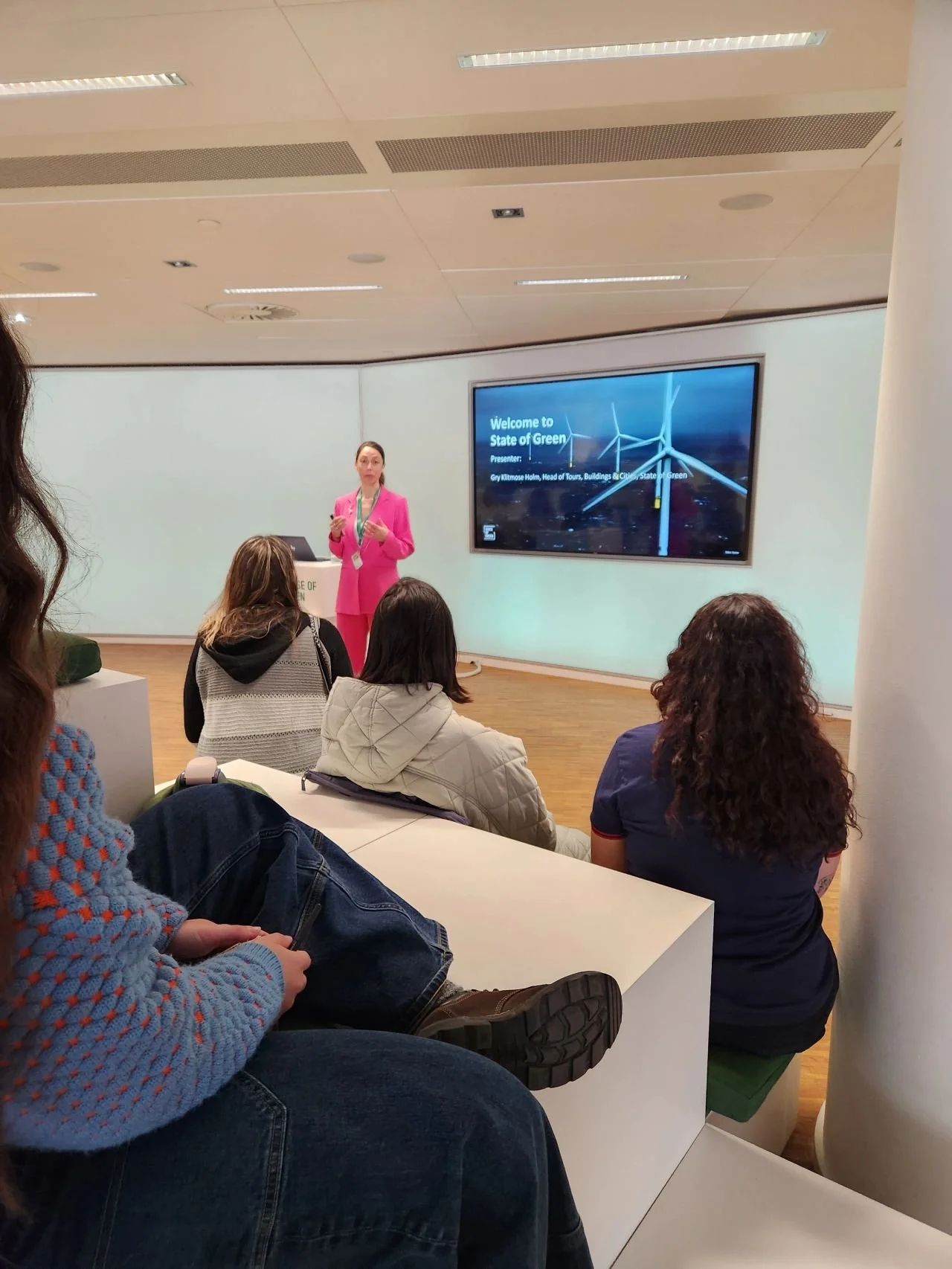
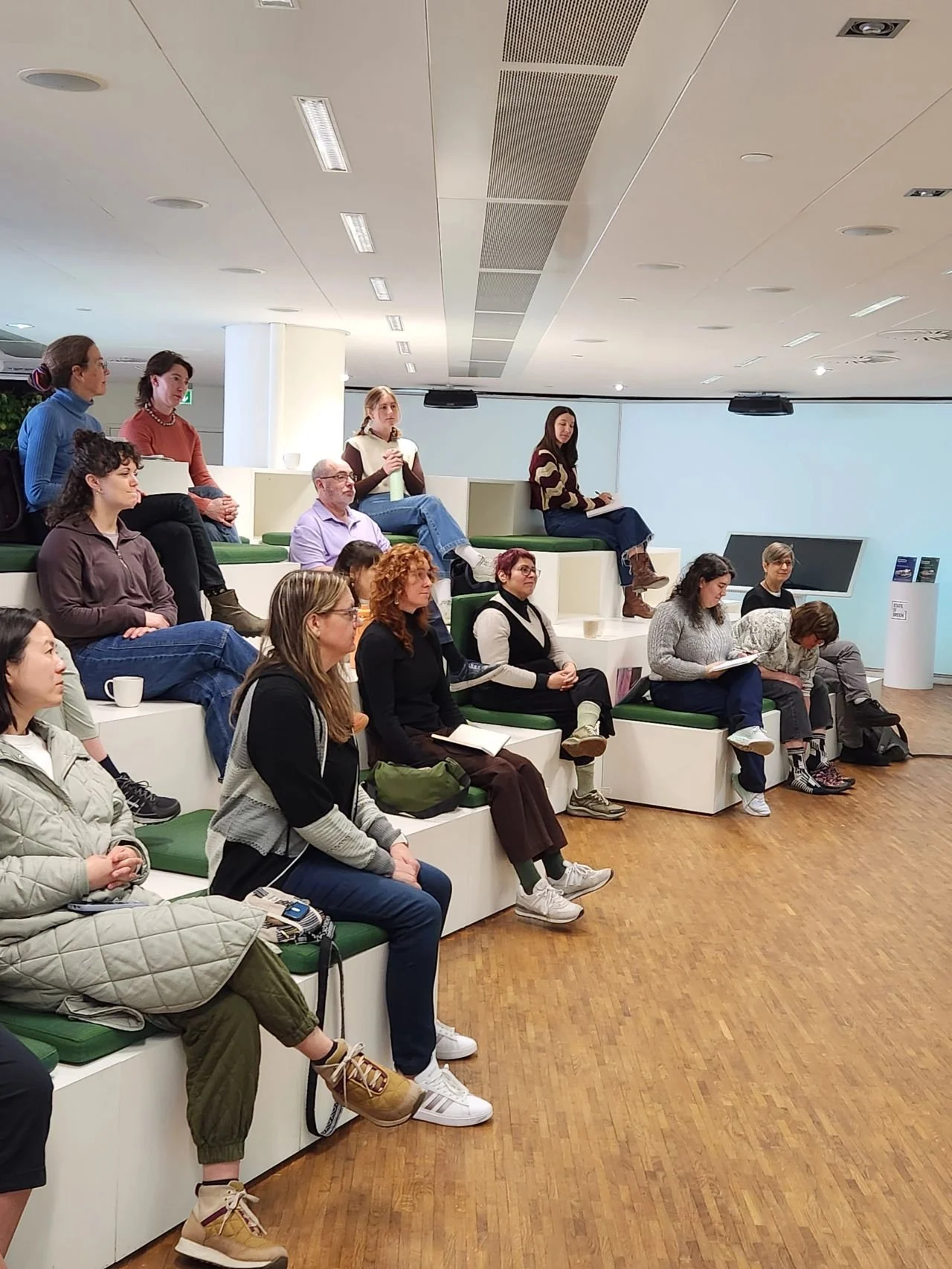
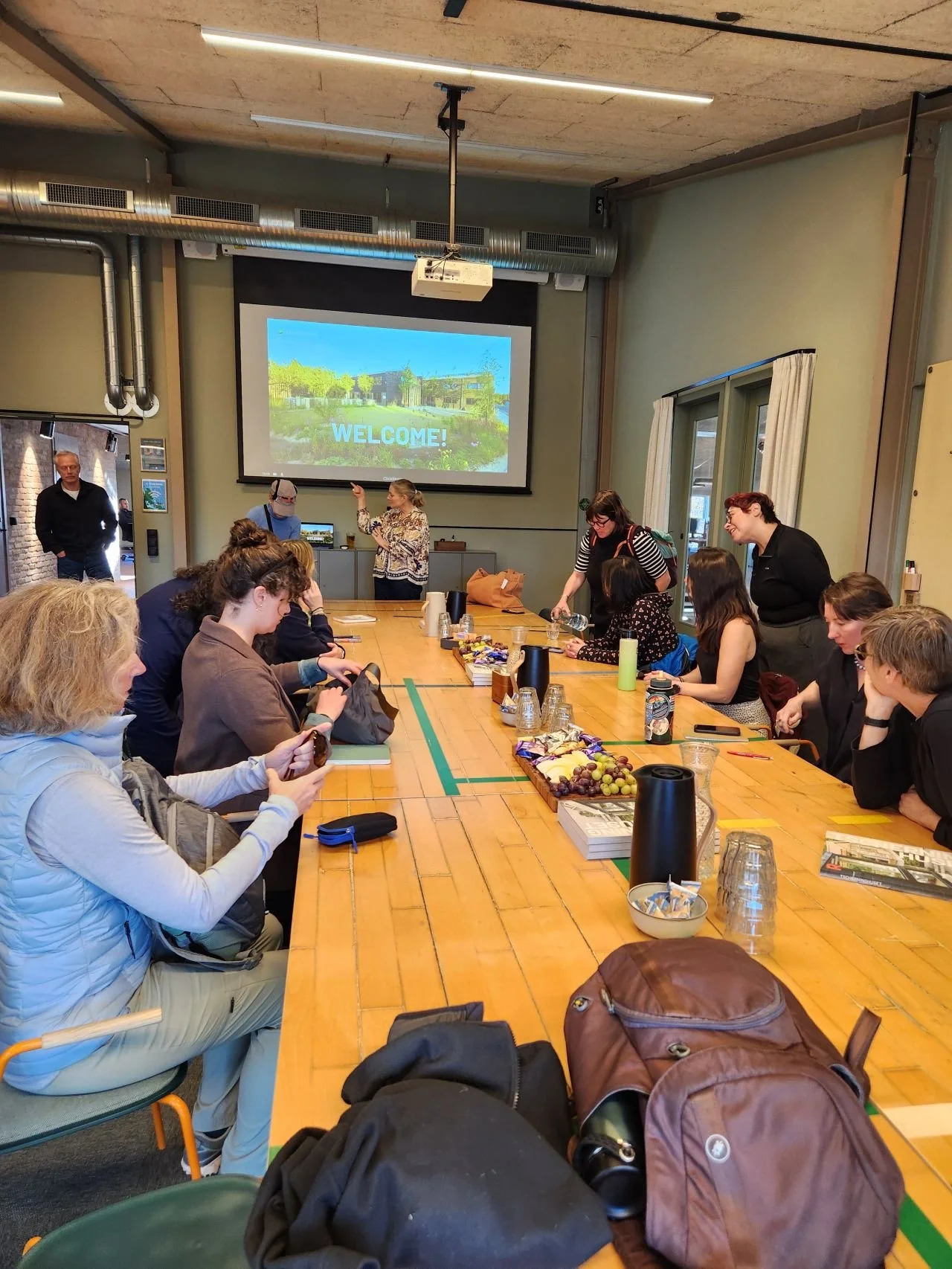
We started the day at House of Green and had three expert presentations:
1) Gry Klitmose Holm of State of Green Denmark provided a broad overview of the history behind Denmark’s pivot to clean technologies and how State of Green helps domestic companies share their expertise with the world. Of note is the fact that the gas crisis in the 70’s really shook the status-quo and drove real investment in a greener energy system.
The oil disruption from the Iran war might be doing the same for more nations. History repeats itself. Who will learn the lesson this time? 🤔
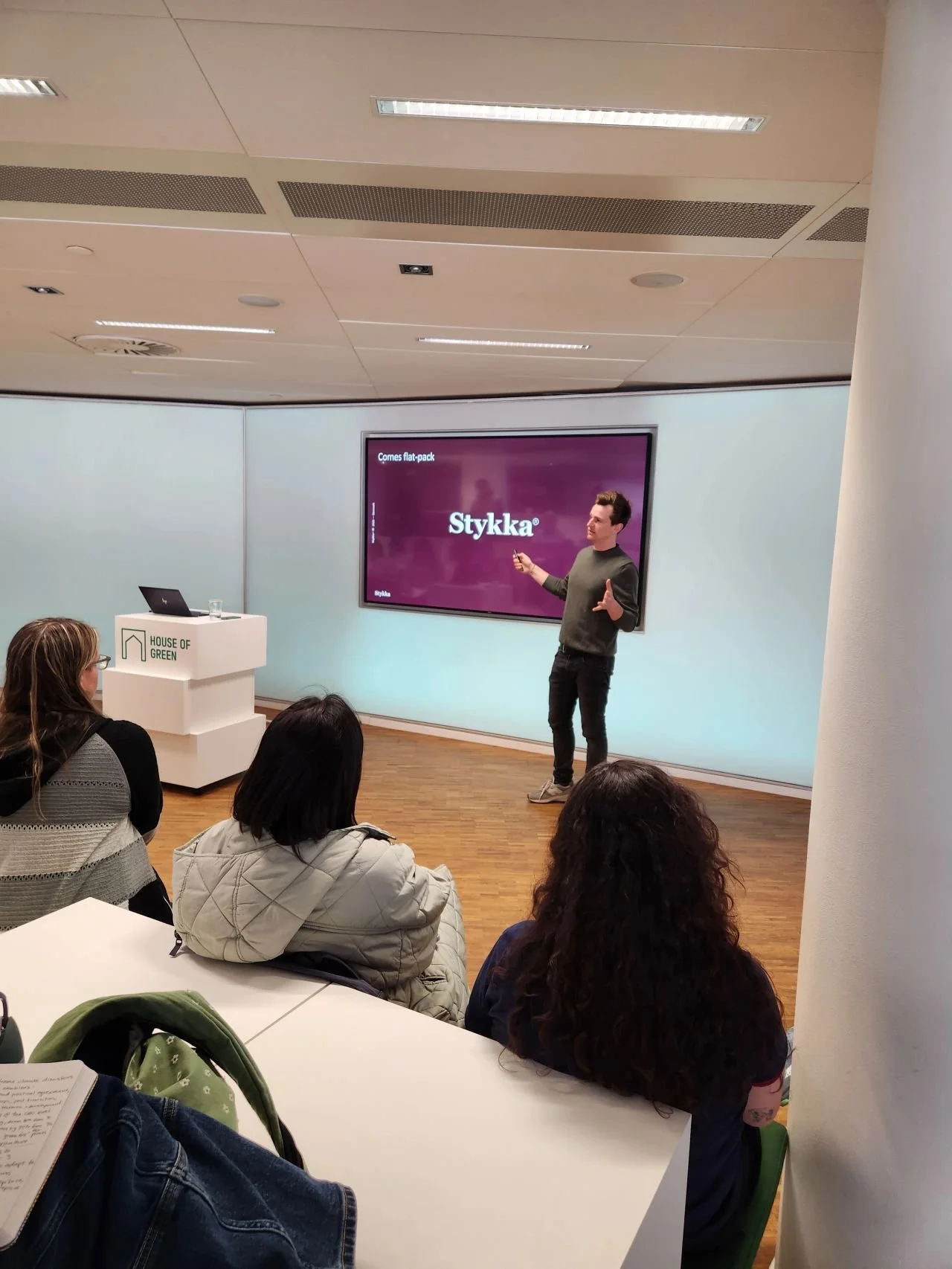
2) Next was Jarl Engelbrecht Vindnæs from Stykka and their unique circular economy kitchen offering. Over 5 years of hard work are paying off as they look to expand internationally. They've built a full offering that enables kitchens-as-a-service including the digital processes, fabrication, physical logistics, and reverse logistics.
There was some much to unpacked in his presentation, we will dedicate a separate post to do a deeper dive.
One great insight:
"The best part, is no part"
They have less than 150 components that allow for modular kitchens to be deployed and disassembled in almost limitless combinations. This simplicity allows for scale.
3) Last up was CONCITO. This is the second time Nicolas Francart has presented, and we’re always blown away by his expertise.
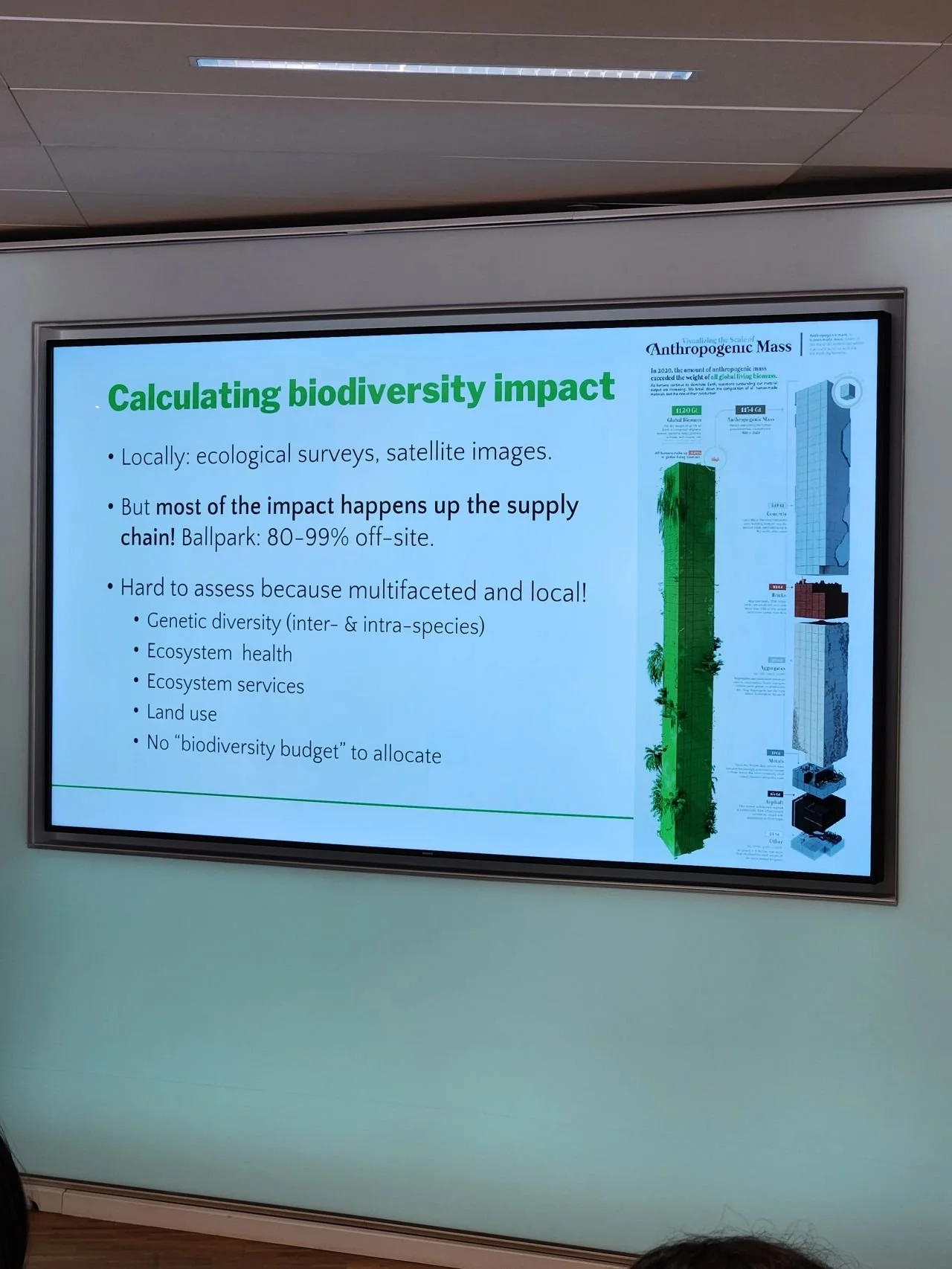
He provided a wonderful recap of the DK2020 initiative to develop a climate action plans for every municipality in Denmark and an update on how implementation of these plans is going. He also talked about the shift from focusing on carbon emissions and thinking about other benefits of climate action, like biodiversity.
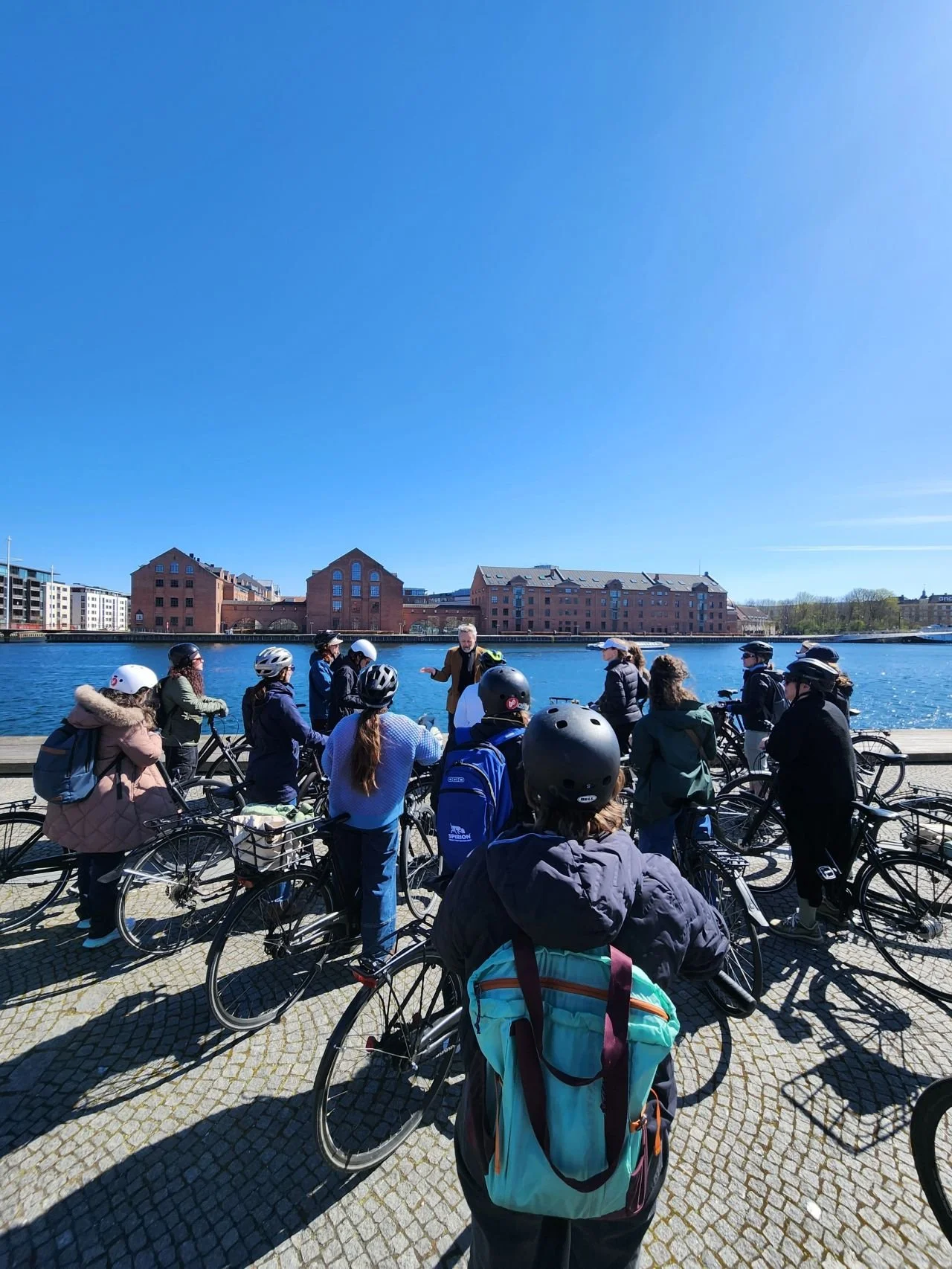
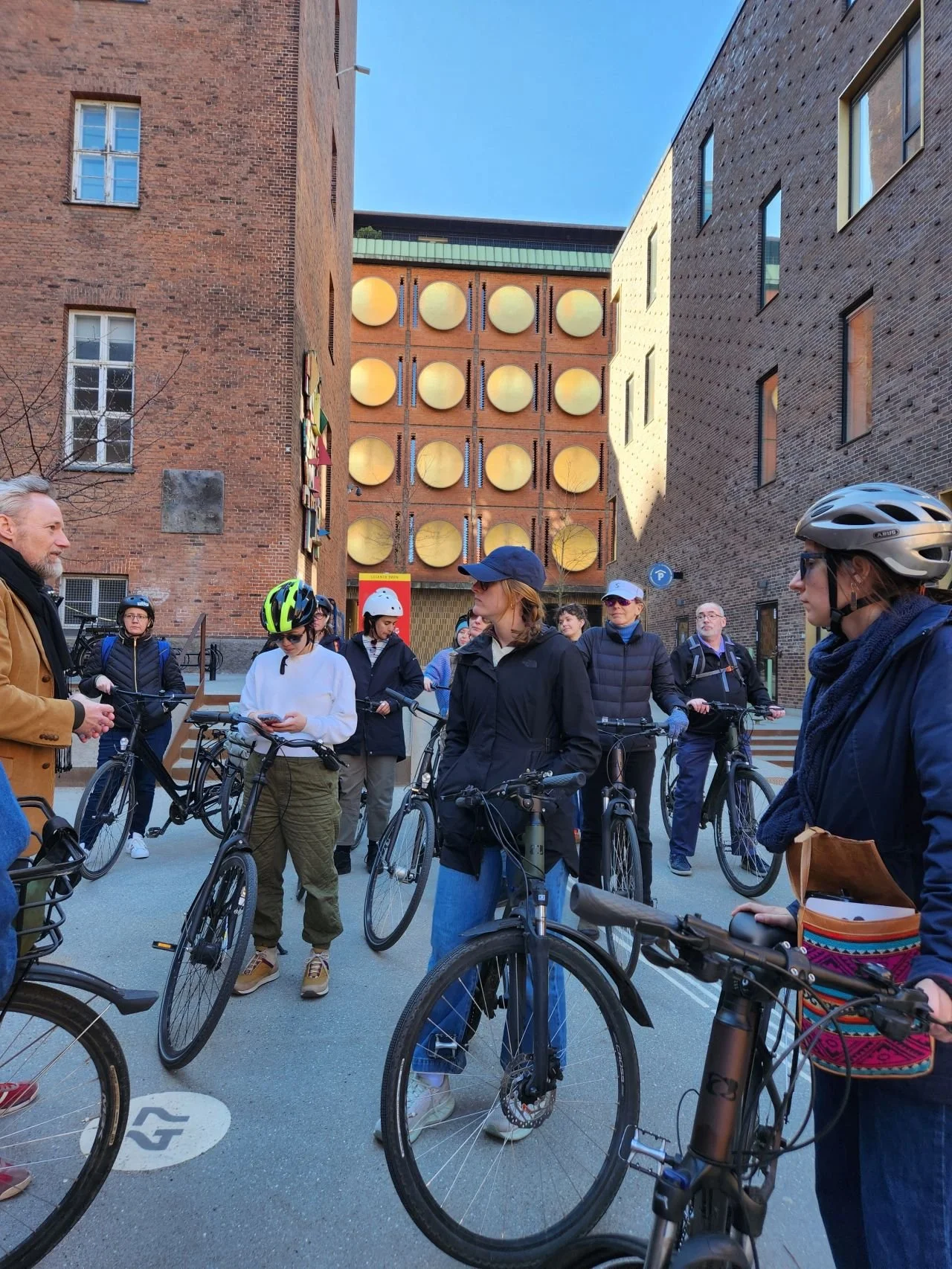
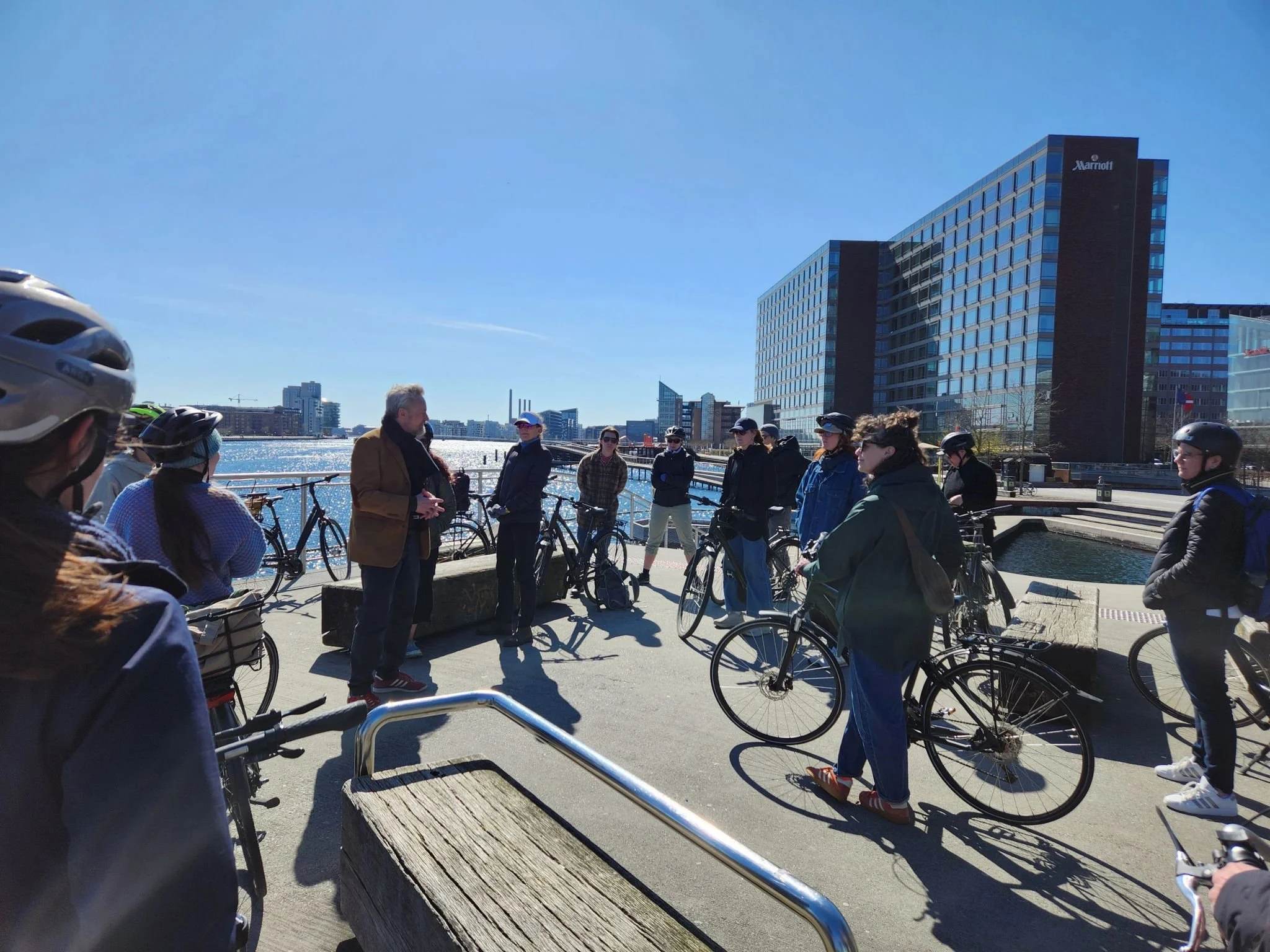
Fueled with inspiration, we hopped on our bikes for an eye-opening and immersive 4 hour tour of the city, exploring green spaces, innovative infrastructure, and sustainable urban planning. Some highlights included:
- The harbor Bath (PLOT / Bjarke Ingels and Julien de Smedt)
- The Wave (Julien de Smedt Architects)
- The City Dune and SEB Bank (SLA landscape architects and Lundgaard and Tranberg)
- The Bicycle Snake (Dissing+Weitling Architects)
- Gemini Residence (MVRDV)
- Havnevigen (Vandkunsten, Arkitema et al., masterplan by MVRDV)
- Carlsberg City Urban Area (Entasis et al.)
- Forskerboligerne (Praksis Architects)
- Enghaven Climate Park (Tredje Natur / Third Nature Architects)
Key urban redevelopments offered compelling case studies in adaptive reuse and modern design. We cycled through the Carlsberg District, the revitalized former headquarters of the world-renowned Carlsberg brewery, now a dynamic neighborhood blending historic architecture with contemporary living, retail, and cultural spaces.
The tour highlighted Copenhagen's exceptional bicycle infrastructure. We traversed iconic pathways like The Snake (Cykelslangen), an elevated, winding cycle bridge offering stunning harbor views and seamless connectivity, and The Wave (Bølgebroen), a visually striking series of interconnected bridges that make navigating the waterways by bike a breeze.
Along the city's waterfront, our guide provided a fascinating history of architectural development, pointing out notable landmarks such as:
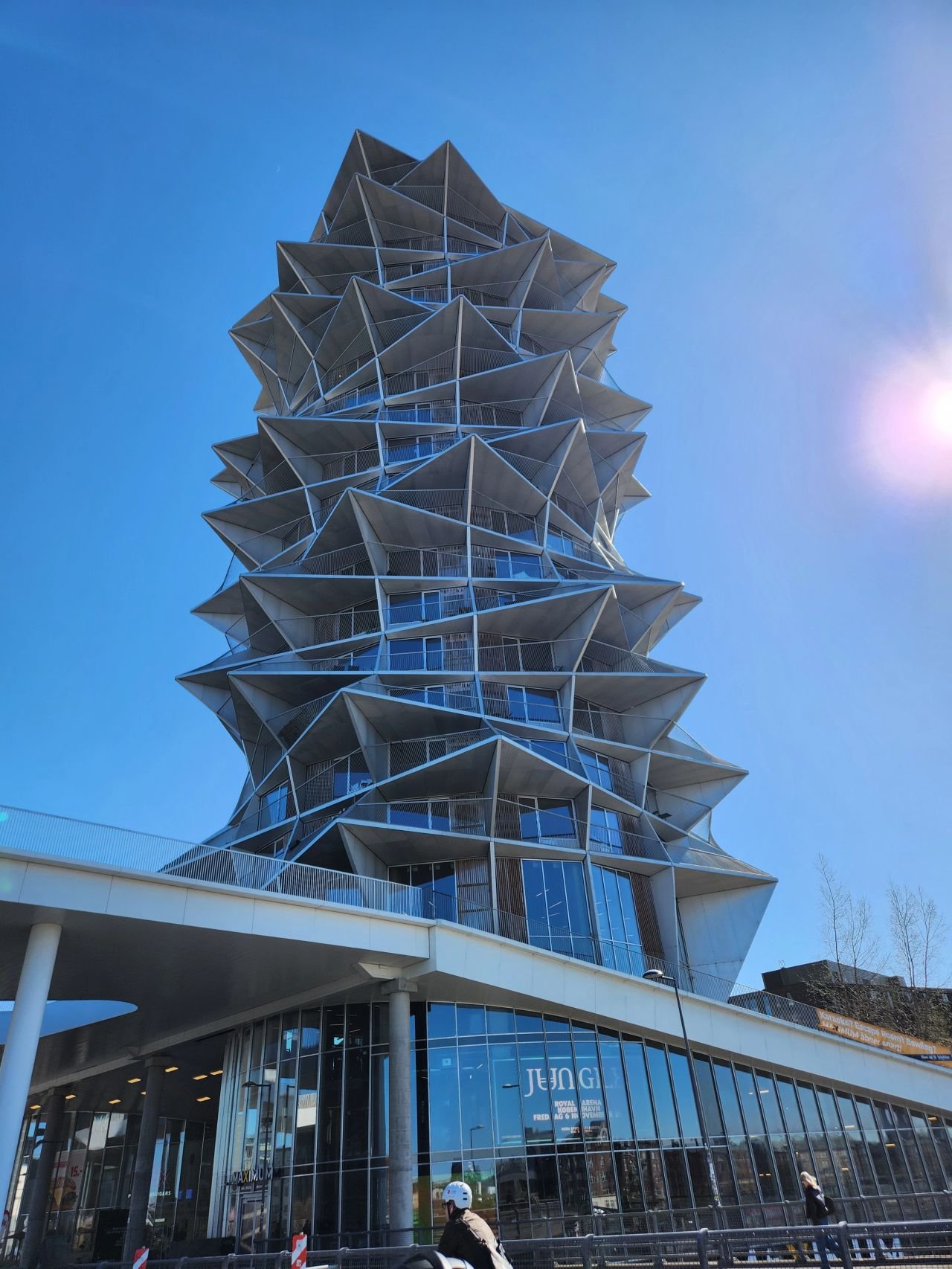
The striking Kaktus Towers, with their distinctive plant-covered facades.
BLOXHUB, Denmark's hub for sustainable urban development and architecture, showcasing innovative solutions for future cities.
The iconic Royal Library (Den Sorte Diamant - The Black Diamond), an architectural gem on the harbor front.
The popular Havnebadet Islands Brygge, public swimming pools integrated into the harbor, demonstrating the city's commitment to accessible recreation.
The distinctive Gemini Residence, two former seed silos transformed into modern apartments with unique cylindrical forms.
Day 3 - Copenhagen: Deep Dive into Sustainable Urbanization at BLOXHUB
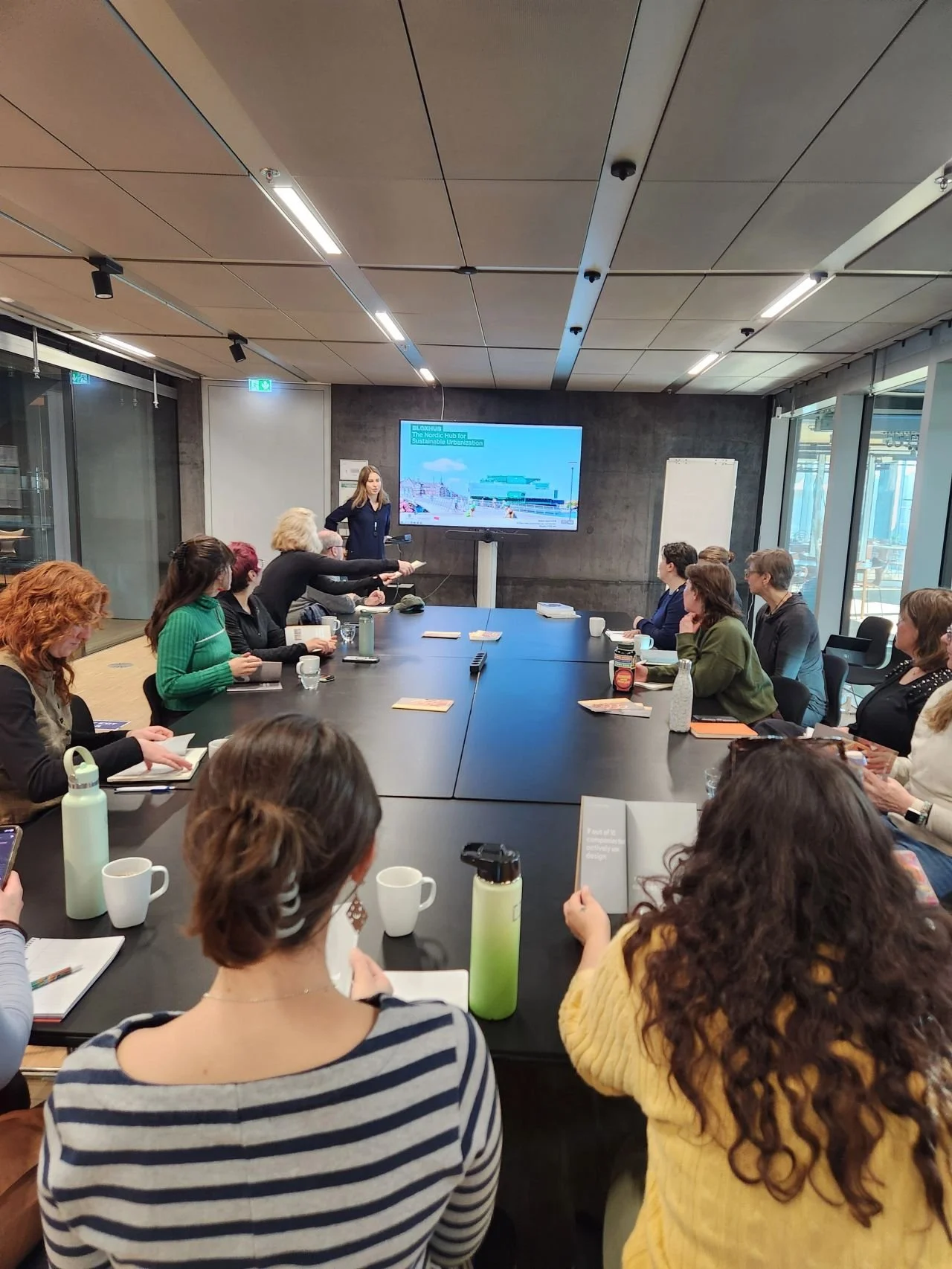
The third day of our sustainability delegation to Copenhagen was all about urban sustainability! Today, we started with a visit to BLOXHUB, where we received expert presentations:
1) Nina Junget Madsen w/ BLOXHUB
2) Kristin Holme w/ Creative Denmark
3) Mathieu Carlier w/ Everimpact
4) Christian Wittrup w/ a:gain [again]
Huge thank you to Martine Reinhold Kildeby, Nina Junget Madsen, and Christoffer Worm Nielsen for being great partners working with us for three years now to welcome us and arrange presentations.
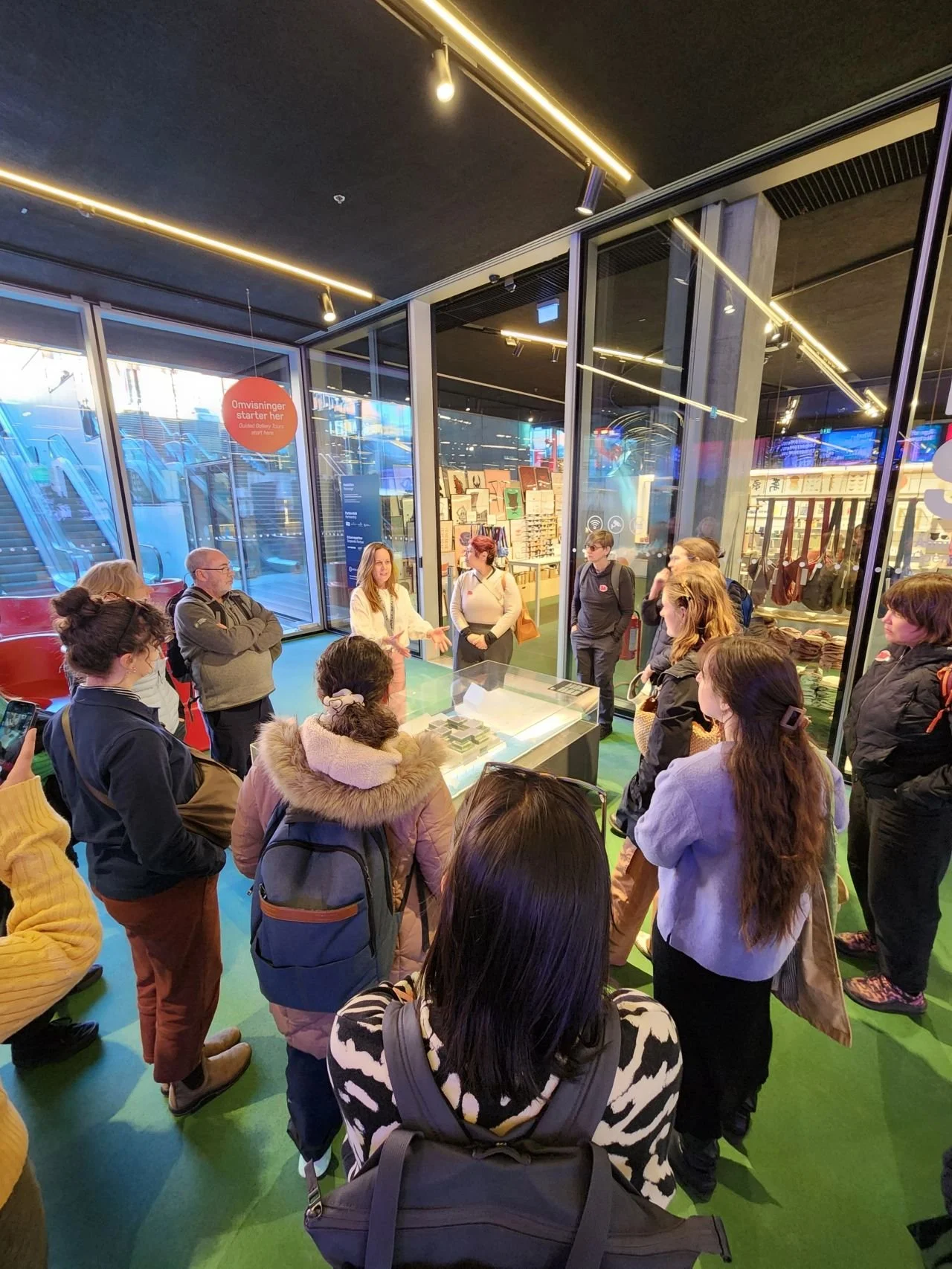
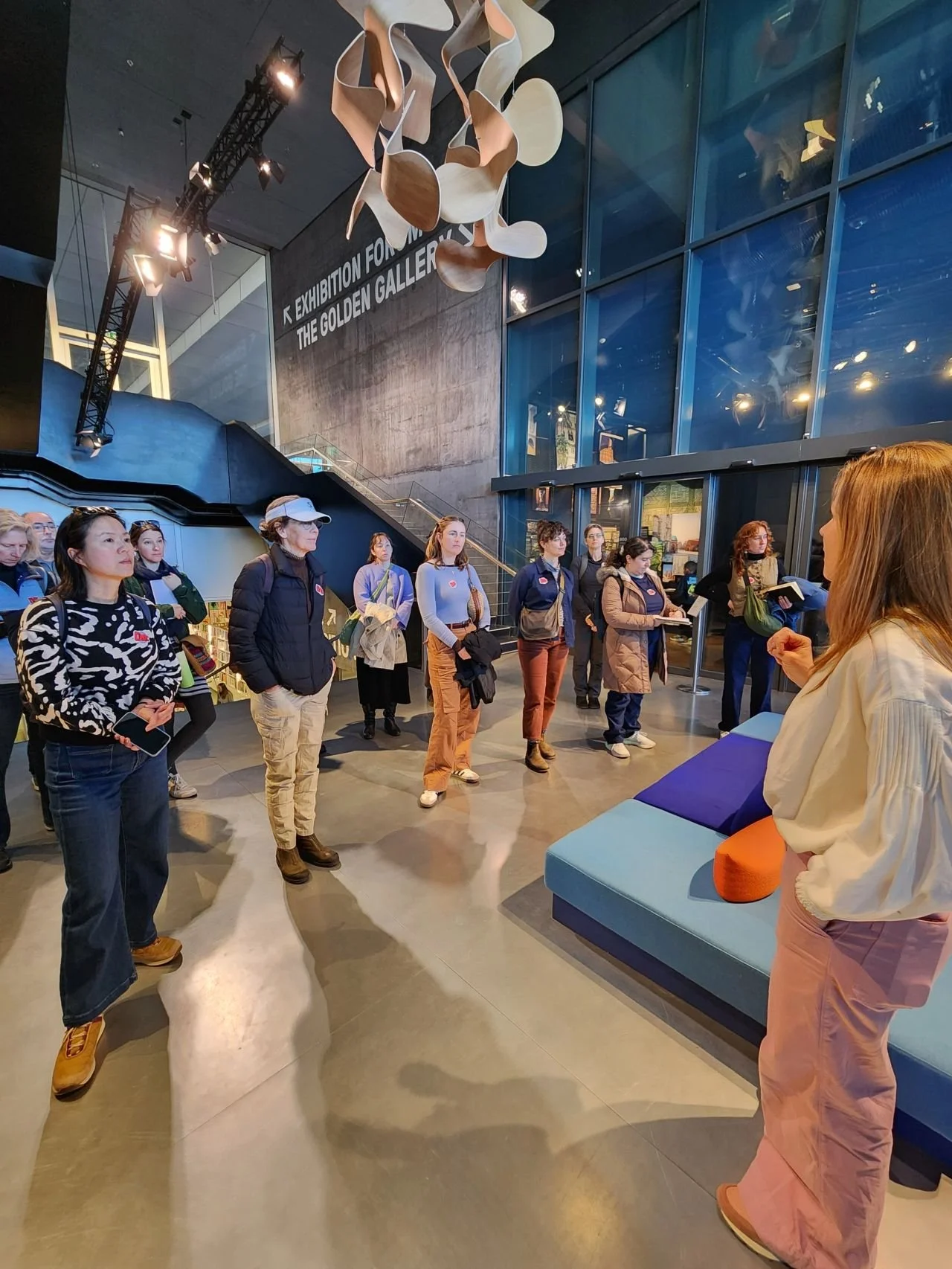
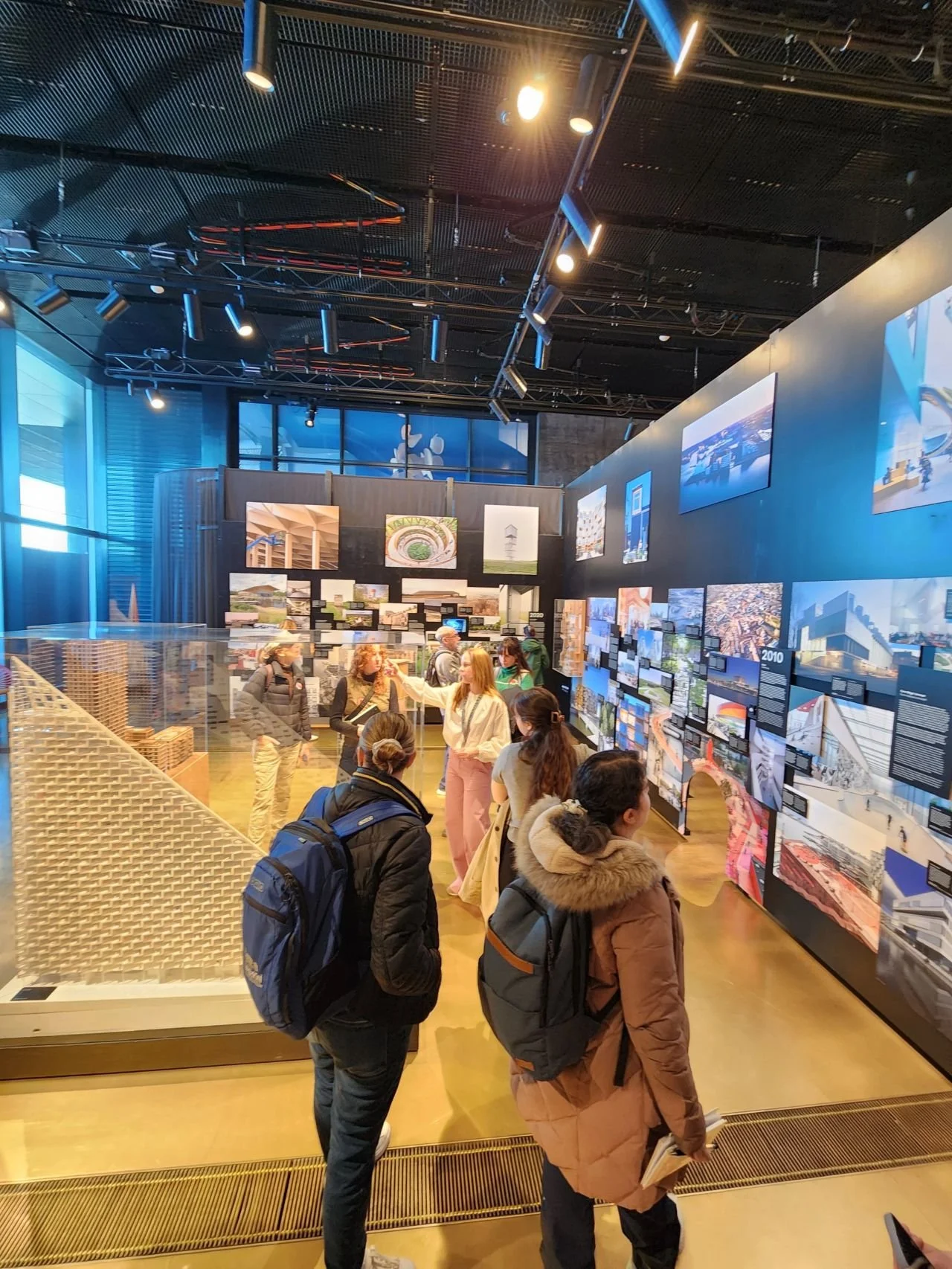
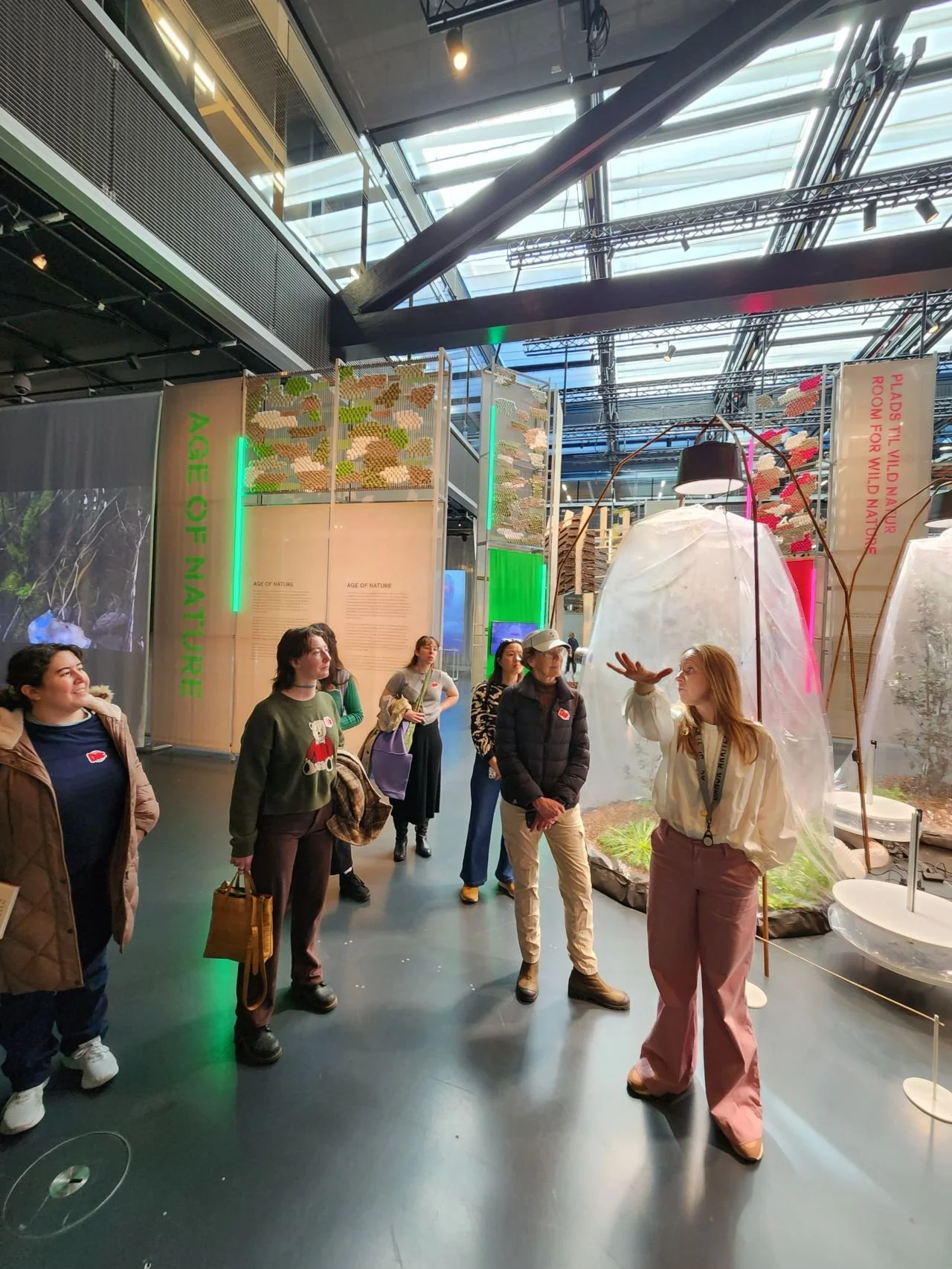
After lunch, we visited the current exhibition at the Danish Architecture Center.
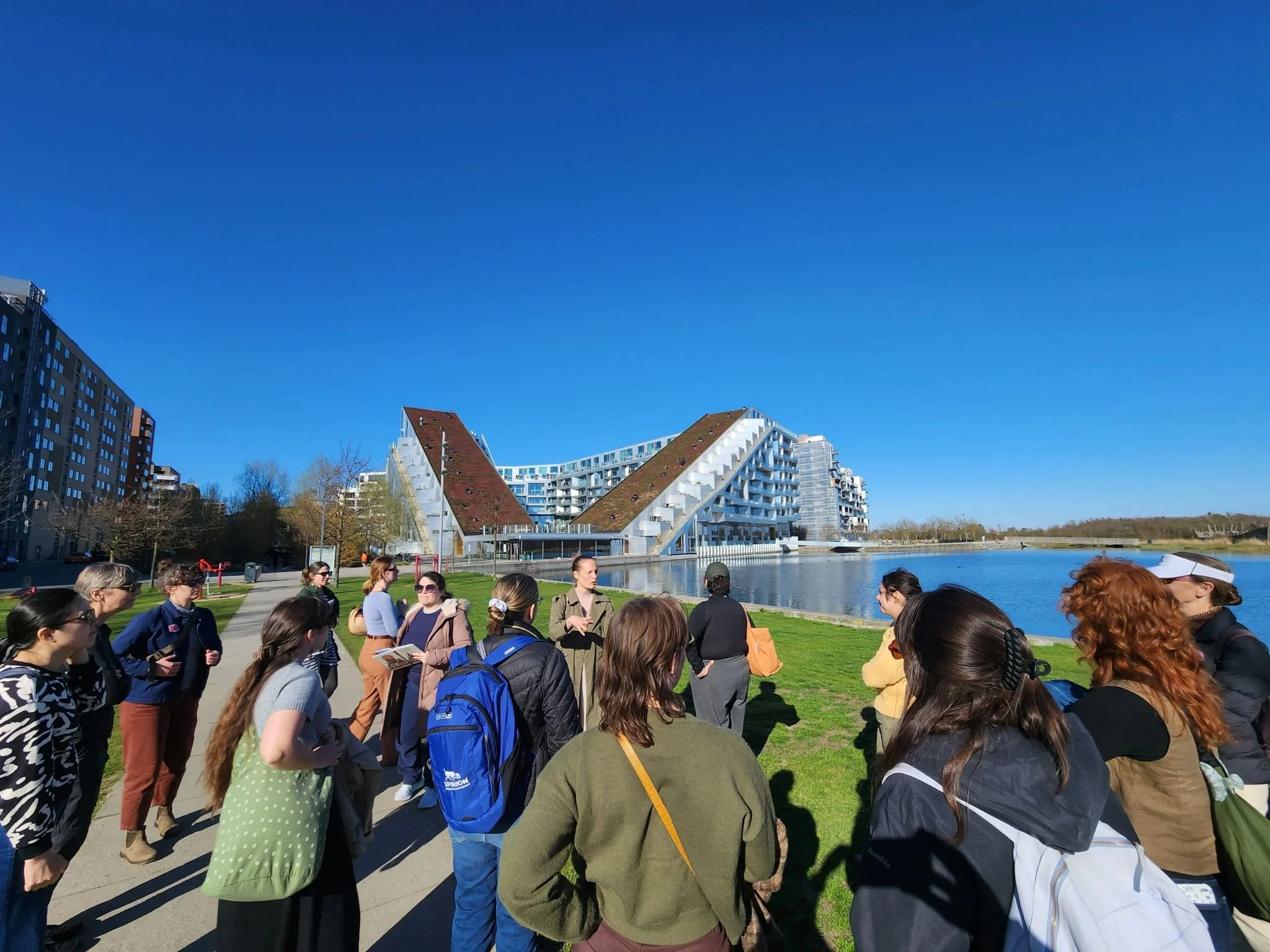
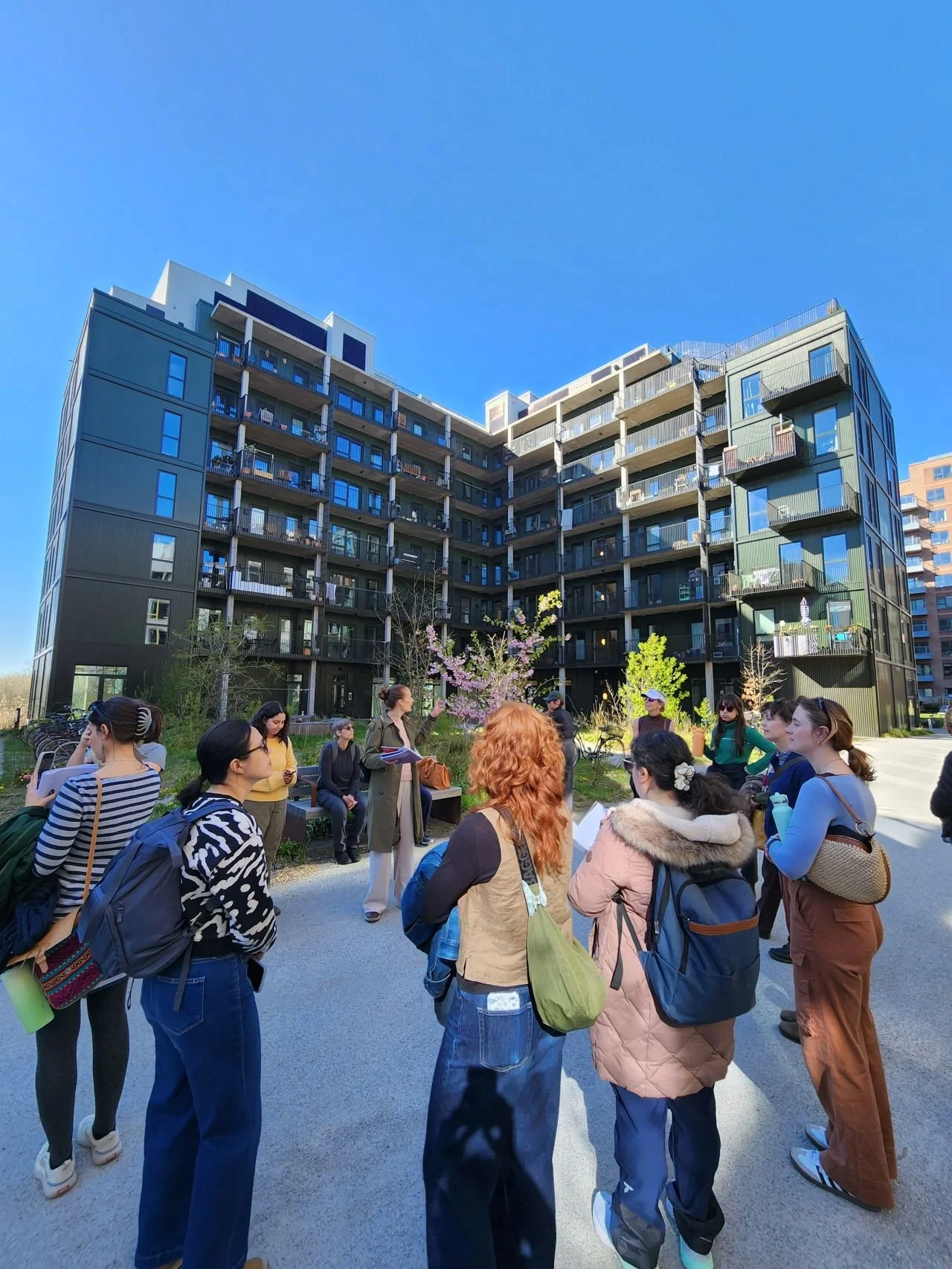
Next up was a walking tour of Orestad district led by the amazing Mira M. Cordsen.
Some highlights:
- Resource Rows and Upcycled Studios: examples of circularity in the built environment
- 8 House: the famous Bjarke Ingels landmark apartment building
- UN17 Village with the ambitious goal of incorporating all 17 of the UN sustainability development goals into an apartment complex
Our co-founder, Christopher Moken, personally thinks UN17 falls short in many ways, but at least this kind of vision exists in Denmark. So many places in the US are still building in an outdated mindset. He's only aware of a few places like Culdesac in Tempe, Arizona, building anything like this in the US. Do you know of any others? Let us know.
Later, we ventured into the unique self-governing community of Christiania,, experiencing the vibrant spirit of this alternative neighborhood. A lot has changed over the last few years. On a past delegation, the local community had literally ripped up the infamous "pusher street" and the stones were in piles. Some real tension could be felt. Things felt much calmer now.
We finished the evening off with a lovely communal dinner at Hotel Kanalhuset where we mixed and mingled with locals from across the city.
Day 4 - Copenhagen: Exploring Innovative Projects and Sustainable Infrastructure
The 4th day of our sustainability professional delegation to Copenhagen is probably one of the most loved because we get to see some of the coolest built environment projects the city has to offer.
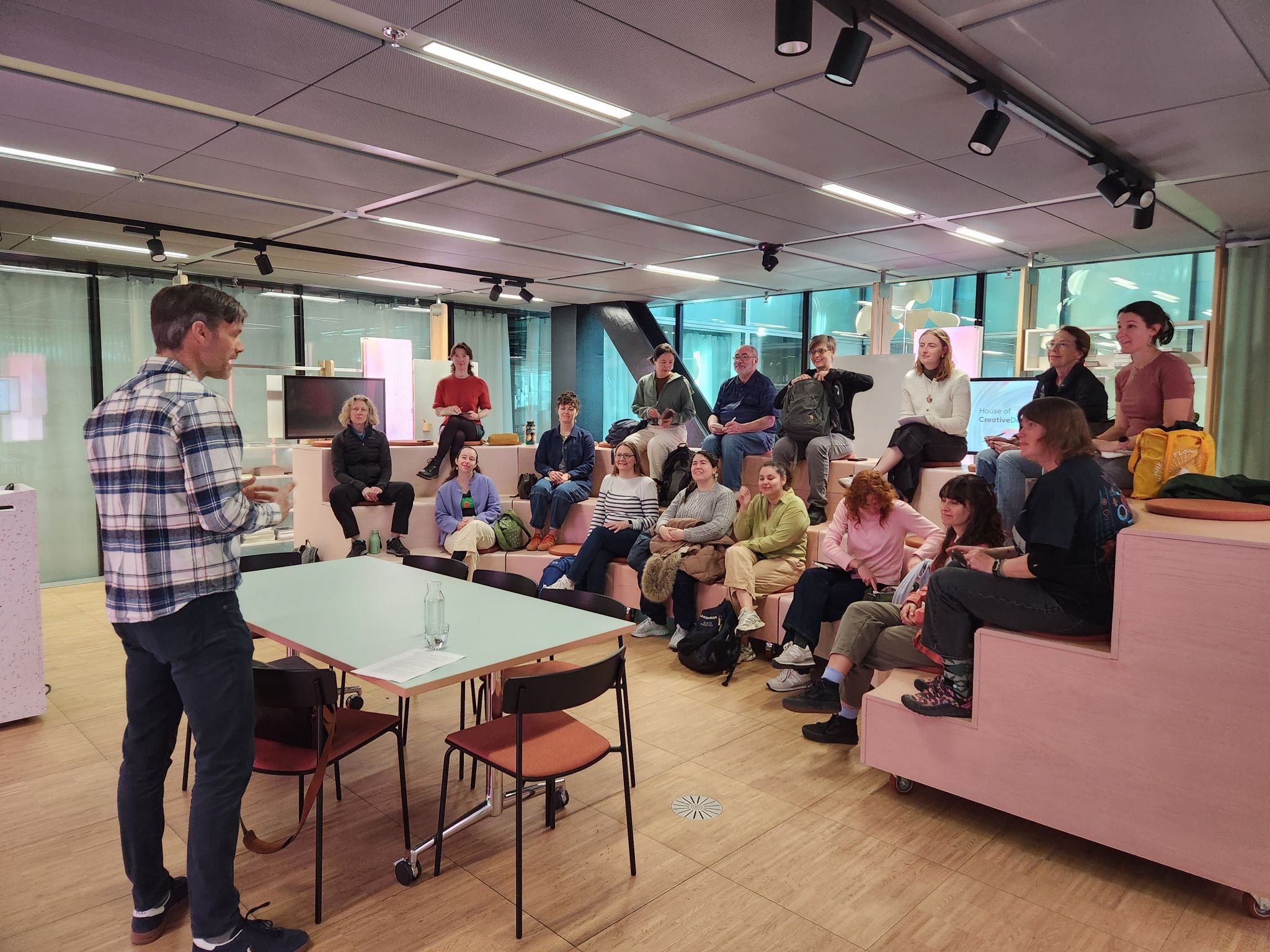
We began the day with a presentation from Troels Grene, the CEO of Flow Loop. We learned about the origin of their circular shower system, the challenges to growing into a market dominated by a few companies, and the mechanics and technology that makes circular shower systems possible. We found it of interest that they abandoned the idea of using sensors to measure when to engage the recycle function and instead empower the user to make this decision through an interface.
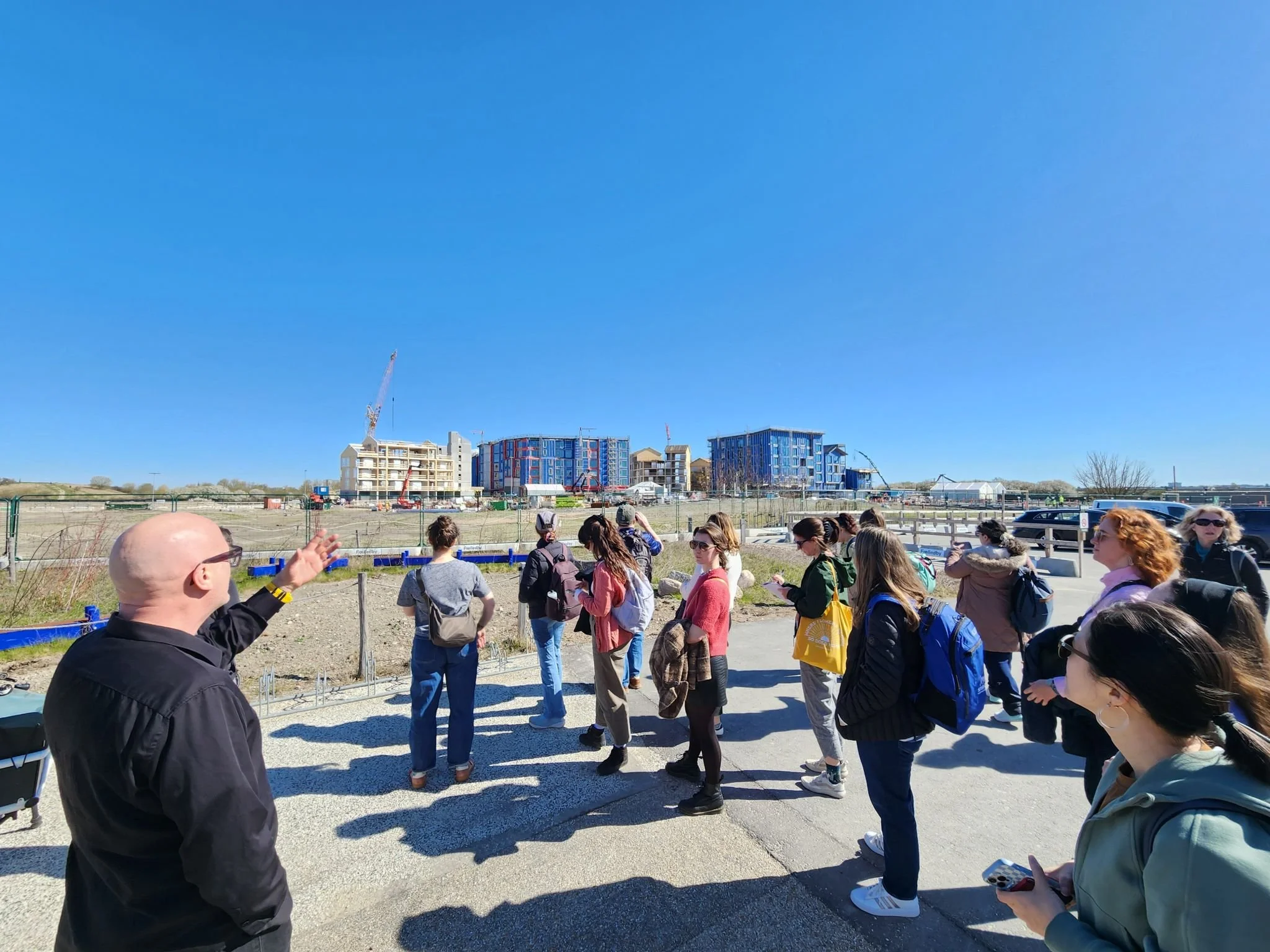
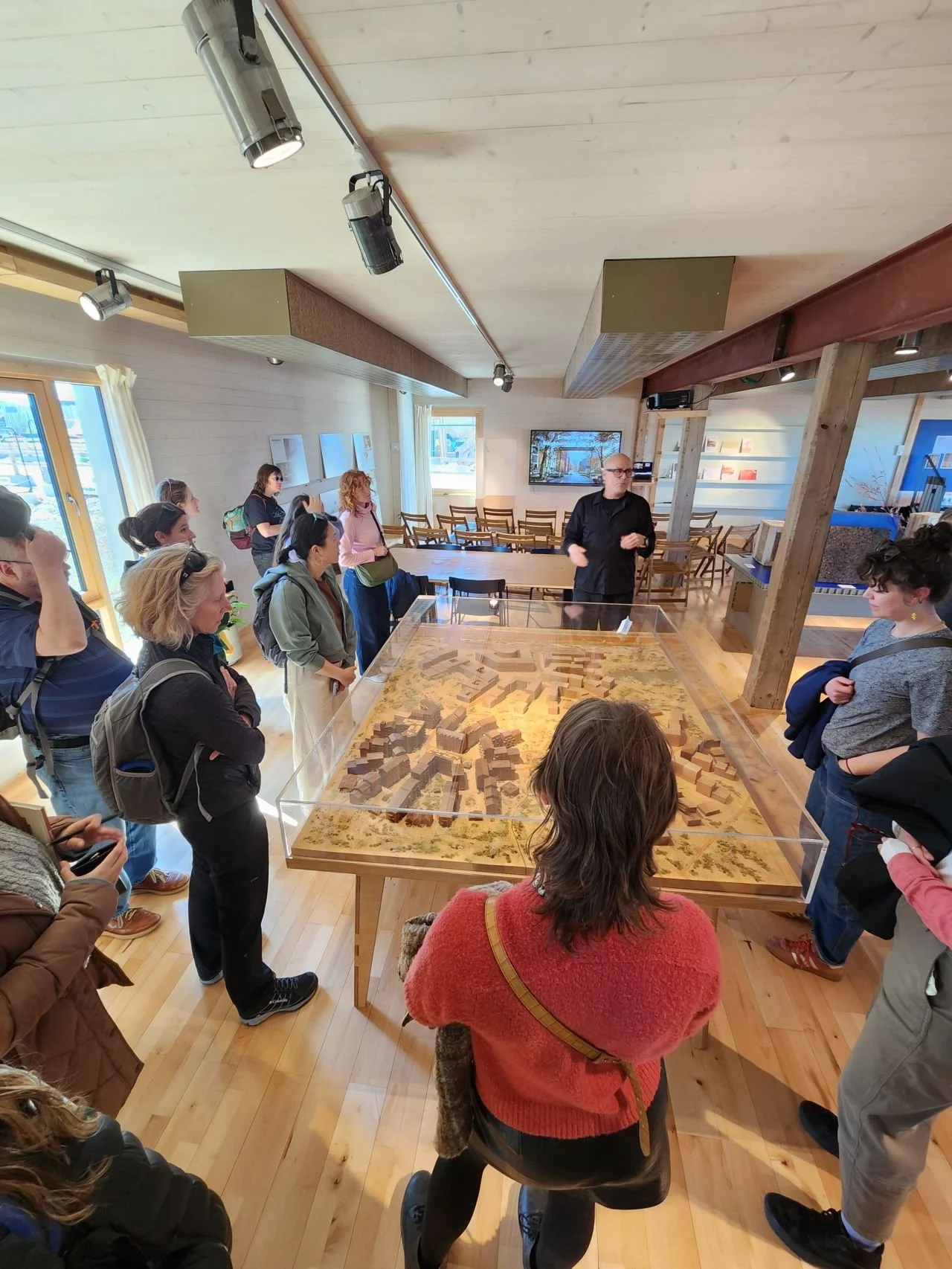
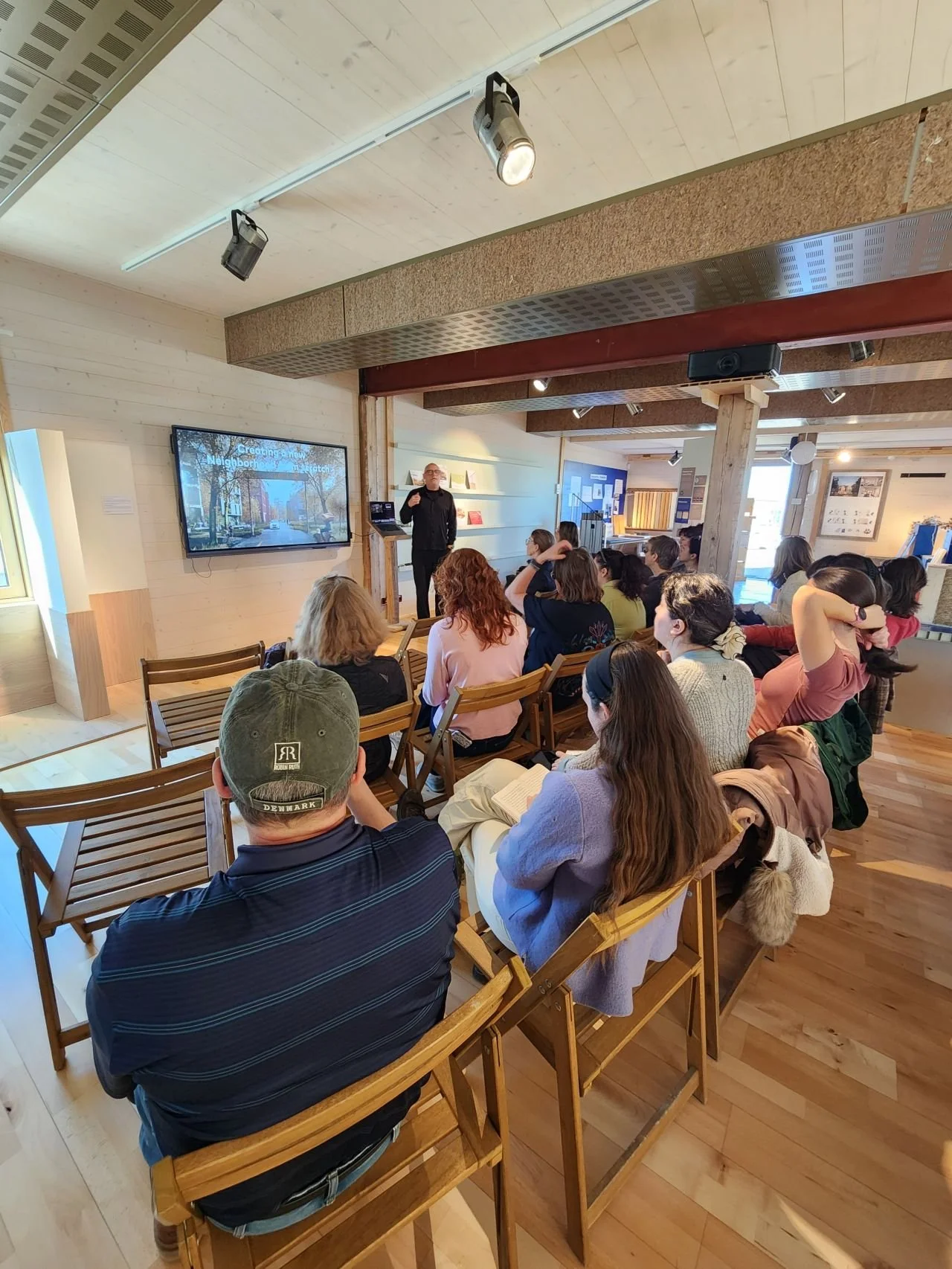
Next, Michael Tillegreen Dagø gave us a guided tour and presentation of Fælledby. This ambitious development project is pushing the boundaries on how we build neighborhoods that not only have a low impact, but place nature at the center. It’s billed at the first timber neighborhood (80% timber) in the country, but it’s more than that. It’s an experiment with a new topology, one that is co-developed with biologist to preserve 40% of the project site for nature.
Once complete, it will house 5,000+ residents as well as a school, a daycare center, an elderly home, and retail shops.
We've visited this project 3 years in a row, and in Christopher Moken's words: "I feel like witness to a mad dream coming true that reminds me of the movie Fitzcarraldo."
There’s a lot at stake with this project. The Danish pension fund is a major investor. If it works as planned, it could lay the groundwork for other pension funds to invest in more sustainability focused neighborhoods.
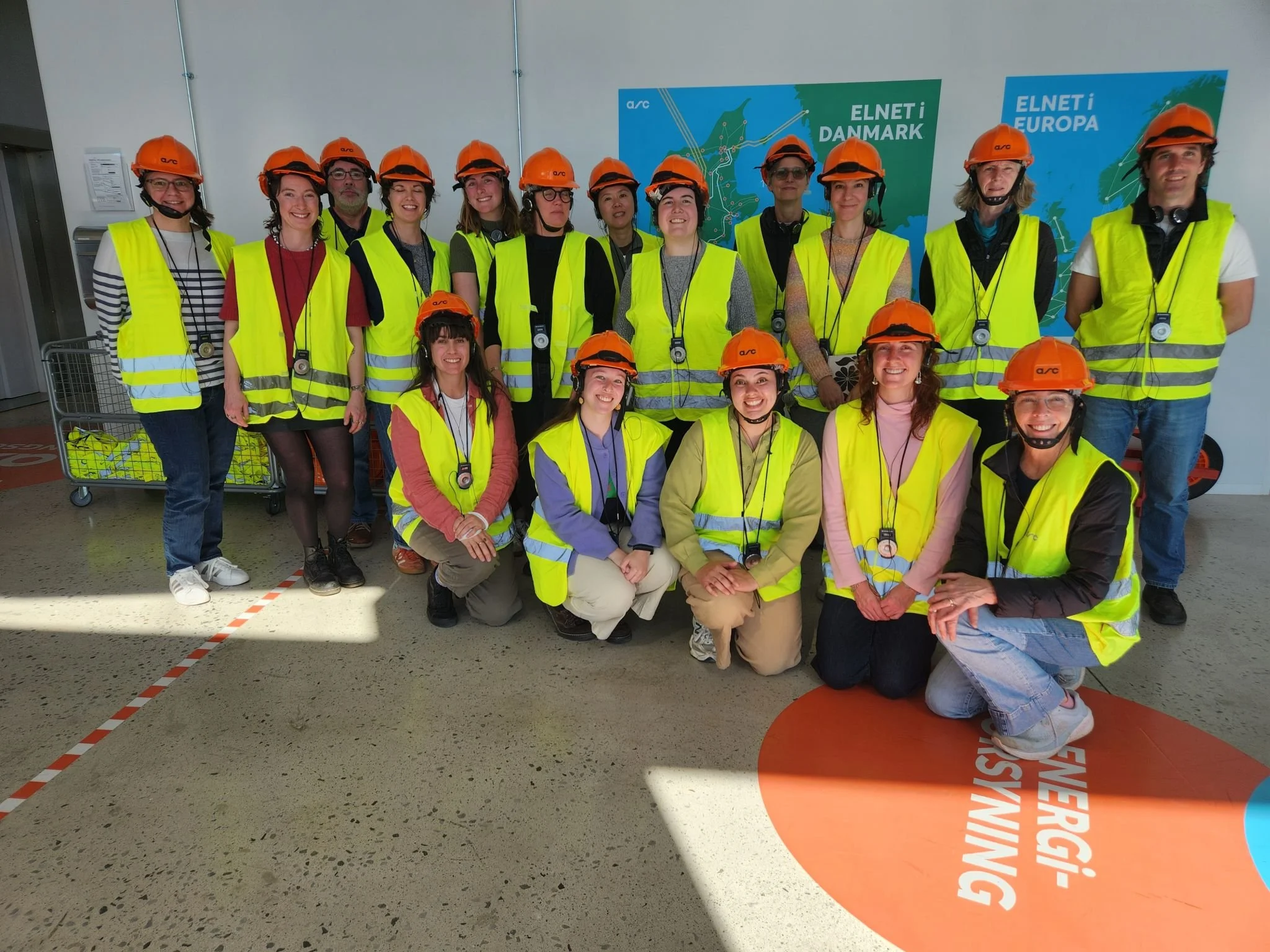
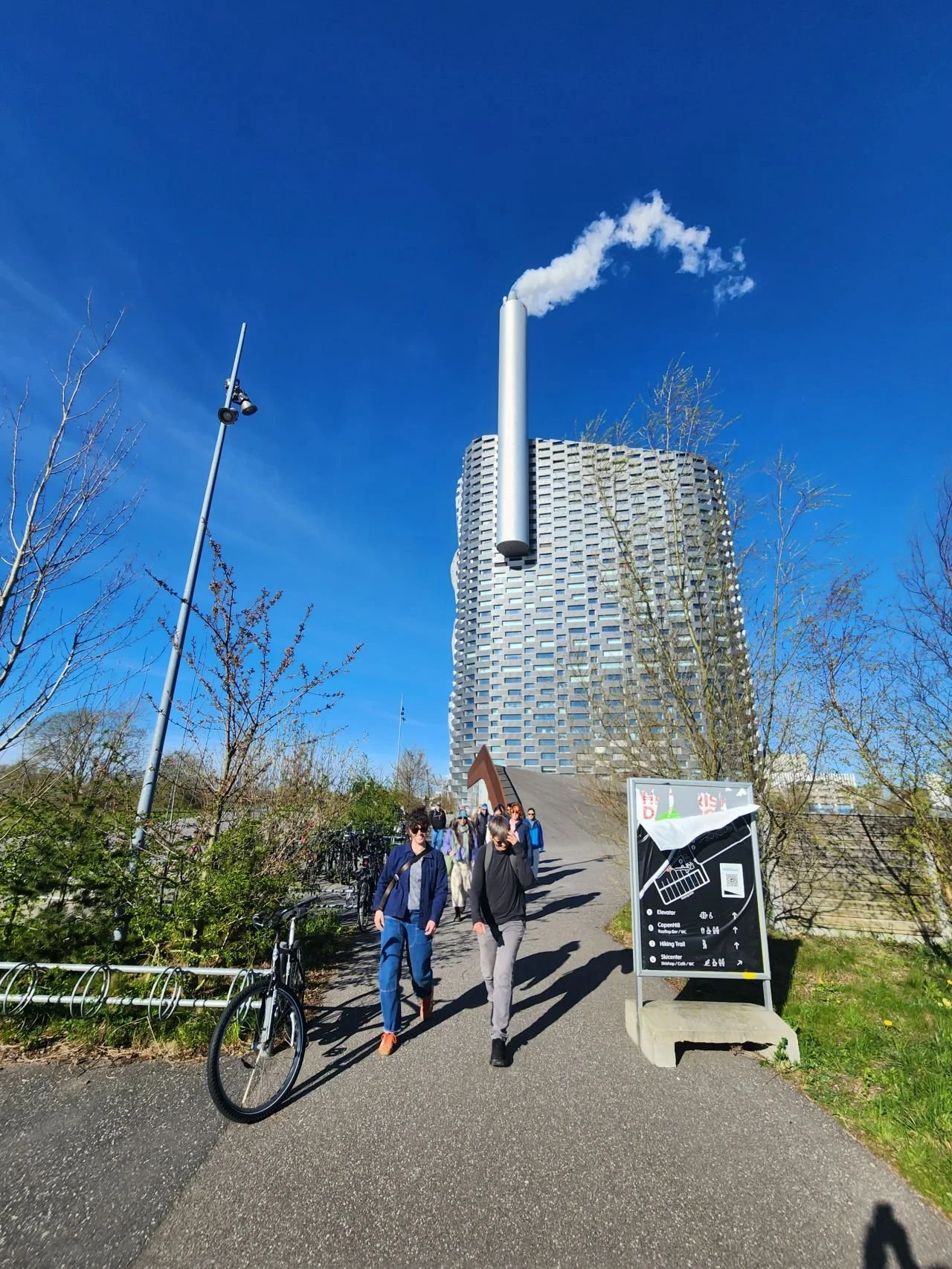
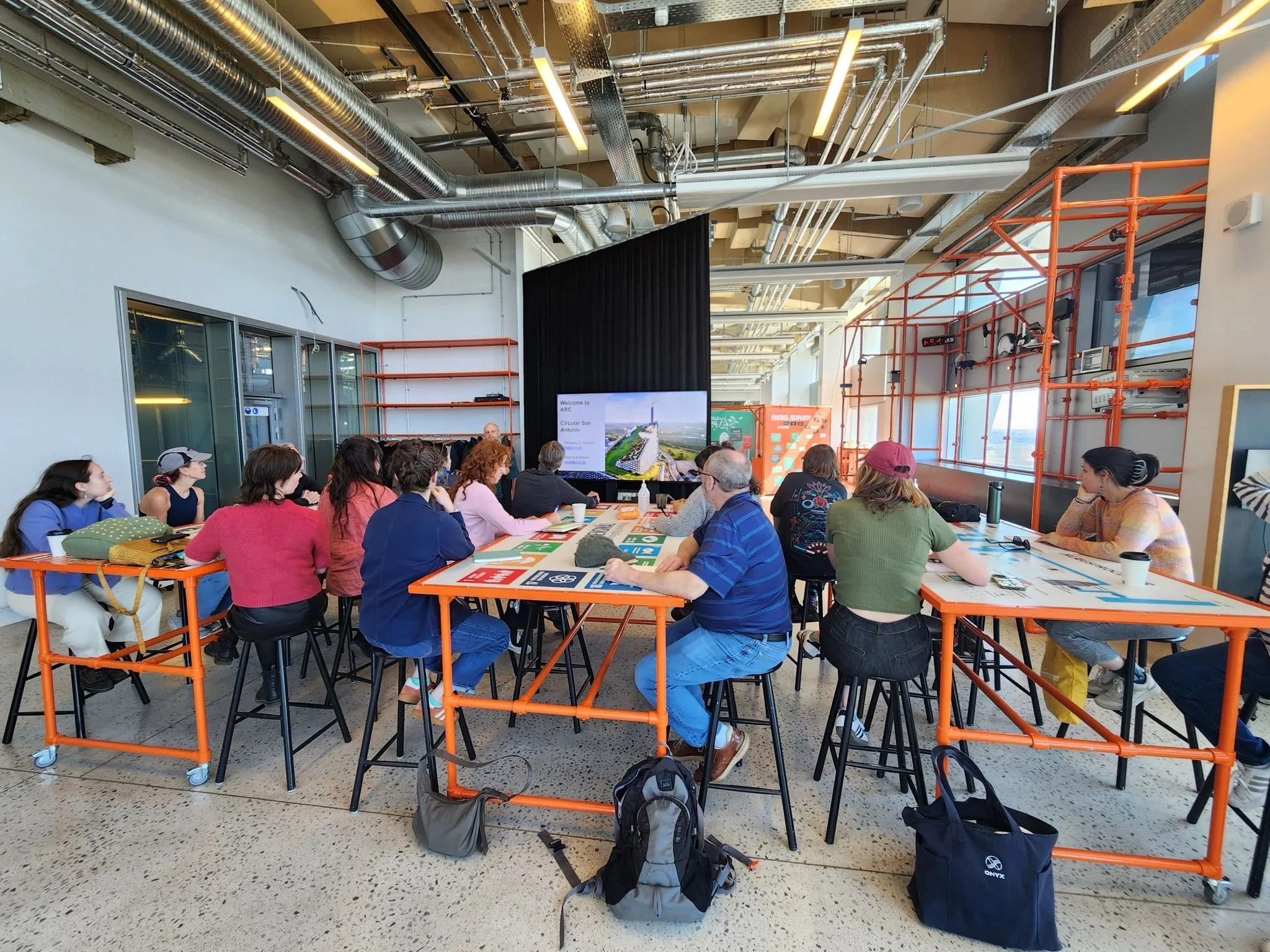
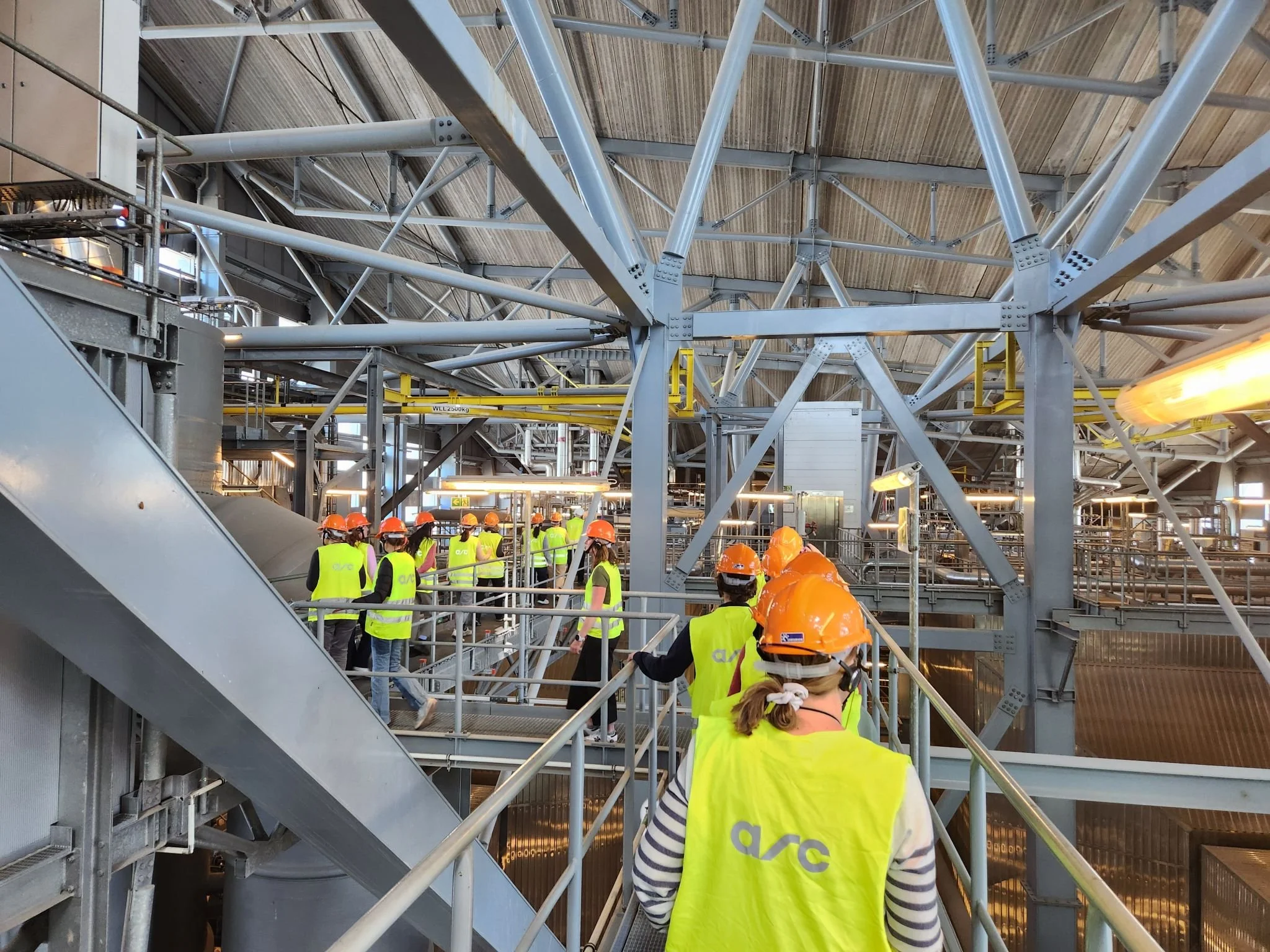
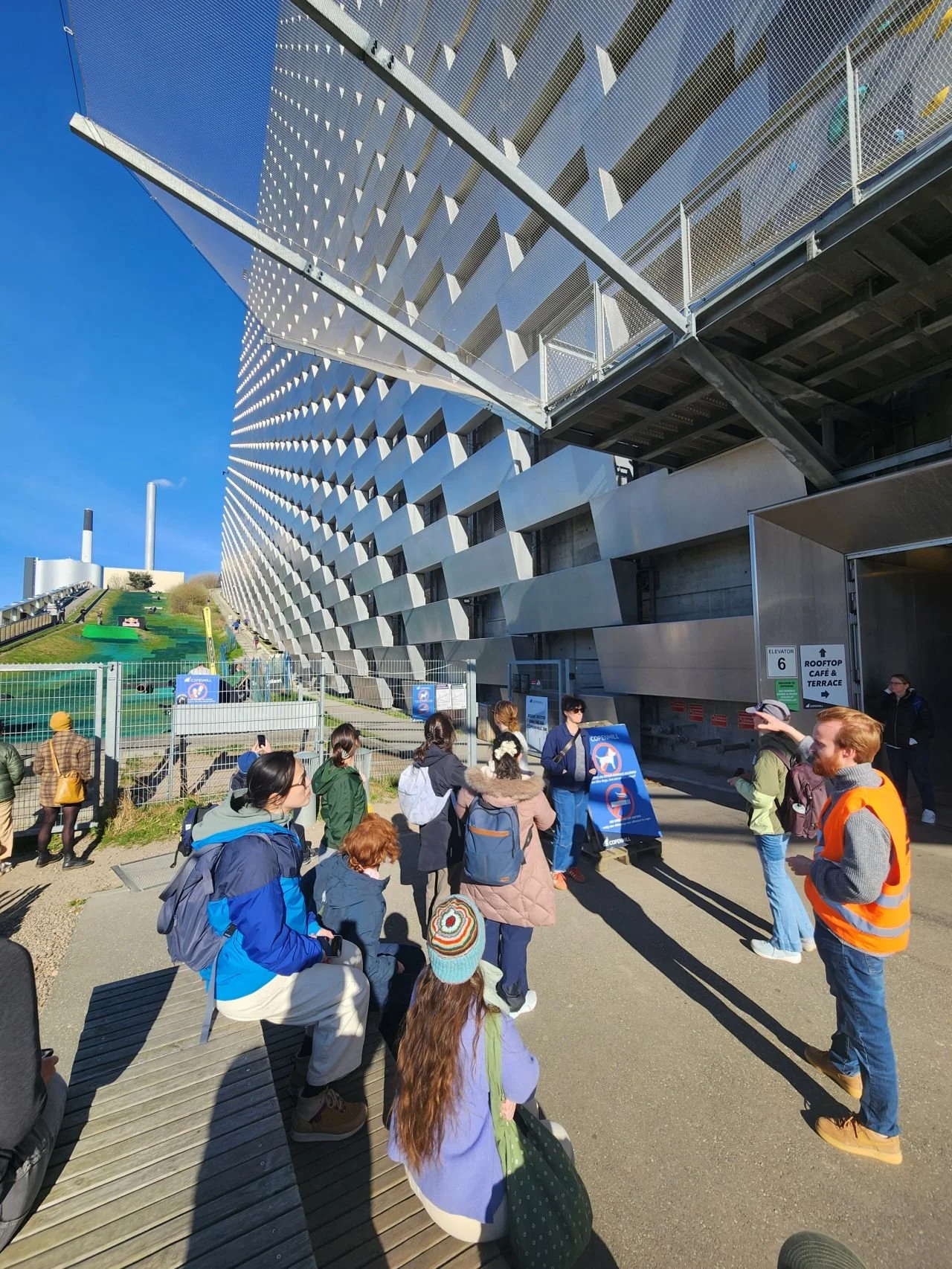
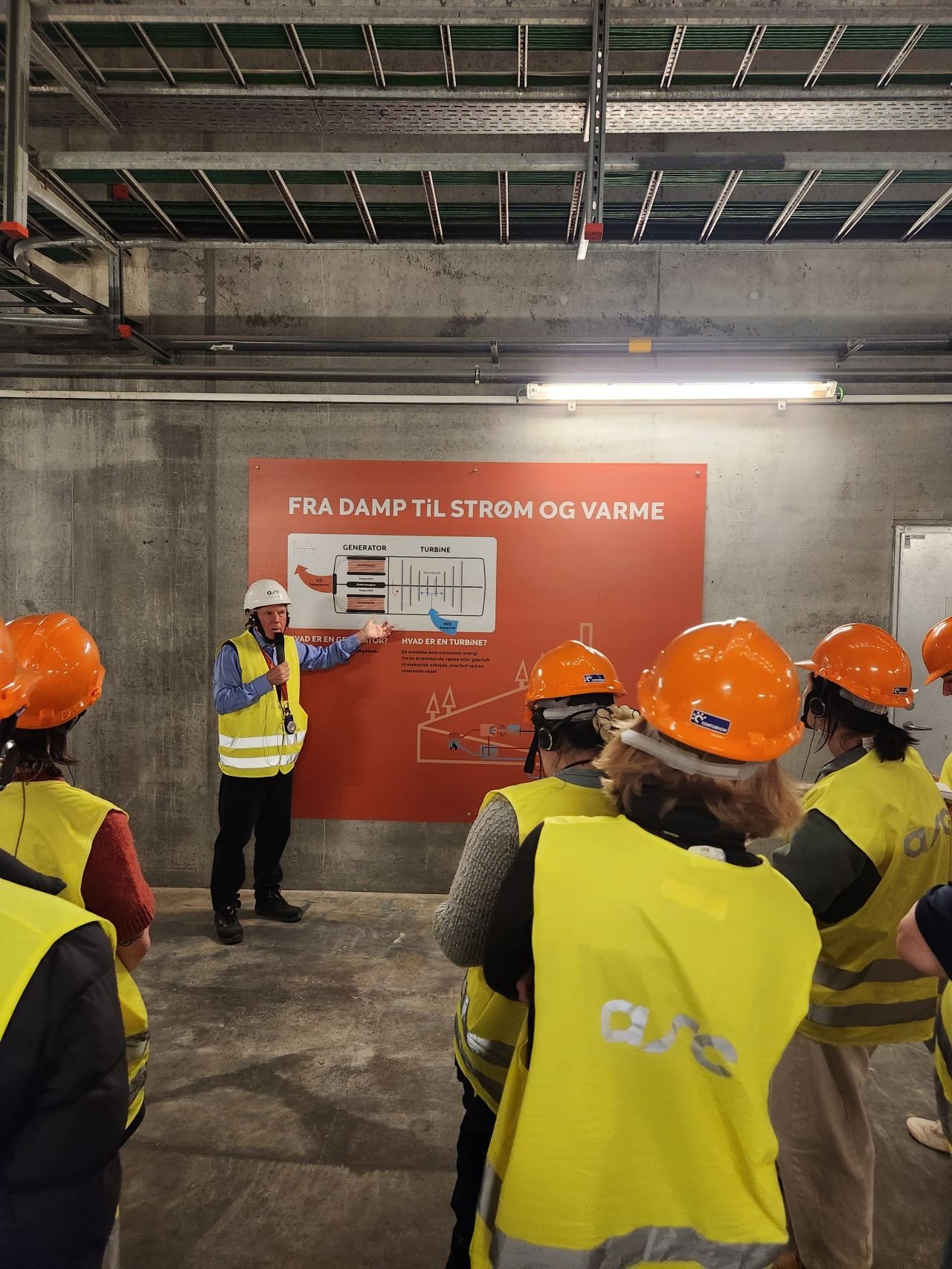
Next up, we toured the The Amager Bakke Foundation waste-2-energy facility. It’s always a treat when you get to tour an active industrial site. Seeing the giant claw moving materials and the massive furnaces up close really makes you appreciate what humans are capable of engineering.
It might not be the most circular solution, but it’s part of the current system, and it’s worth learning from and understanding.
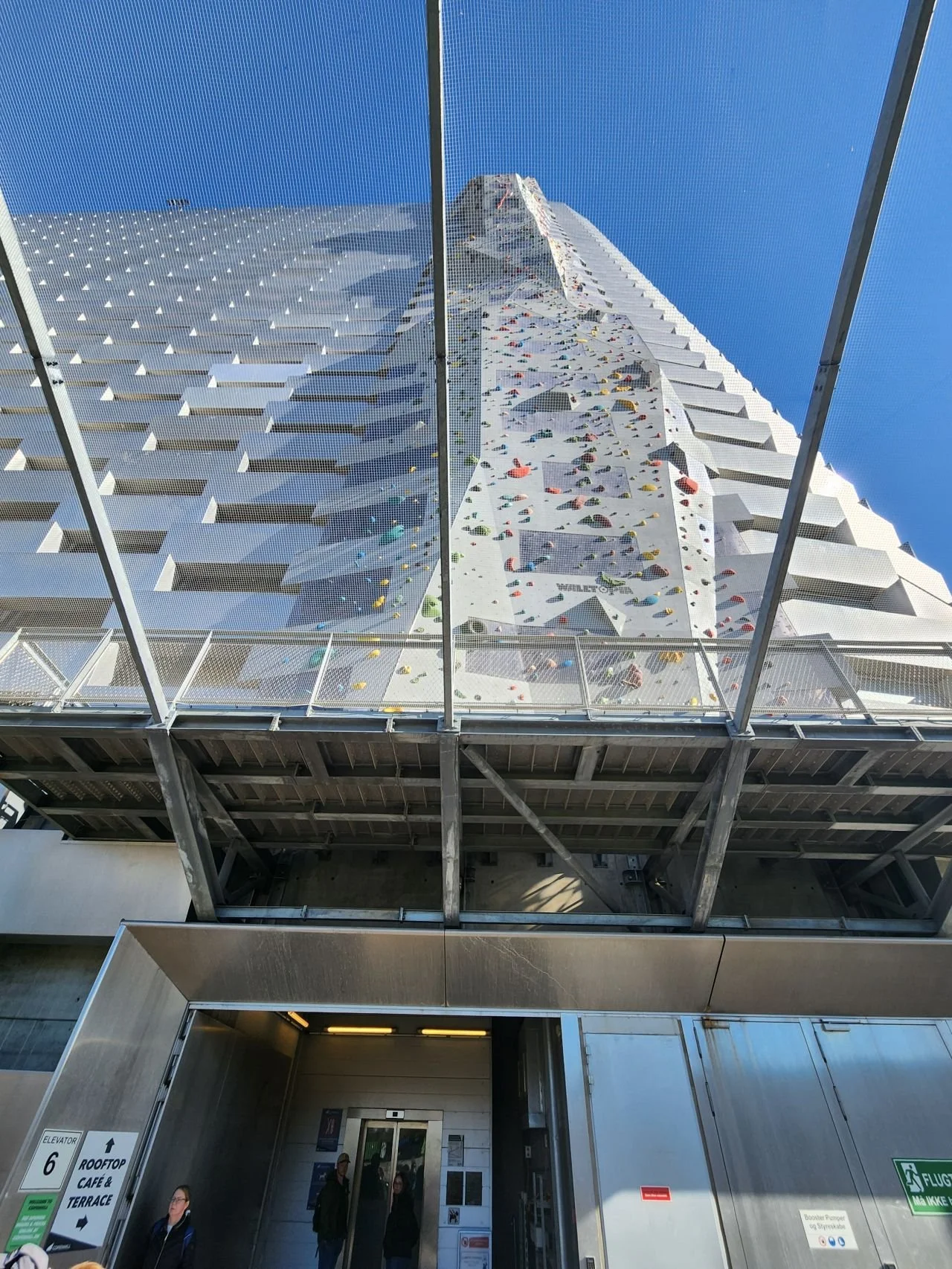
Our favorite part of this building is that it also doubles as a recreational facility. It’s a masterclass in how you can develop a facility that normally faces massive NIMBYism into something that attracts visitors and becomes an active part of the community.
You can ski down it, rock climb up it, and run up/down it. There’s also a rooftop cafe with a stellar view of the city. This should make ever urban planner and city ask themselves how we can better design structures that can serve multiple purposes and audiences. So much space is wasted because of a lack of imagination and design.
For dinner, we visited the nearby Reffen street food market. Billed as the largest in northern Europe, it’s a high energy place to find an assortment of food and see live music.
On the way back to the hotel, we made use of the harbor bus. A relaxing way to get a different view of this diverse city.
Day 5 - Copenhagen: Circular Economy in Action and Architectural Innovation
Day 5 of our sustainability delegation to Copenhagen was slay. At least that's what I was told after being informed I'm an unc. If you have to google that, you're not alone.
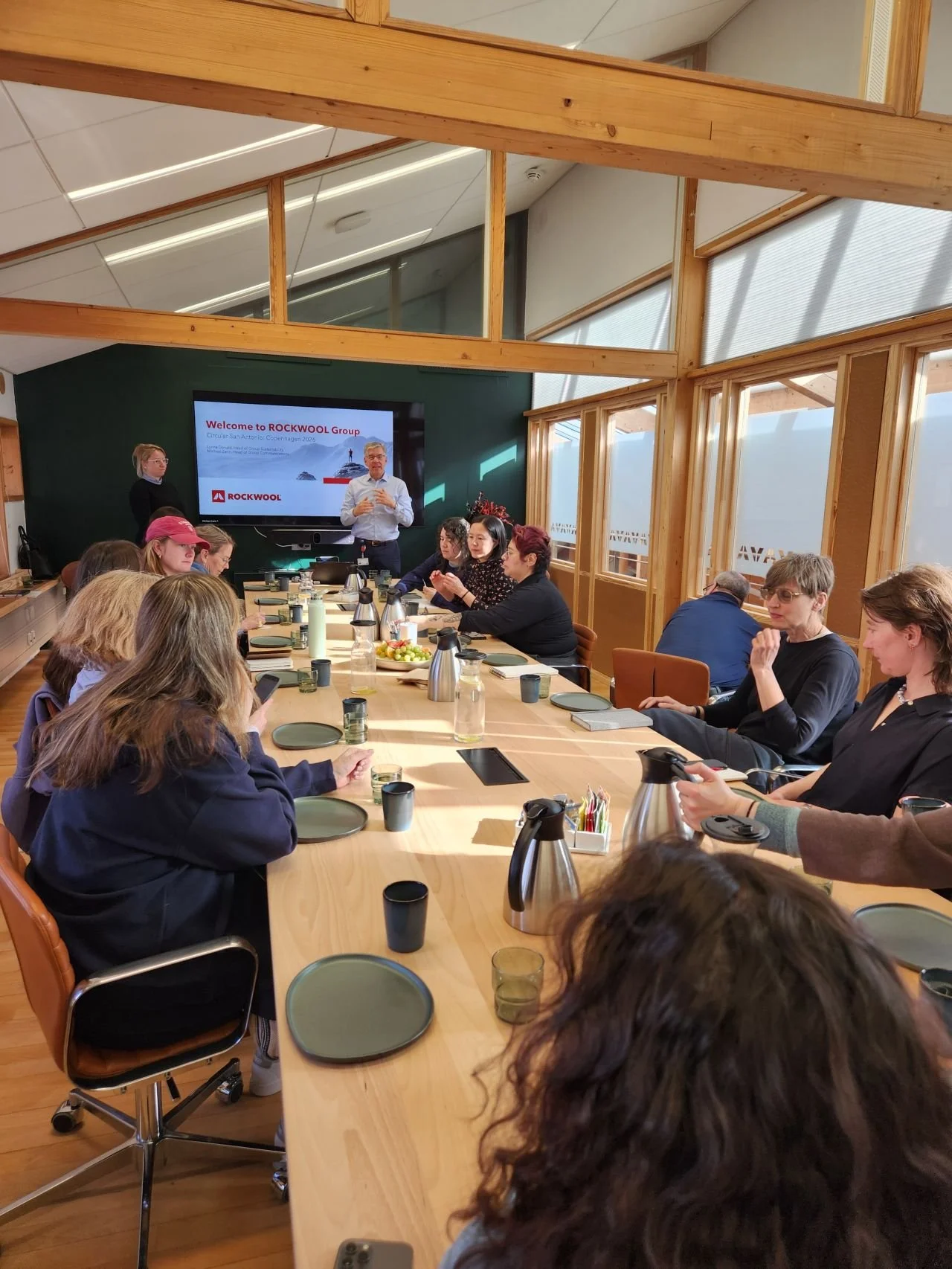
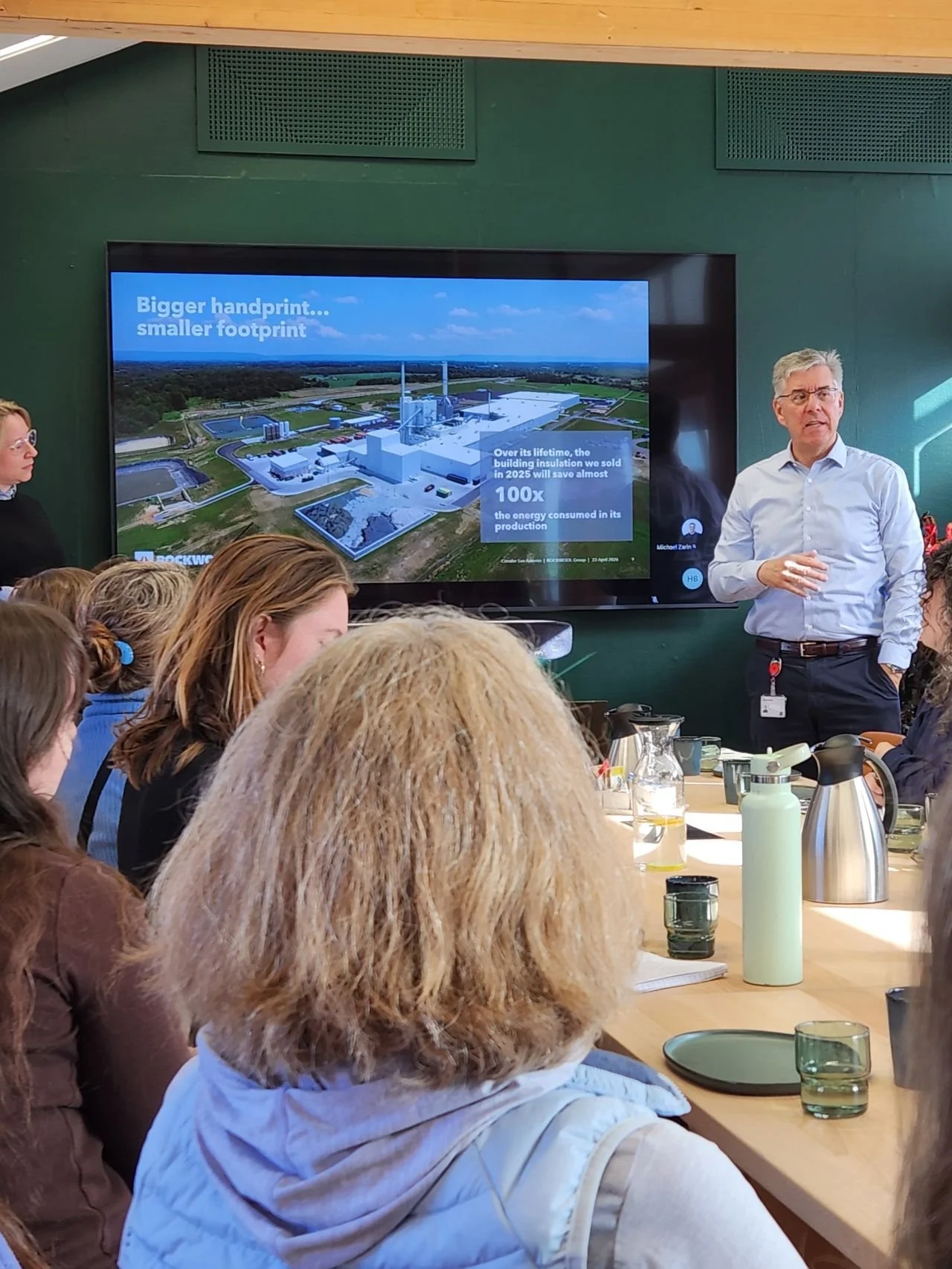
We began the day with a presentation from ROCKWOOL Group in the nearby suburb of Hedehusene. Our focus was learning about their sustainability initiatives. They were very honest about the GHG footprint of their products, but were equally honest about their work to reduce their footprint even as their business continues to grow.
Some highlights:
- They operate take-back recycling programs in 25 countries
- In 2025, they recycled 30+ tons into new products replacing virgin content by 15%
- Finding renewable power sources is a key priority when deciding where to locate a new facility
Next up, we visited the HQ of Tscherning. This is always one of my personal favorites. The amount of passion that went into building this HQ is just amazing.
In collaboration with the architectural firm 3XN/GXN, the project transformed a 1,300 m² structure into a 1,700 m² modern headquarters, utilizing 100% recycled load-bearing structures and 89% reused or recycled materials. The renovation achieved a total CO₂ saving of 58% (equivalent to 318.6 tonnes) compared to a new build.
They also used the Japanese technique Yakisugi on the wooden exterior of their entrance. Yakisugi involves charring the wood to create a protective layer. This process transforms the outer wood into a naturally tough material that resists fire, water, insects, and rot without using any chemicals or paints.
Another thing we like about the company is their pride in their workers. Around the office you see photos of staff in worksites. You can really feel that this is a family business with a lot of pride.
They are also very generous and provided us with a lunch of open face sandwiches. Thank you for your warm hospitality.
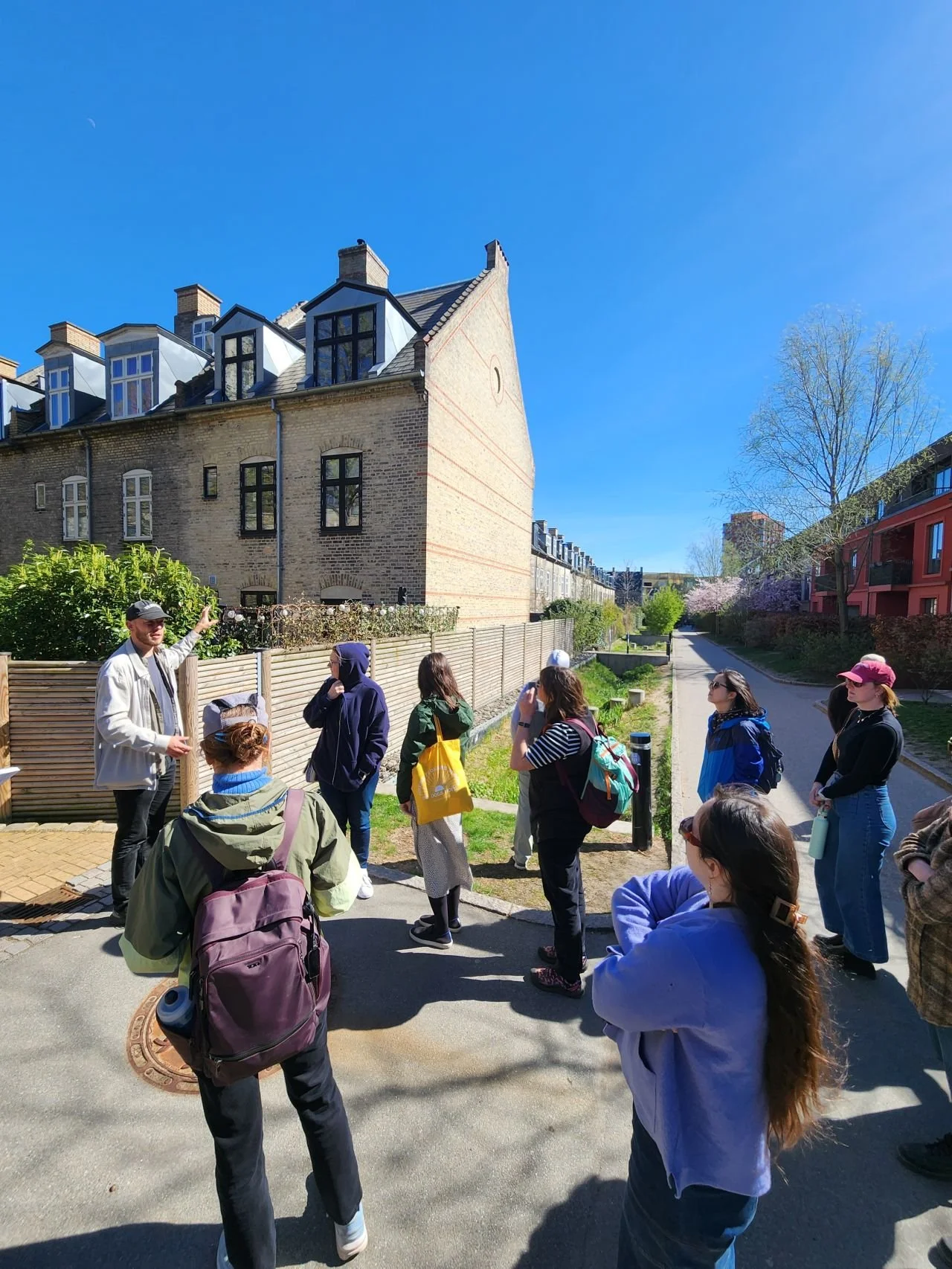
After lunch, we met up again with Asger Arnbjørn for a guided walking tour of Carlsberg City District where the former industrial brewery buildings are now given new life, and are mixed with modern construction and climate protection. The flood prevention infrastructure using green spaces and innovative playgrounds doubling as temporary water reservoir during heavy rain was a great example of multi-use low impact spaces all cities should be implementing to maximize lands usage in dense areas while adapting to climate change.
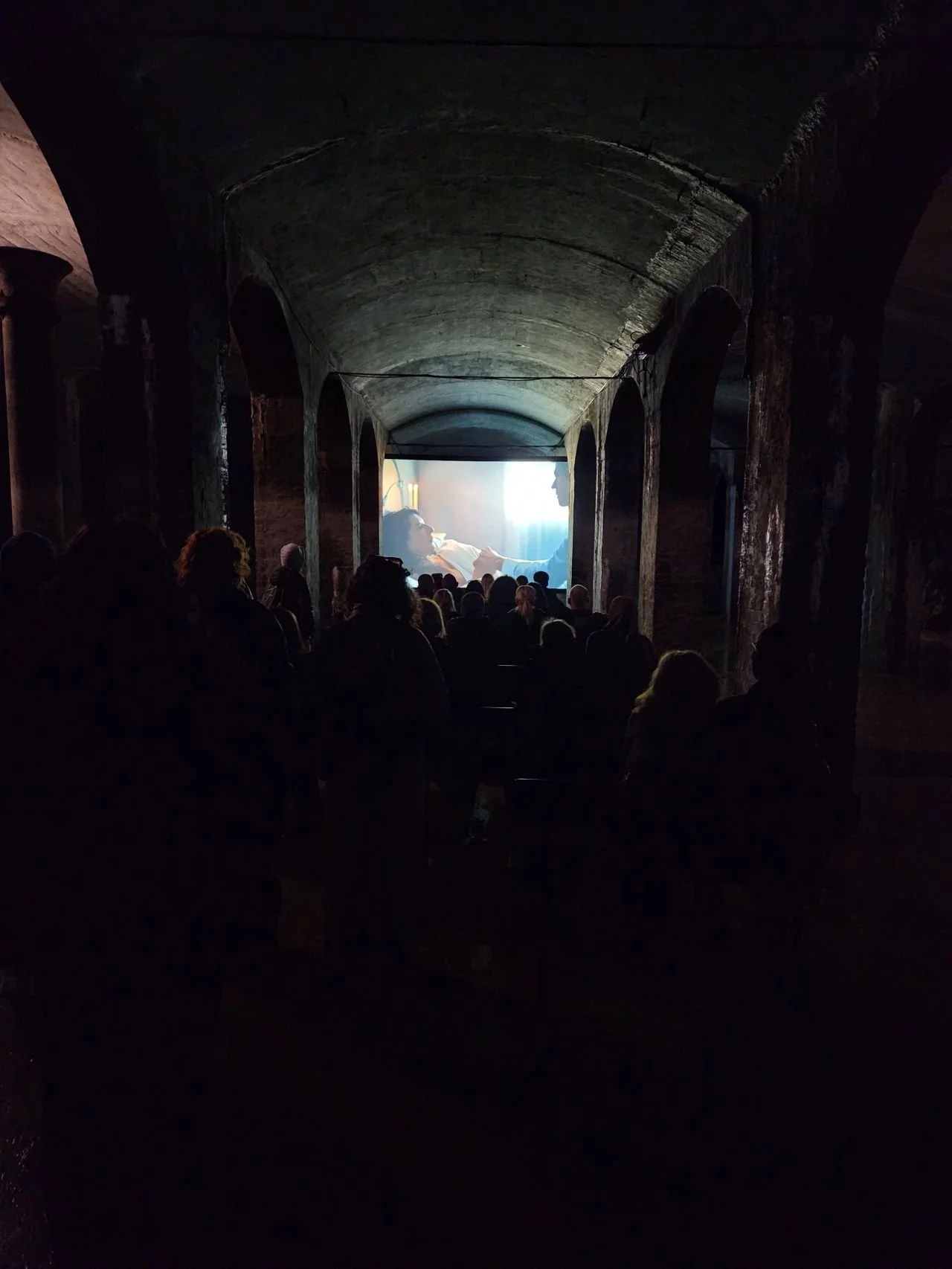
We finished the day off by exploring the captivating Cisternerne museum. This underground water reservoir has been transformed into a vibrant contemporary art space.
Fitting a little bit of local culture into an otherwise demanding week is always appreciated by our delegation members.
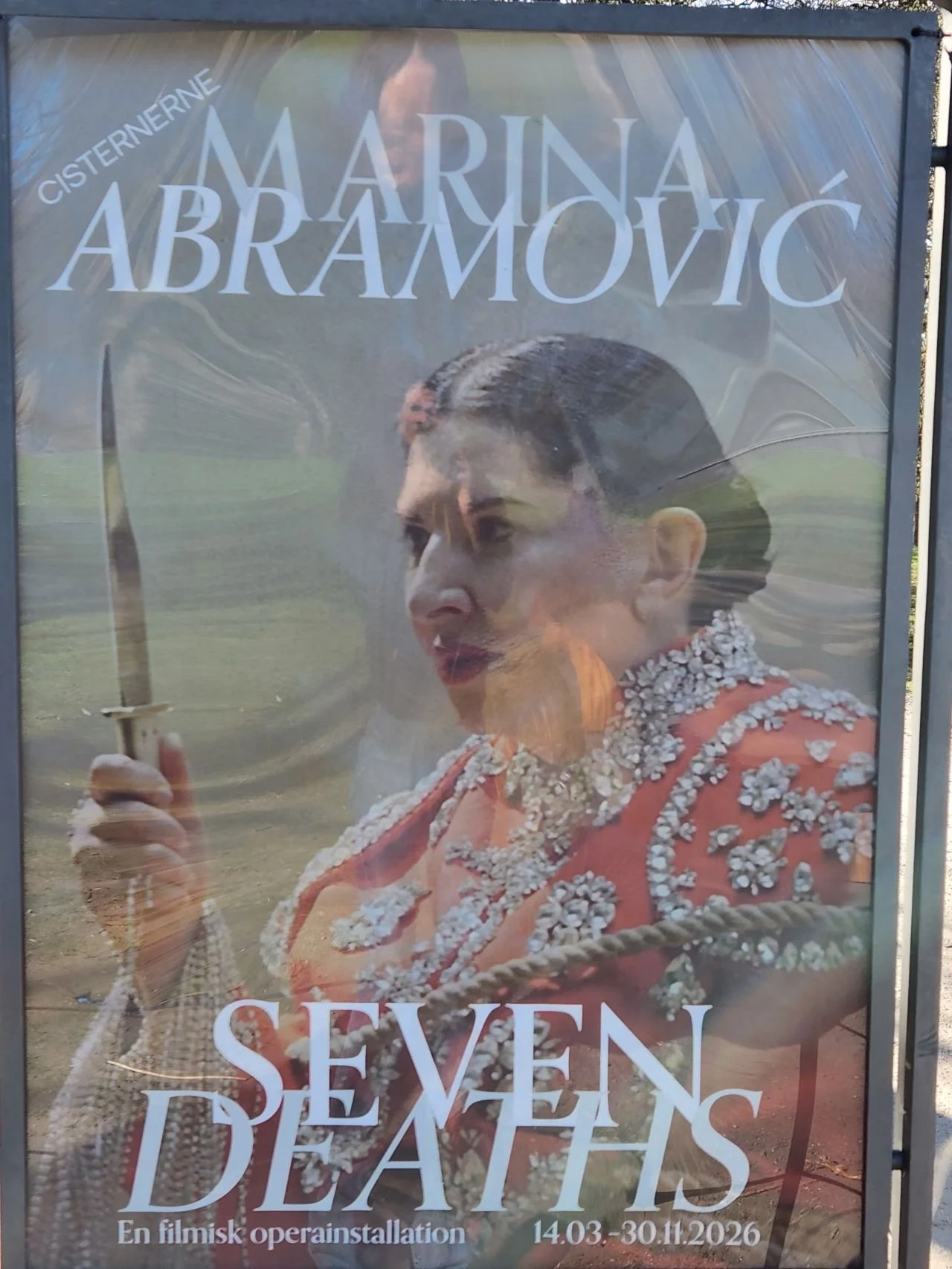
This year’s exhibition:
Seven Deaths is a cinematic opera installation in which the world-renowned performance artist Marina Abramović stages death through seven of the most iconic female roles in opera history. Set to arias from seven different operas sung by the legendary opera diva Maria Callas, the work unfolds as a visually imagined filmic universe. Abramović herself assumes the female lead, appearing opposite Hollywood actor Willem Dafoe.
Day 6 - Malmö: Circularity and Sustainable Design Across the Øresund
We work up extra early to hop on the train and cross the border to visit Malmo, Sweden. For a small city, it punches above it's weight when it comes to sustainability.
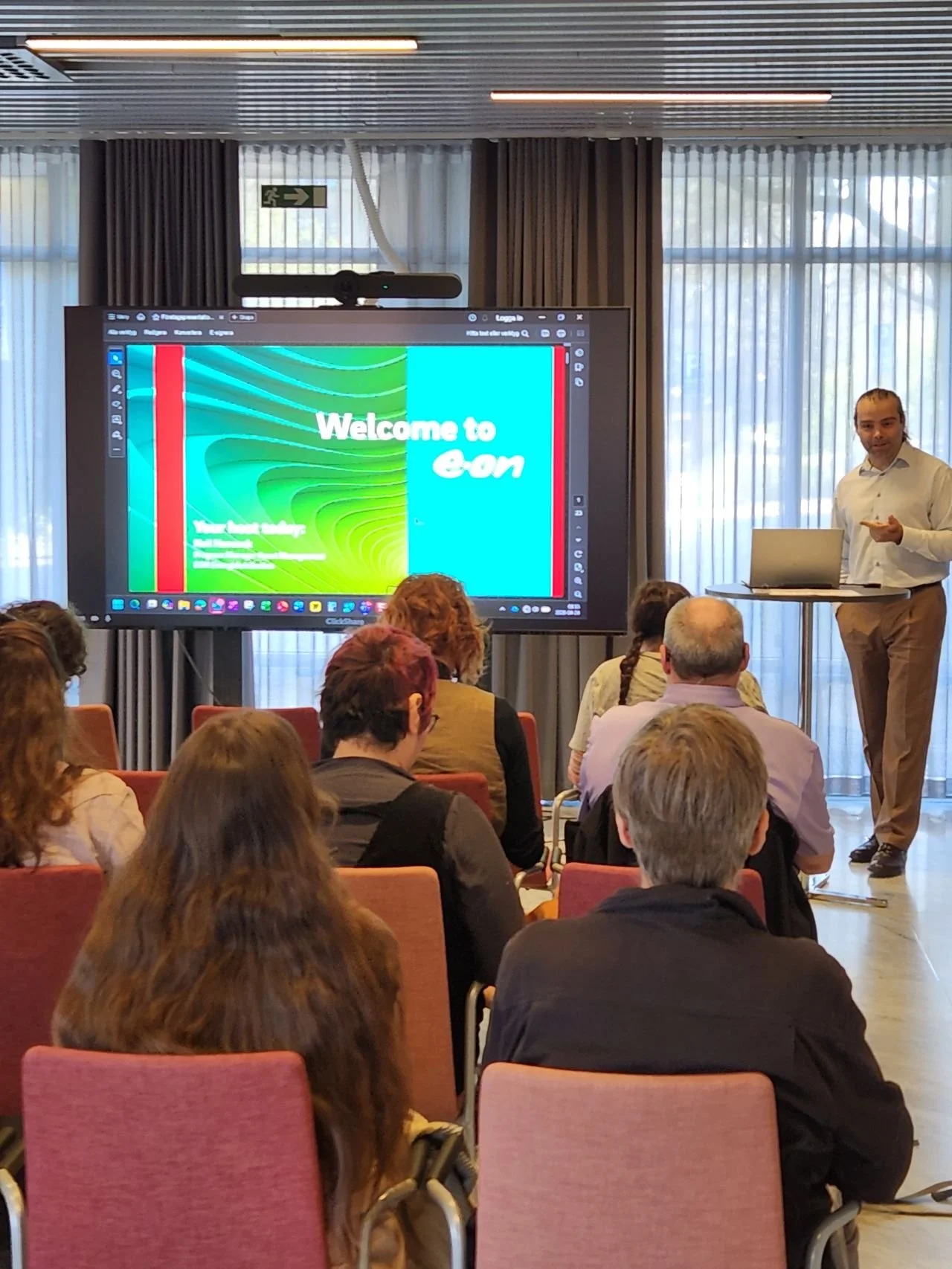
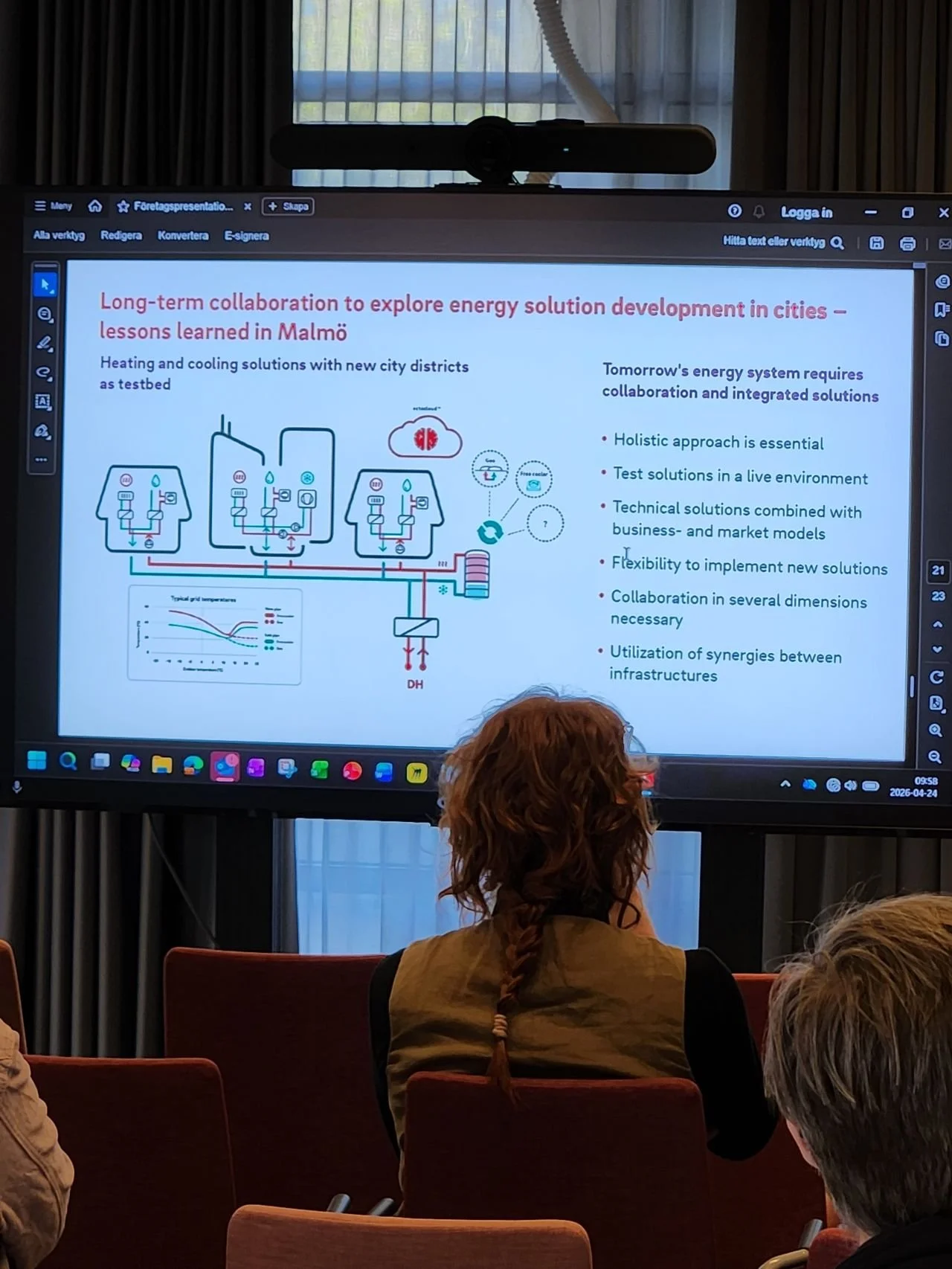
We began the day with a presentation from Neil Hancock, PMP, LPM of E.ON about smart energy grids and off-grid renewable power systems. It was a stark reminder of the essential role electricity plays in daily life. Of note was their pilot in Simris, which began in 2017. This innovative system provided 100% renewable, locally generated power to the Swedish village by combining solar panels, wind turbines, 2 types of battery energy storage systems, and load balancing. They launched the project to demonstrate the feasibility and the economics.
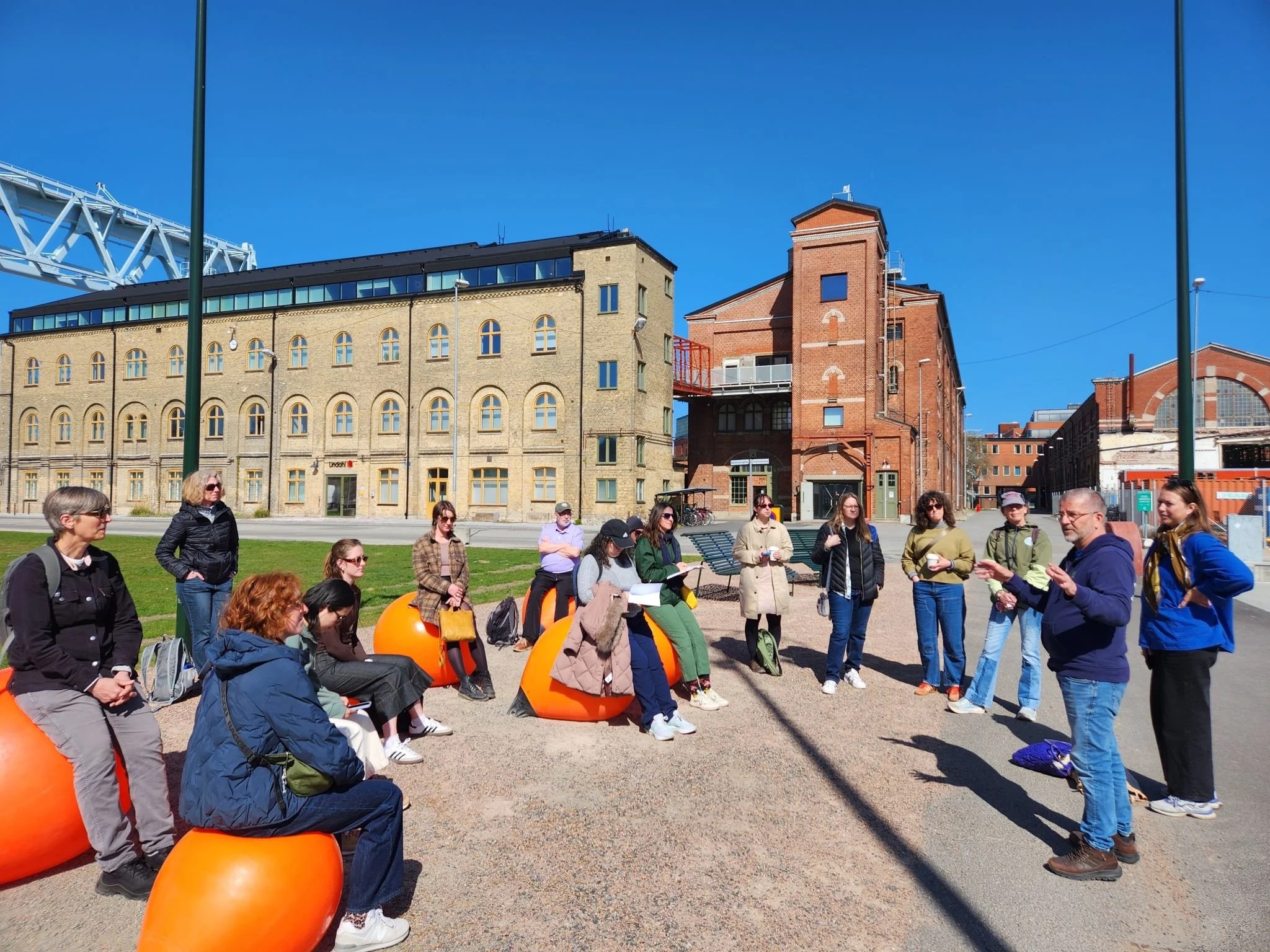
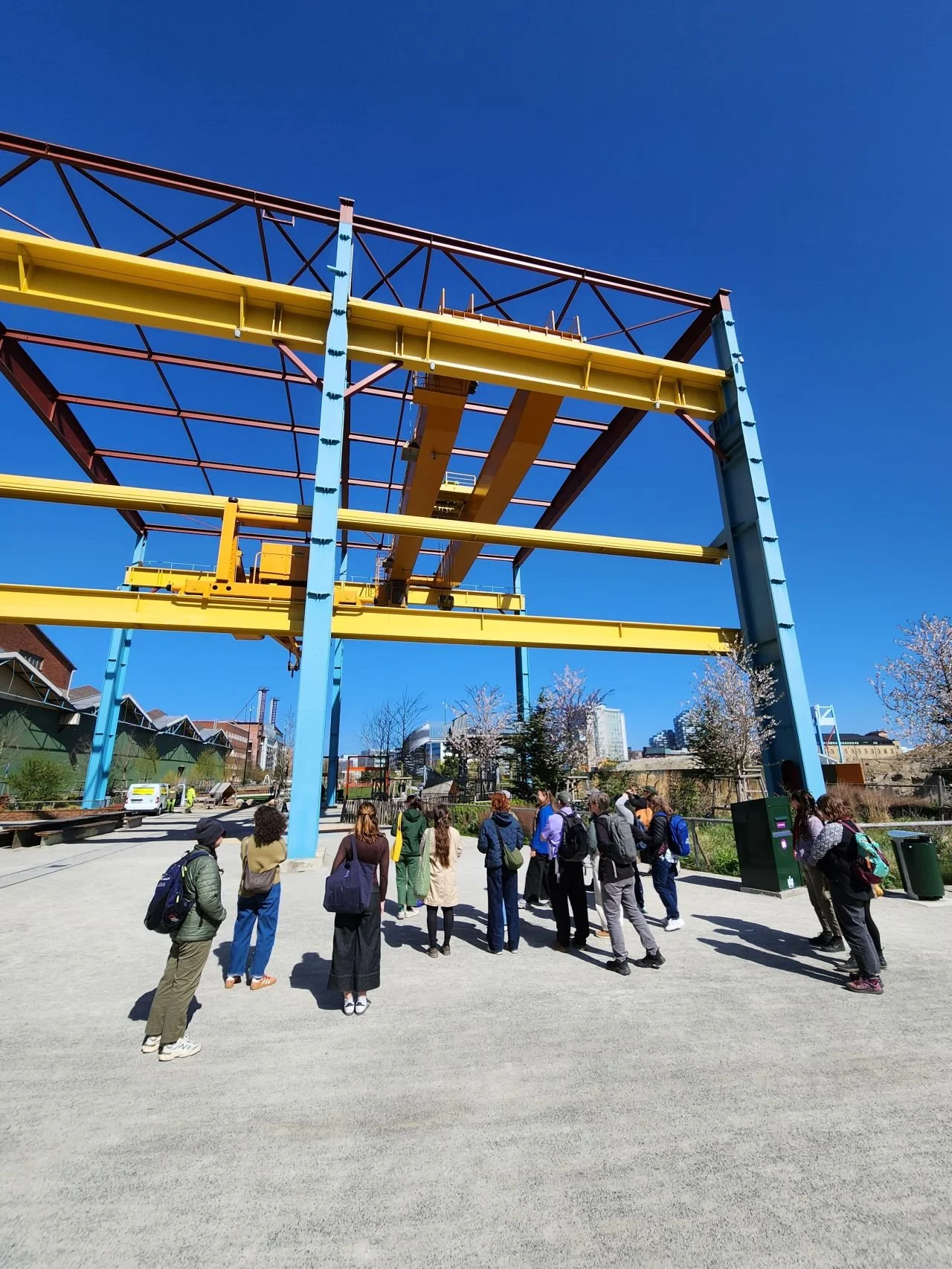
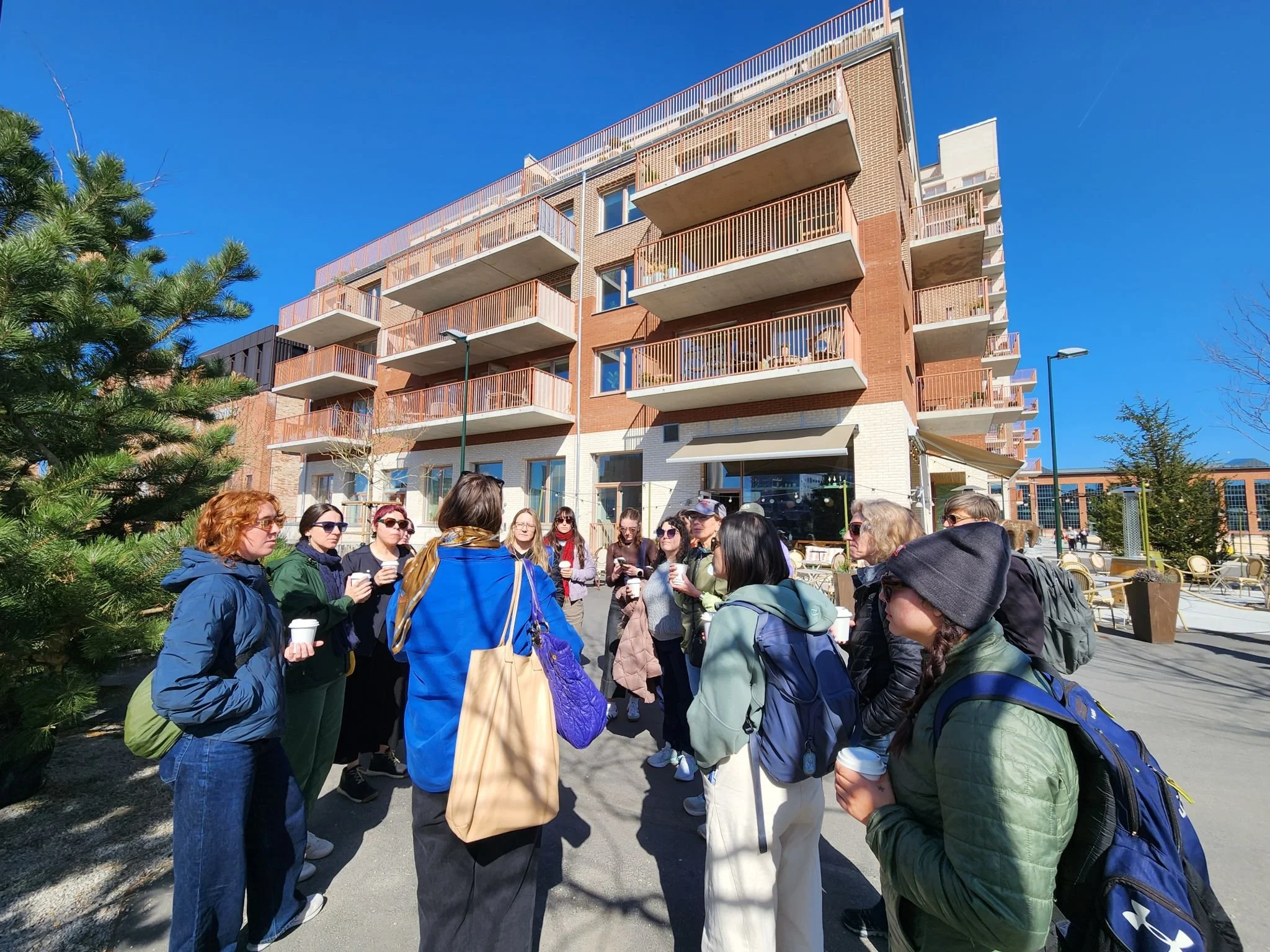
Next we were led by Evelina Stjernfeldt on a tour Varvsstaden, a former shipyard begin converted into mix-use development. The developer went to great lengths to maintain several existing structures and also used a warehouse locally as a material bank to store materials salvaged from the site. Without any mandate from the city, the developer aims to reuse 80% of the materials on-site.
The next time a developer tells you it's not possible to be circular, tell them to visit Varvsstaden. As you see in the second photo, they did something really cool. They kept part of the frame from the massive submarine factory to help visitors understand the scale of this one powerful industrial harbor.
We also got really lucky and ran into the marine biologist that helped the city restore the harbor area ecosystem with eel grass. It's not perfect b/c the city still releases sewage into the water occasionally, but it's one big step in the right direction to making the water swimmable, a long-term goal of the city.
Afterwards, we had two more presentations:
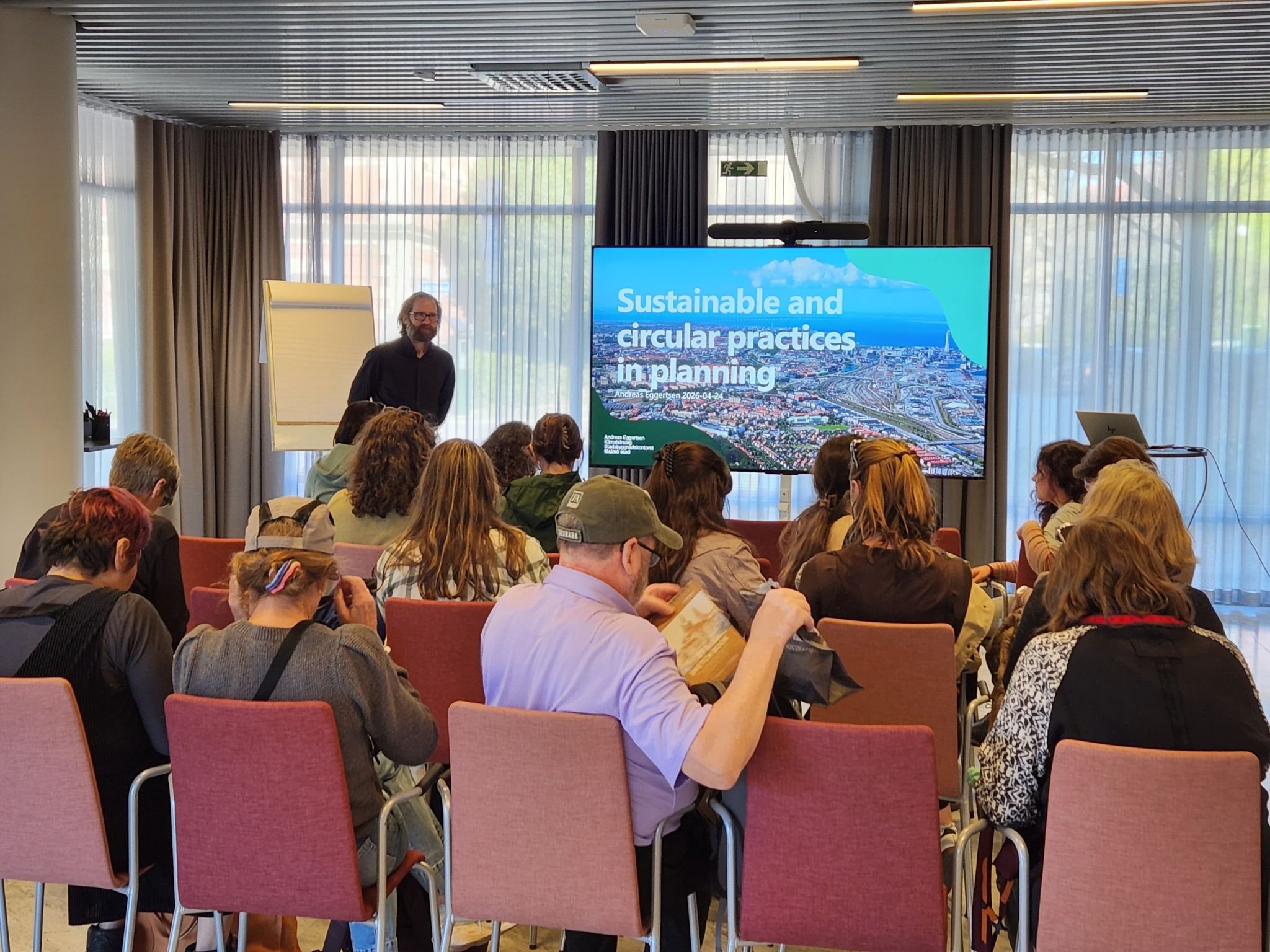
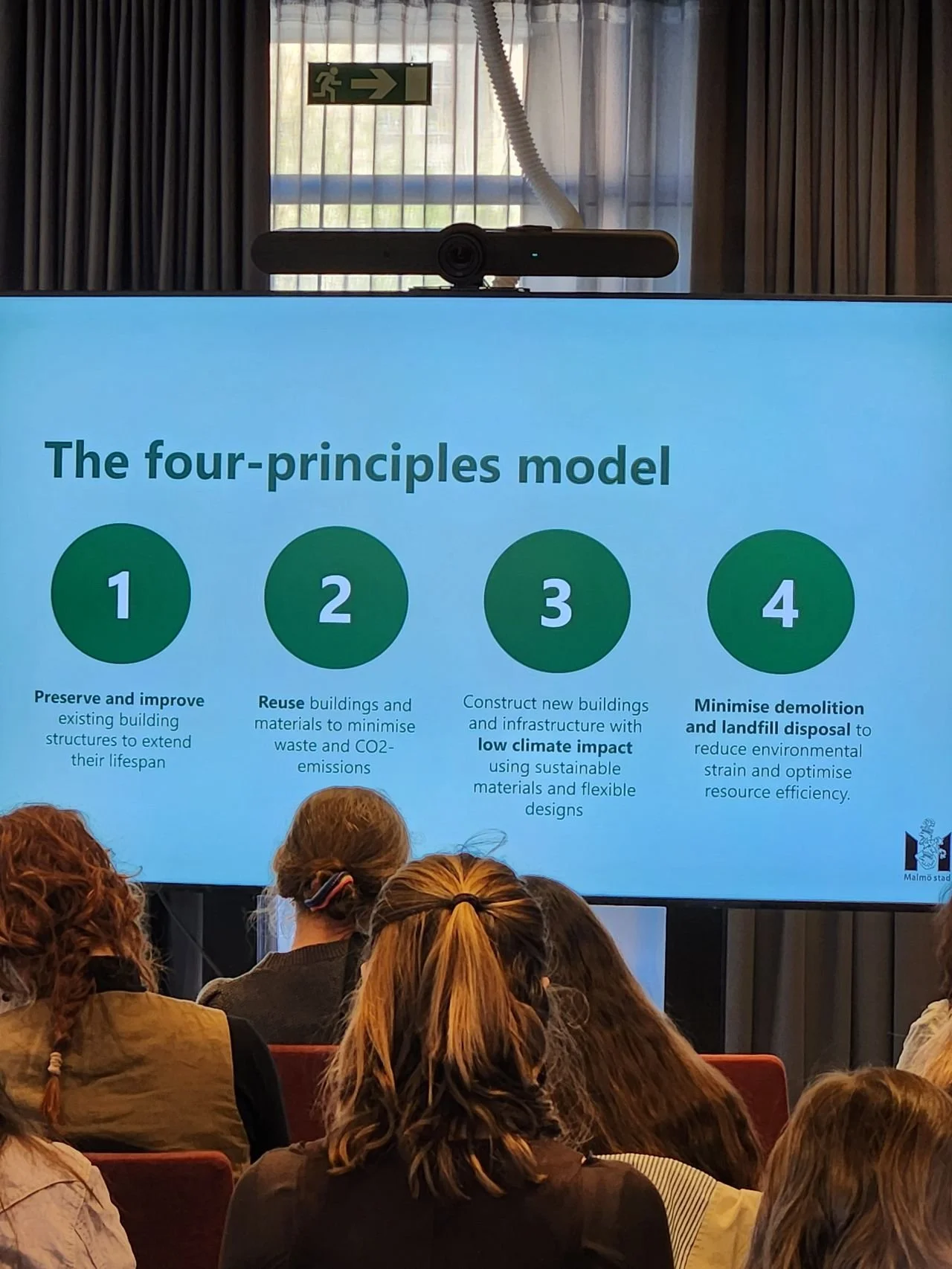
Andreas Eggertsen from the City of Malmo discussed the city's sustainability initiatives, especially in mobility and the built environment.
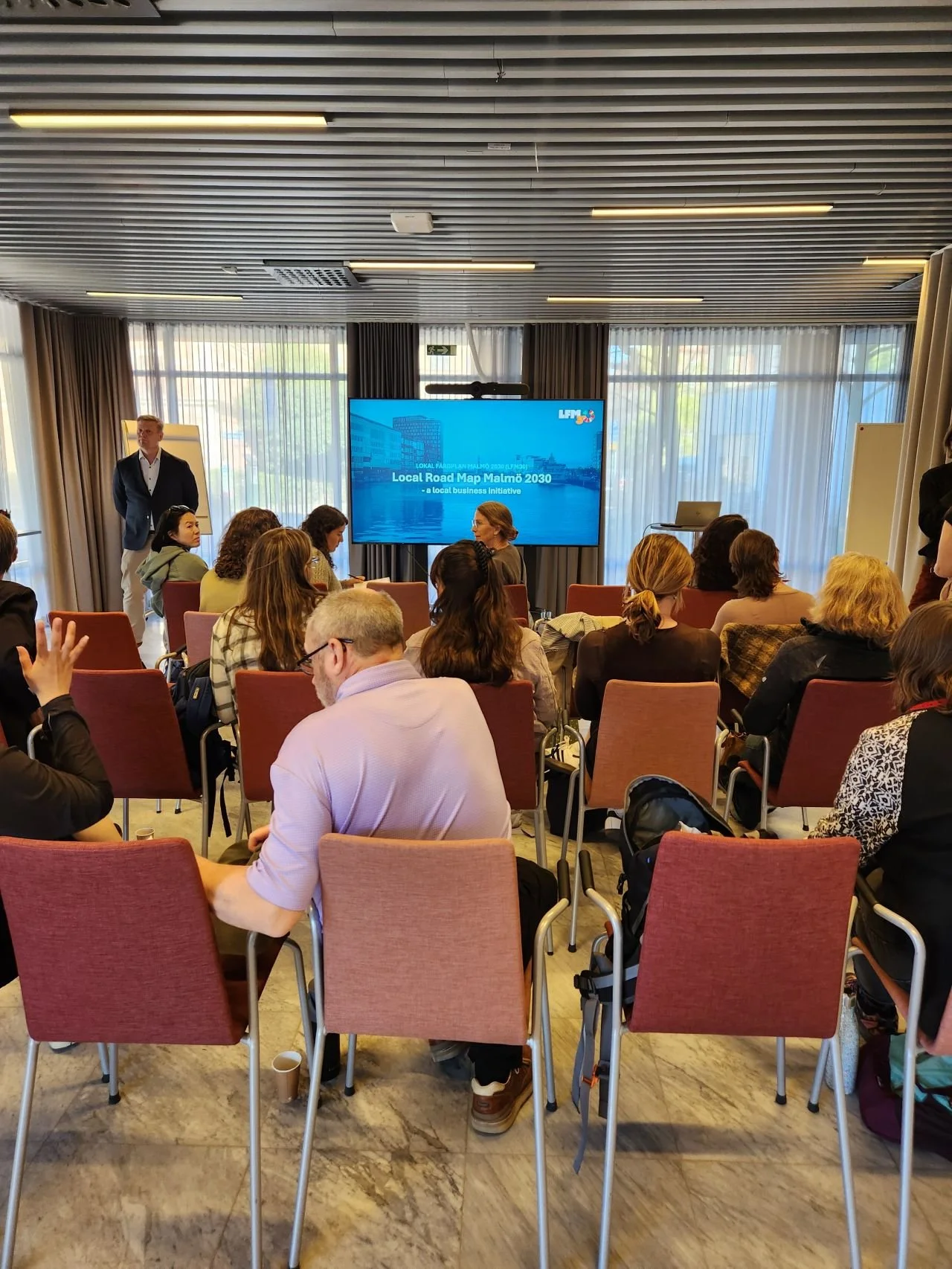
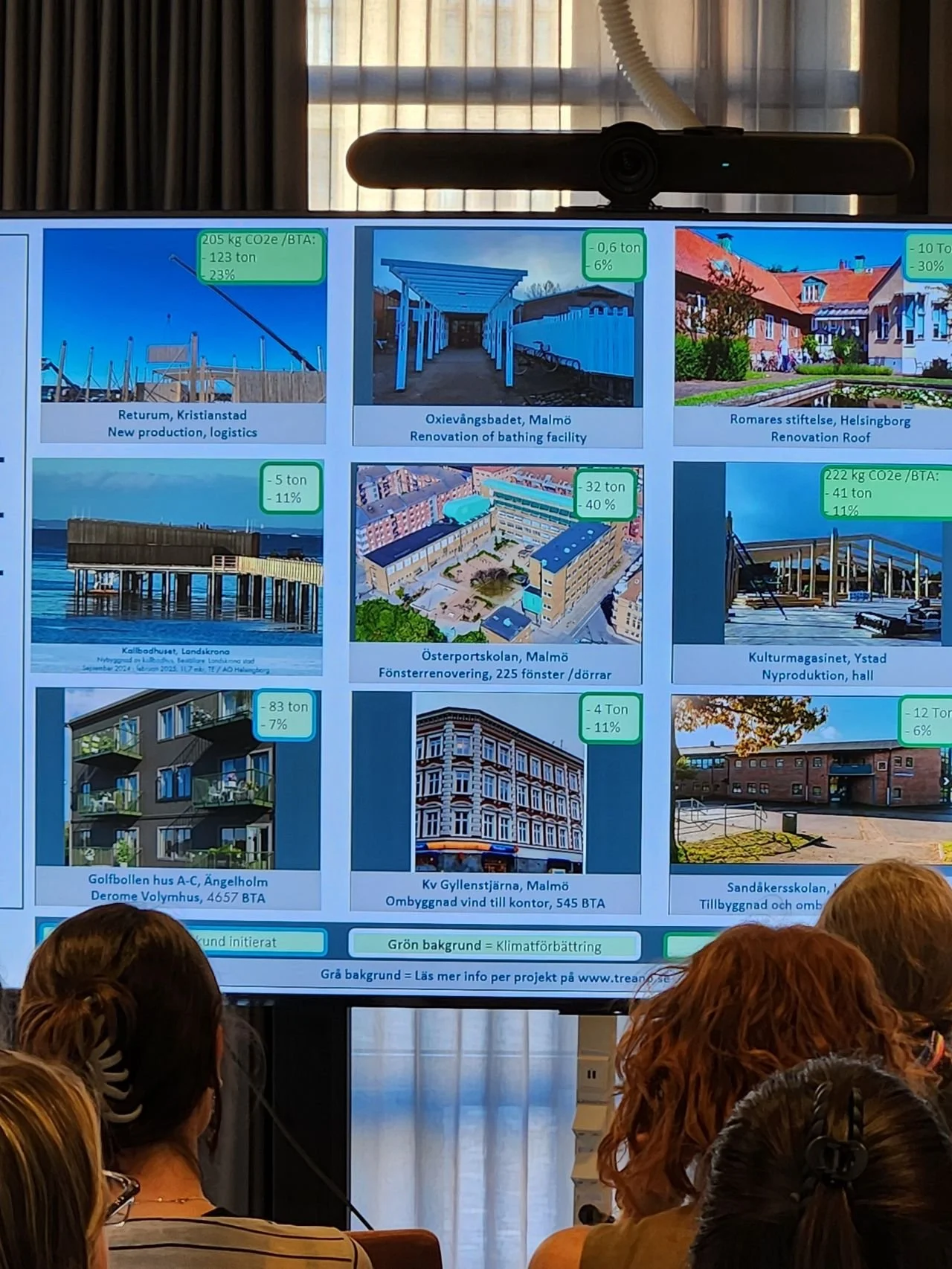
Andreas Holmgren from LFM30 explained the mission and purpose of this regional initiative of construction industry businesses working collectively to learn from one another about how to reduce GHG emissions while also being more competitive. A key point he wanted to make: most projects can cut GHG emission by up to 25% without additional costs with the right decisions. Cutting up to 50% of GHG emissions can be accomplished in some situations with some additional costs that aren't "excessive".
A recurring theme we keep seeing on this delegation visit isn't technical bottlenecks, but knowledge and willpower bottlenecks.
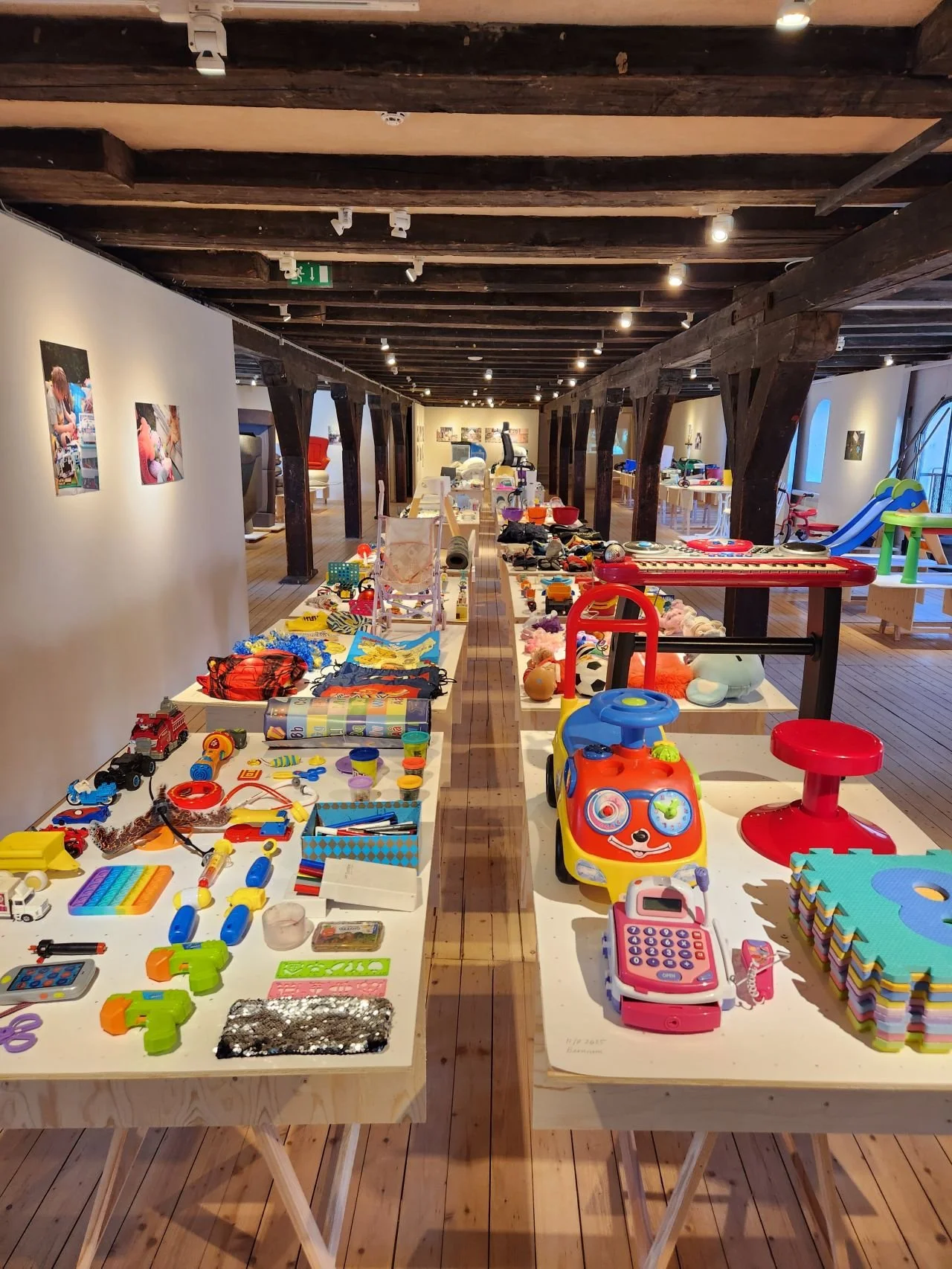
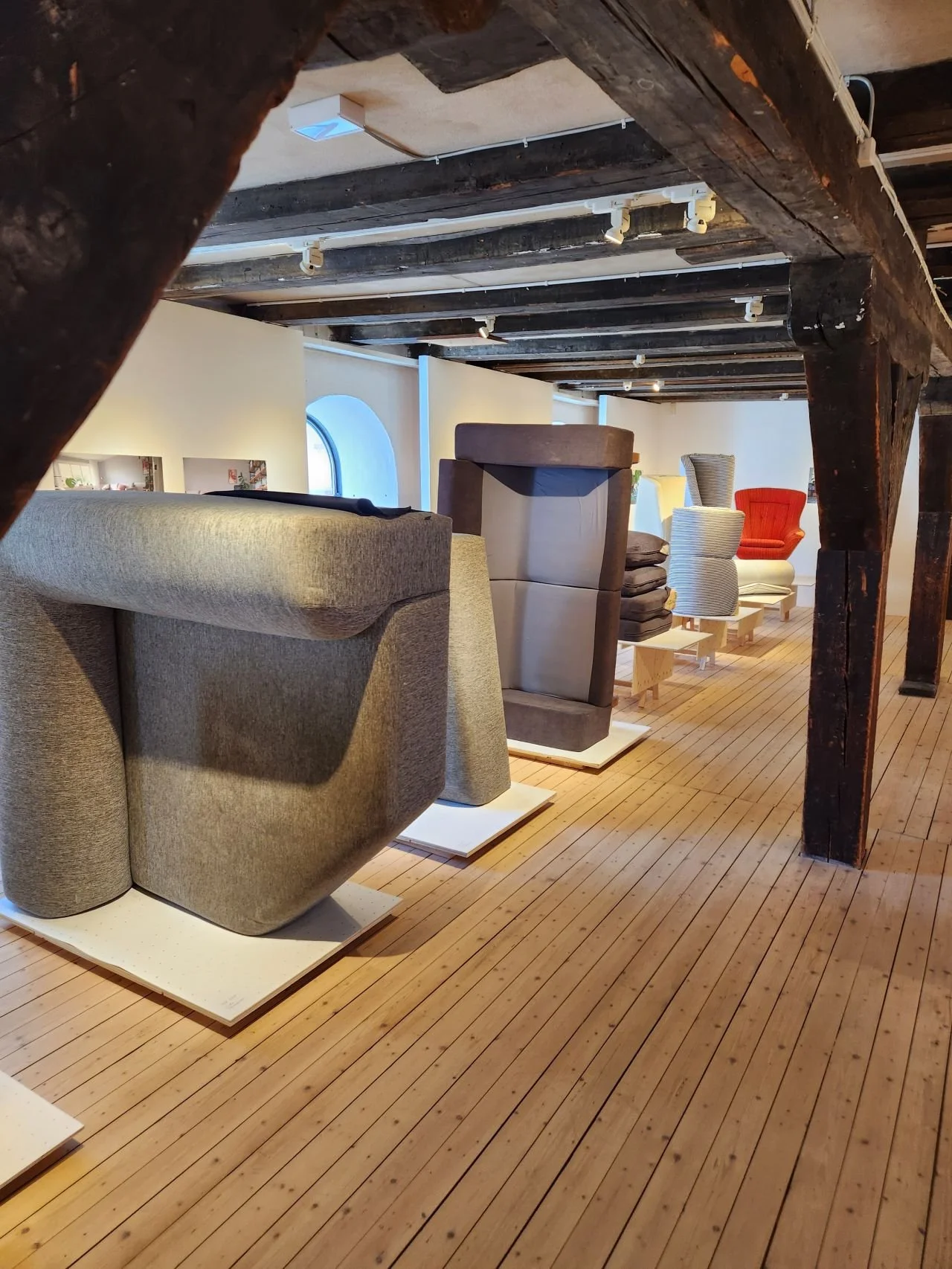
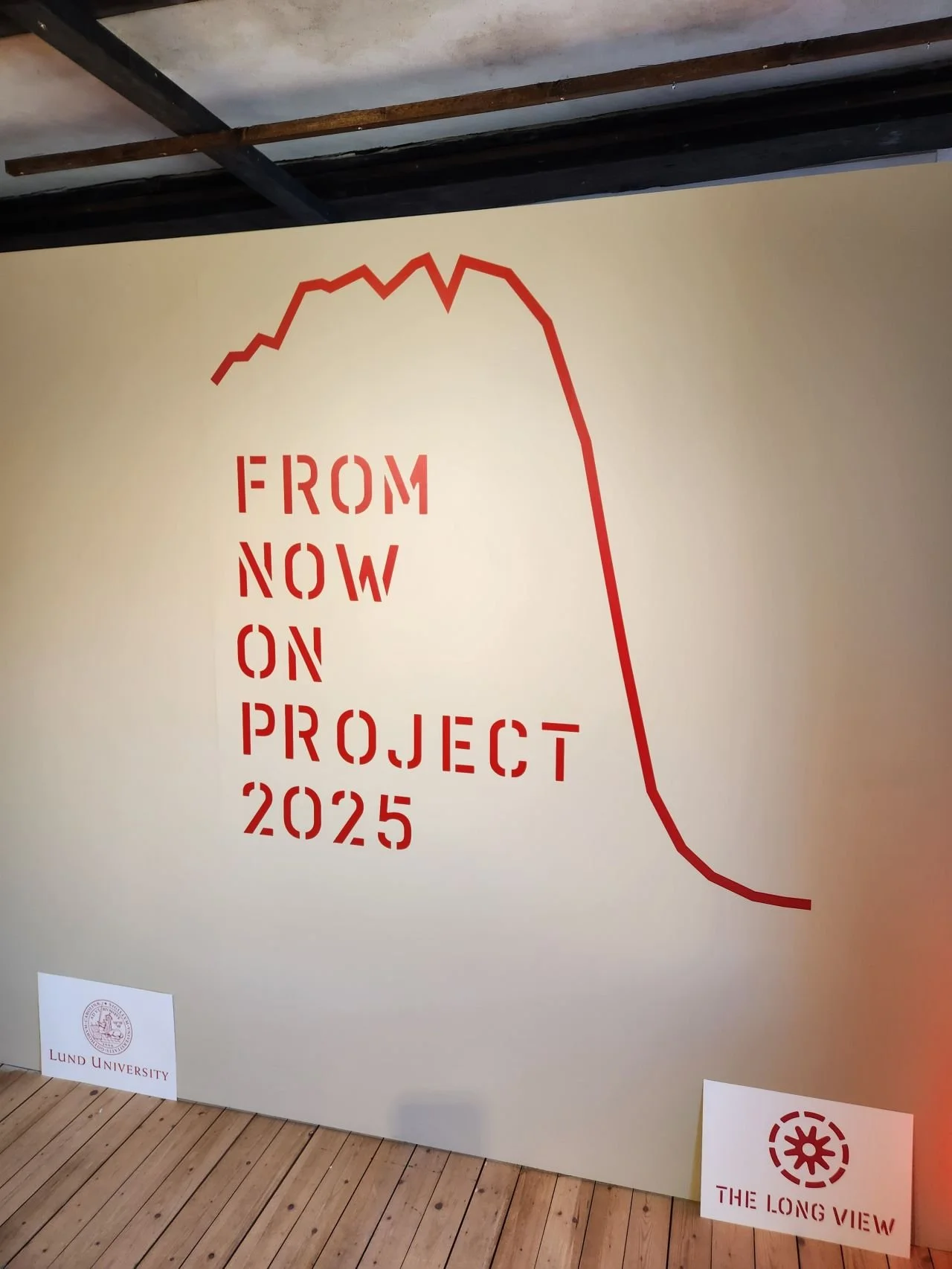
We ended our day with a visit to the Form/Design Center, the leading platform for architecture, design, and crafts in southern Sweden. Designated by the government as a national node for designing living environments, sustainability is built into the core of much of their existing work. Our members had a lot of fun with the existing exhibits. They had two interrelated exhibits. The first was about a family that purged plastic from their home. When you see all the plastic materials in one big exhibit, it really makes you appreciate the insidious reach of plastic.
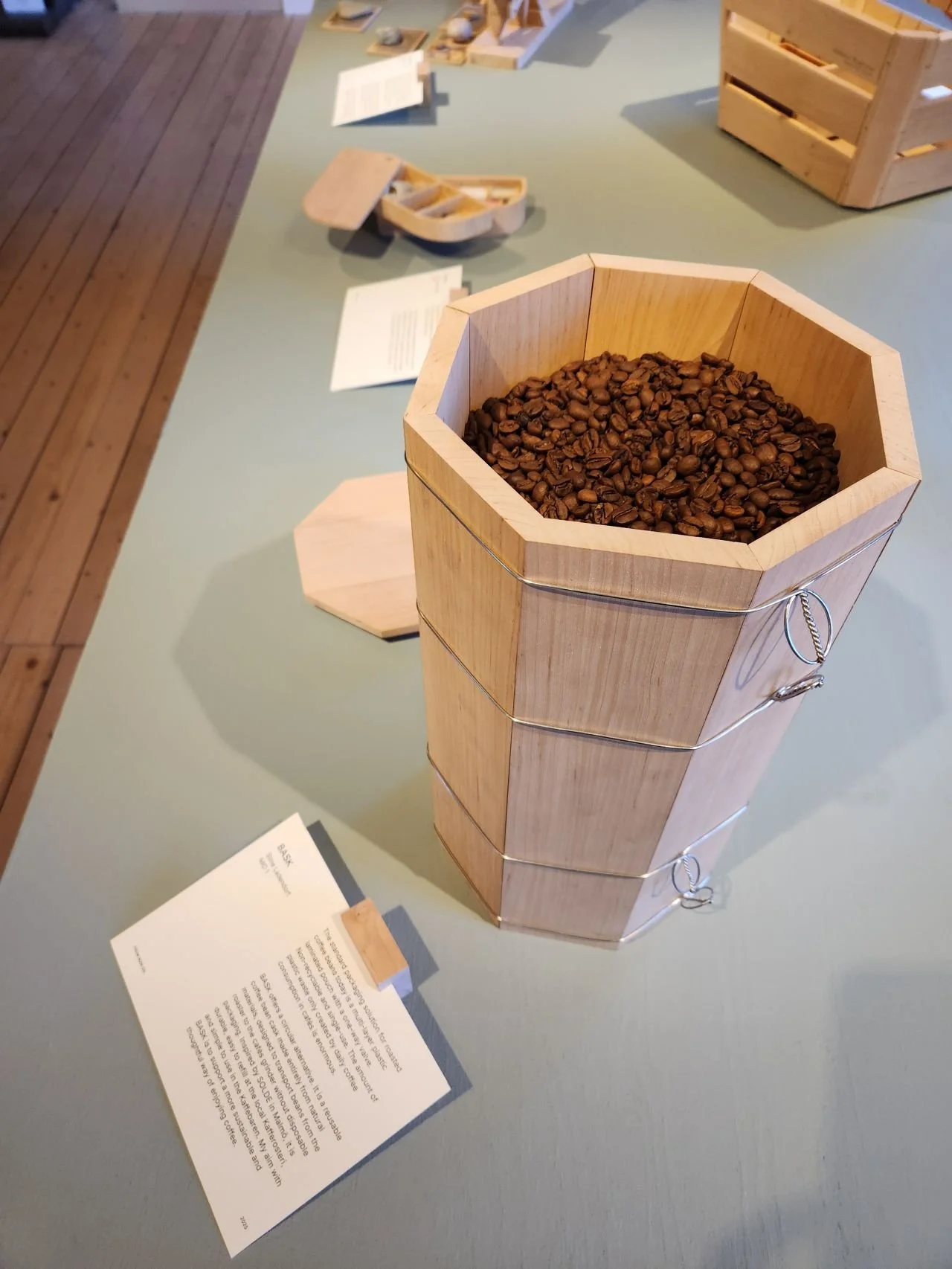
The second exhibit was about an initiative to pull inspiration from the past to make plastic free products for everyday use. Many household items made using wood and nature based materials.
Day 7 - Copenhagen: Last Day
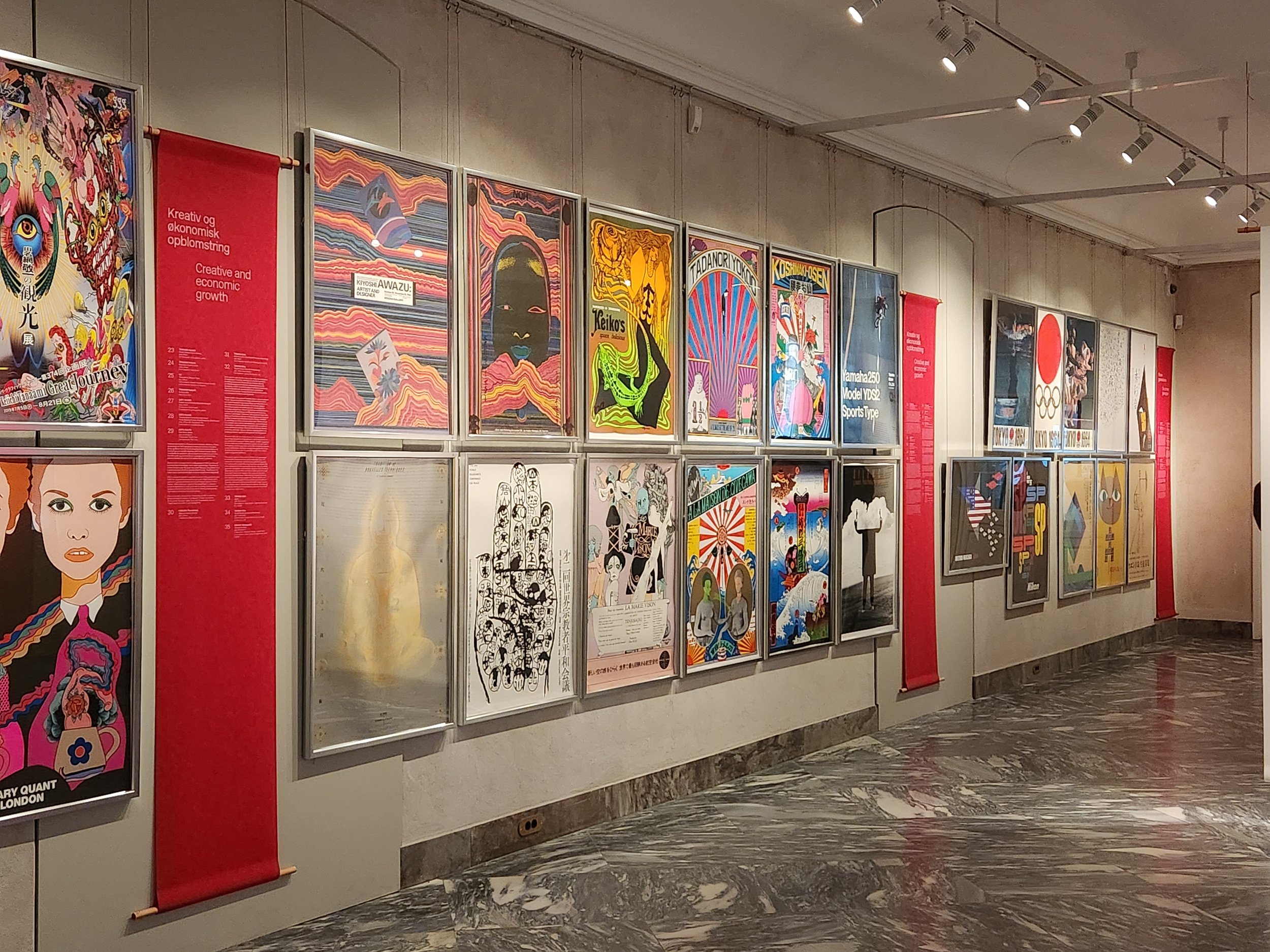
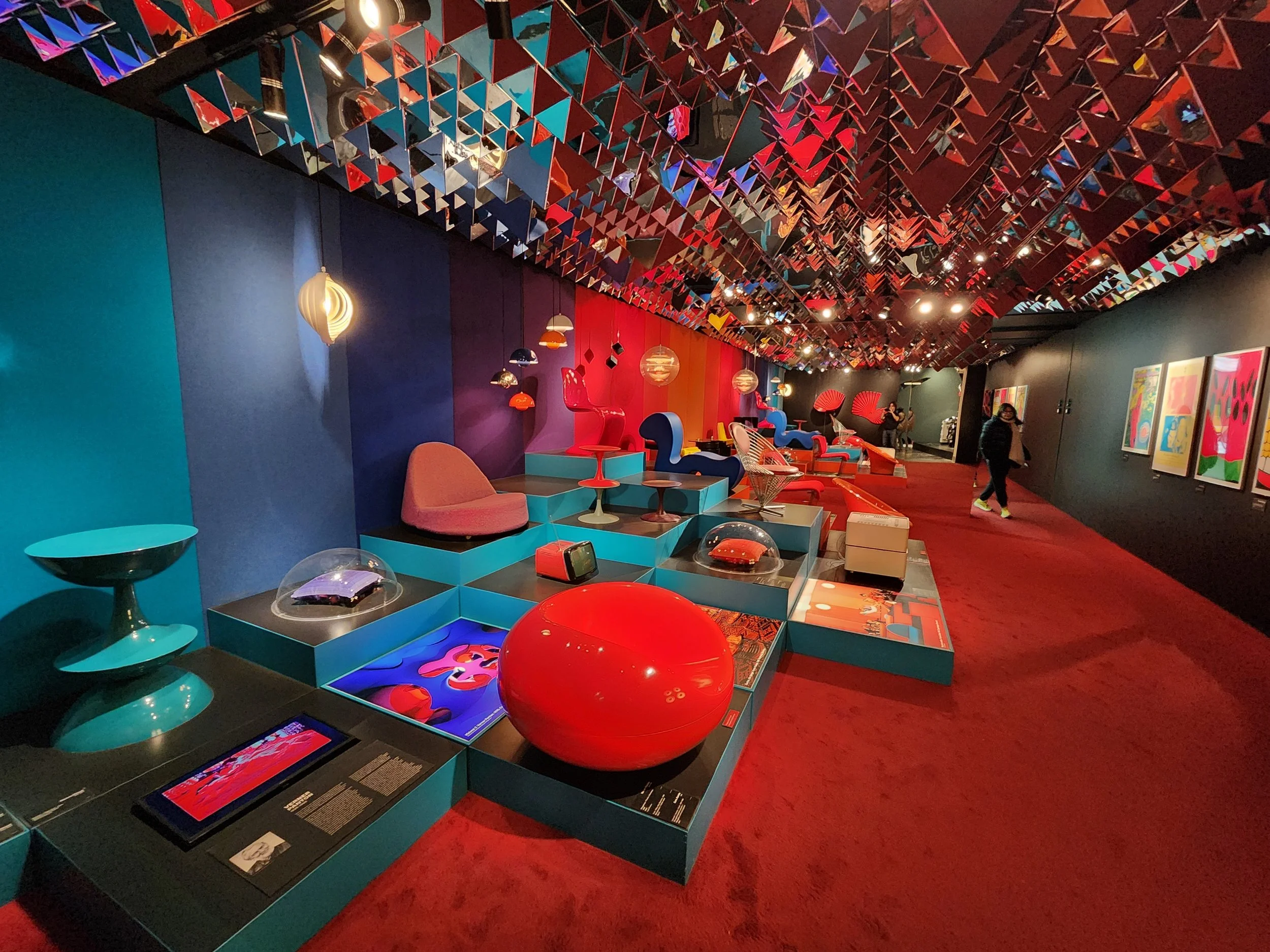
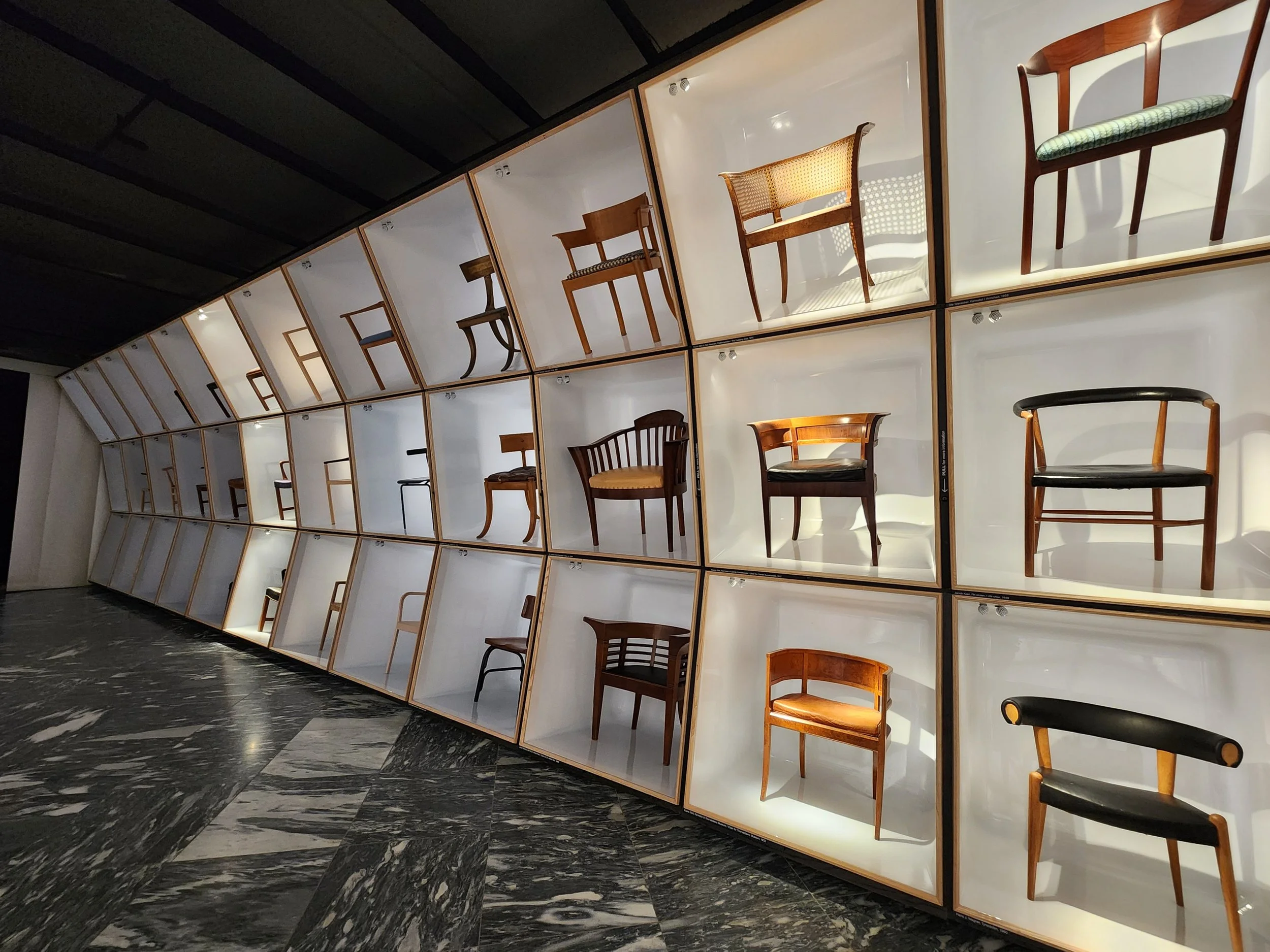
Our final full day in Copenhagen began with a visit to the Danish Design Museum, housed in a beautifully repurposed 18th-century hospital. The museum showcases a rich collection of Danish design exports, from iconic furniture and art to fixtures, alongside thought-provoking exhibits that delve into the human experience, our relationship with the environment, and how contemporary design is shifting towards a planet-first approach. For lunch, we enjoyed smørrebrød (open-faced sandwiches), one of Copenhagen's most recognizable dishes, at Oscar Cafe, a prominent LGBTQ+ friendly restaurant just steps from the museum.
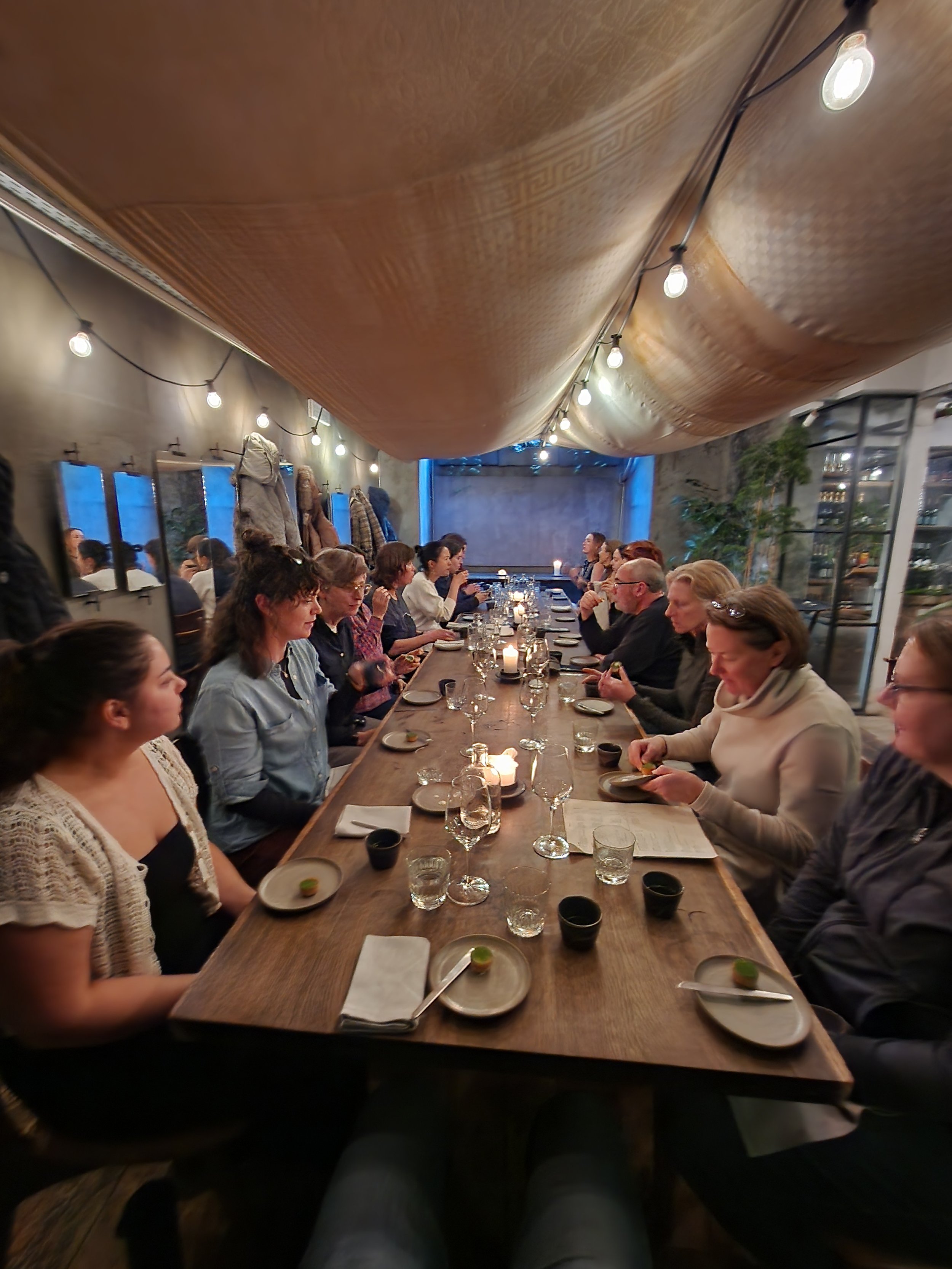
In the afternoon, delegation members broke into smaller groups for some free time to explore other points of interest around the city. Some delved into Copenhagen's vibrant thrift store scene, while others enjoyed the tranquility of the city's major public parks and iconic landmarks. A few even braved a waterfront sauna experience. We reconvened for one last memorable dinner together at Vækst, located in the charming old Latin Quarter. Part of the Cofoco restaurant collaborative, Vækst celebrates local produce in a stunning space designed to evoke the ambiance of a greenhouse, providing a fitting end to our immersive trip.


About Sustainability Delegations
Circular San Antonio’s Sustainability Delegations offer an opportunity for sustainability professionals to participate in immersive experiences in European cities that are focused on shaping greener, more sustainable urban environments. Open to professionals from all US states and territories, delegation trips cultivate transdisciplinary relationships with peers across the United States that represent geographic, cultural, and professional diversity. Our curated tours allow participants to engage with their counterparts in Europe, establishing transatlantic connections and relationships that can support collaborative efforts on both sides of the Atlantic — an imperative more important now than ever.
We are now accepting applications for our next delegation to Copenhagen in April 2027! Apply now to secure your spot.